About this trip.
Comparing firms? Every Camino holiday on Mooch, route by route.
Before you book: Walking holidays vs cycling holidays — when each one is the right answer · Which Camino route is right for you — an honest opinion on each of the seven
Starting in Lisbon
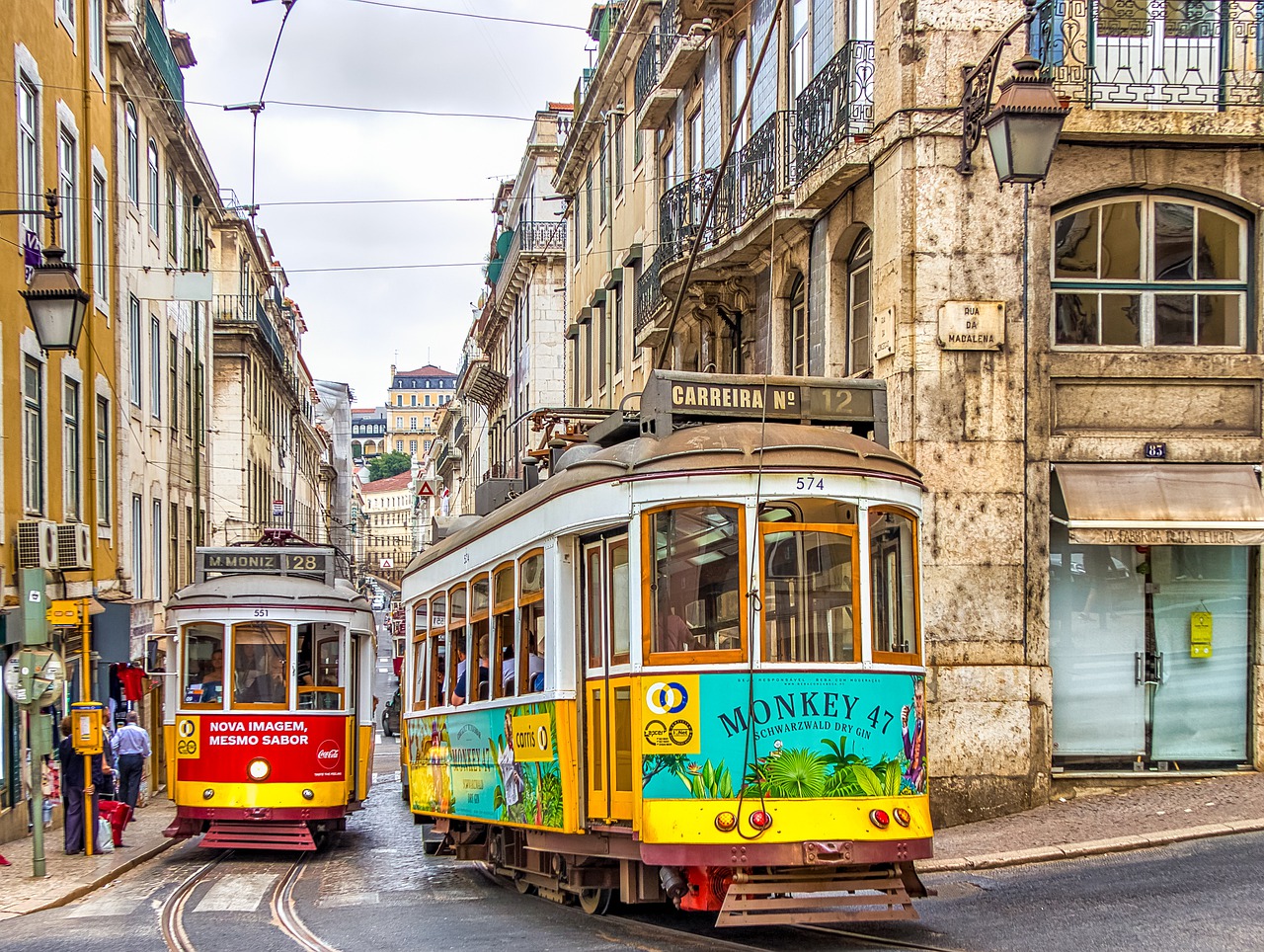
Lisbon, Portugal's capital, stands where the River Tagus meets the Atlantic, and it is where this walk begins. The Camino Portugués Central is the historic inland pilgrim route to Santiago de Compostela, and walking it in full from Lisbon is the traditional way to do the Portuguese Camino. It takes almost a month, passing farming regions, river valleys and some of Portugal's great cities before crossing into Galicia at Tui. Don't expect dramatic first impressions. The route rewards patience, curiosity and a liking for slow travel. Before you set off, there's time to explore Lisbon's cobbled streets, tiled façades and hilltop viewpoints.
From the Tagus to Coimbra
The first stages are gentle and mostly flat. They follow the Tagus through parks and riverside paths to Santa Iria de Azoia, then pass farmland and wetlands known for their birdlife on the way to Vila Franca de Xira. The route then turns inland across open plains associated with horse and bull breeding to Azambuja, a traditional Ribatejo town. Vineyards, orchards and crop fields lead on to Santarém, a former Moorish stronghold on a hill above the Tagus valley, with wide views and historic churches. Quiet country lanes take you to Golegã, famous for its equestrian heritage, and rolling countryside brings you to Tomar, once the seat of the Knights Templar in Portugal.
Beyond Tomar the landscape gets more rugged, with woodland, valleys and old Roman tracks. This is one of the more physically demanding stretches, with steady climbs and descents. The next stage is shorter, opening with a sharp climb before easing through olive groves and farmland. After that, shaded paths of eucalyptus and pine lead to Condeixa-a-Nova, close to important Roman ruins. A final climb brings you into Coimbra, Portugal's former capital, which is known for its ancient university and lively atmosphere.
Porto and the northern stages
North of Coimbra the route passes vineyards and Roman road remains to Mealhada, which is known for its food and wine. It then follows the ancient Via Romana XVI over a Roman bridge and through rolling hills to São João da Madeira. Arriving in Porto, with its historic centre, riverfront and bridges, is a major milestone. Many pilgrims join the Camino here.
After Porto the trail quickly gets quieter. Stone paths and village life take you through Gião and Arcos to Barcelos, known for its rooster symbol, which you reach along riverside paths and country lanes. A short, calm stage leads to Balugães, and historic paths and river crossings take you to Ponte de Lima, with its medieval bridge and old town. The next day is a challenging one, with one of the toughest climbs in Portugal on forest trails and mountain paths.
Into Spain at Tui
You cross the River Minho into Spain at Tui, where the cathedral overlooks the river. From here the paths are well marked, with historic bridges along the way. The route passes through Redondela, Pontevedra, Caldas de Reis and Padrón before reaching the cathedral city of Santiago de Compostela. If you'd prefer coastal scenery, there is a Coastal version of the route from Lisbon that follows the Atlantic after Porto. The Central route stays inland and suits walkers who want the classic pilgrim path from Lisbon to Santiago.
The shape of the trip.
Everything you might be wondering.
Q1How hard is it really?
The grading is set by the operator and usually reflects daily distance and total ascent. As a rule of thumb: if you can comfortably manage a 5-6 hour hillwalk at home on a weekend, a moderate-graded route will be fine. Read the day-by-day notes carefully, and train with a loaded pack in the months before.
Q2Can I do this solo?
Yes — self-guided walking holidays are well suited to solo travellers, and some operators waive the single-room supplement on certain departures. The route notes are written for confident independent walkers, and most operators run a 24/7 support line.
Q3Do I need to speak the language?
No. Hotels and restaurants on the route are used to English-speaking walkers. A phrasebook for menus and a few polite basics (hello, thank you, please) is all you really need. The operator's support line speaks English.
Q4Can I bring my dog?
Some routes are dog-friendly, others aren't — it depends on whether all the accommodation on the itinerary accepts dogs. Check with the operator before booking. If you do bring a dog, you'll need a pet passport, up-to-date rabies vaccination, and a lead for villages.
Q5What if it rains?
The route is walkable in rain — your luggage travels ahead regardless, so you'll always arrive somewhere dry. Some trails get slippery in wet weather and the operator's support line can arrange a taxi for any stage if conditions are properly bad.
Q6How do I get there from the UK?
Most routes are reachable by a short flight to a nearby airport, followed by train or transfer. The operator will usually point you at the nearest airport and can advise on rail connections. Some will book train tickets on your behalf for a small fee.
Q7Can I shorten or extend it?
Usually yes. Many operators offer shorter versions of a route as a standalone, and most will add extra nights at the start or end at their own rates. Ask when you enquire — they'll tailor it before booking.
Q8What about cancellation?
Typically a deposit (usually 20-25%) is taken at booking, with the balance due 8-10 weeks before departure. The operator's own terms apply — Mooch doesn't handle the booking or refunds. Travel insurance is strongly recommended.
Three walking holidays, side-by-side.
The closest walking holidays on Mooch, by trail, then region, then country. Prices are the operators' own, per person.