A Stroll in the Pyrenees
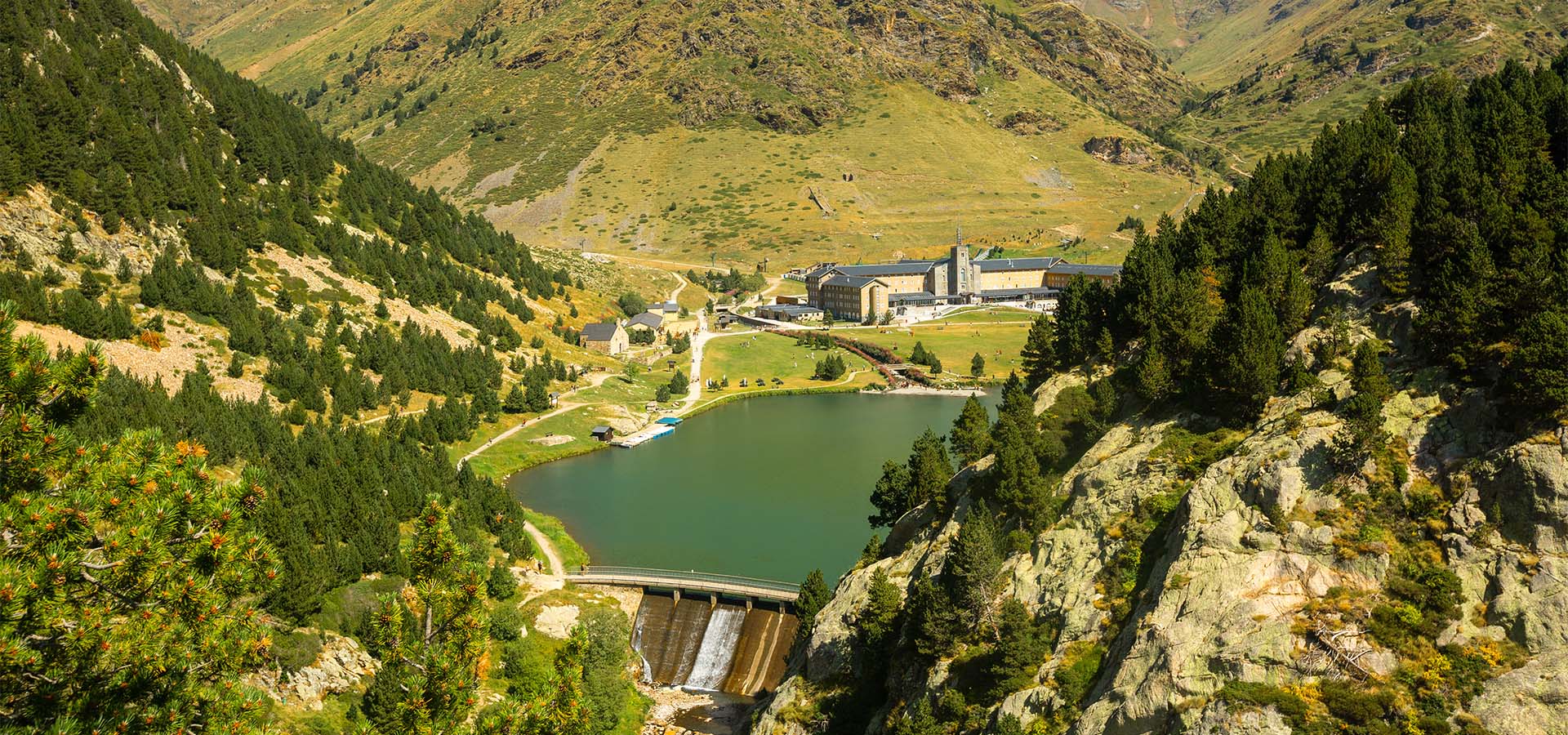
The monastery at Núria is the trip's centrepiece — stay two nights. The rack-and-pinion train up from Ribes de Freser is worth the detour on its own.
About this trip.
The rack railway from Ribes de Freser
The rack railway climbs a thousand metres into the Vall de Núria, and that single piece of engineering is the key to this week. The Catalan Pyrenees here are quieter than their French counterparts and noticeably less developed than the Aragonese stretch further west — the trails are usually empty, the villages small and unfussy, and the mountains themselves do most of the talking. Ribes de Freser, an old spa village in the valley below, makes a sensible base for walking that doesn't demand long ascents or technical nerve. Barcelona is roughly two hours away by local train, so you arrive by rail rather than spending half a day in a transfer minibus.
A choice of leisurely walks
Routes are graded 1 to 2, with daily distances between roughly 5 and 15km on mountain paths, drovers' roads, meadows and woodland. A short figure-of-eight above the village (around 6km, 240m of ascent) traces the old Town Promenade laid out when Ribes drew visitors for its springs. A longer option climbs through woodland to the hill-top hermitage of Sant Antoni — 8.5km, 480m up and back, with 360-degree views over the village. For a flatter day, take the local train up to Planoles and walk the 8km back along the railway and the Rigard river. Other walks make use of the rack railway itself to reach the high country around the Monastery of Santa Maria de Núria, with side trips possible to Llívia and Puigcerdà on the Cerdanya plain. There is no fixed itinerary; you pick each morning according to weather and inclination, with route notes and GPS files supplied.
The hotel and the table
Your base is the Resguard dels Vents, a family-run four-star hotel-spa perched above the village with a pool and a small wellness area for the end of a walking day. Catalan cooking is the other reason to stay put in the evenings — cured meats, locally caught trout, the heavier mountain dishes that suit cool nights, and the regional wines that go with them. Three dinners are included over the seven nights, along with breakfast every morning and two picnics for days when you'd rather not double back for lunch.
Bookings and logistics
The holiday runs from 1 April to 25 October 2026, with any-day arrivals and the option of extra nights. From £1,093 per person, excluding flights; Inntravel can arrange flights and transfers, the transfers alone, or rail travel from London if you'd rather avoid flying altogether. The rack railway and any other train rides you use during the week are paid for locally. Suitable for walkers happy with 5–15km a day and the occasional climb, but not for anyone hoping to bag high-altitude peaks — this is the gentler face of the range, and it sets out to be exactly that.
The shape of the trip.
What's typically in the price, what isn't.
A general guide for walking holidays of this kind. Check the operator's booking page for the final inclusions on this specific trip.
Typically included
- ✓Hotel accommodation, double or twin en-suite rooms
- ✓Daily breakfast at each hotel
- ✓Luggage transfer between hotels on every walking day
- ✓Detailed route notes with maps and GPX files
- ✓24/7 support line in English for the duration of the trip
Typically not included
- ×Flights to and from the country of travel
- ×Travel insurance (strongly recommended)
- ×Lunches — typically a village picnic or café stop
- ×Some evening meals — depends on the specific itinerary
- ×Alcohol beyond any wine included with set dinners
- ×Optional room or transfer upgrades
Everything you might be wondering.
Q1How hard is it really?
The grading is set by the operator and usually reflects daily distance and total ascent. As a rule of thumb: if you can comfortably manage a 5-6 hour hillwalk at home on a weekend, a moderate-graded route will be fine. Read the day-by-day notes carefully, and train with a loaded pack in the months before.
Q2Can I do this solo?
Yes — self-guided walking holidays are well suited to solo travellers, and some operators waive the single-room supplement on certain departures. The route notes are written for confident independent walkers, and most operators run a 24/7 support line.
Q3Do I need to speak the language?
No. Hotels and restaurants on the route are used to English-speaking walkers. A phrasebook for menus and a few polite basics (hello, thank you, please) is all you really need. The operator's support line speaks English.
Q4Can I bring my dog?
Some routes are dog-friendly, others aren't — it depends on whether all the accommodation on the itinerary accepts dogs. Check with the operator before booking. If you do bring a dog, you'll need a pet passport, up-to-date rabies vaccination, and a lead for villages.
Q5What if it rains?
The route is walkable in rain — your luggage travels ahead regardless, so you'll always arrive somewhere dry. Some trails get slippery in wet weather and the operator's support line can arrange a taxi for any stage if conditions are properly bad.
Q6How do I get there from the UK?
Most routes are reachable by a short flight to a nearby airport, followed by train or transfer. The operator will usually point you at the nearest airport and can advise on rail connections. Some will book train tickets on your behalf for a small fee.
Q7Can I shorten or extend it?
Usually yes. Many operators offer shorter versions of a route as a standalone, and most will add extra nights at the start or end at their own rates. Ask when you enquire — they'll tailor it before booking.
Q8What about cancellation?
Typically a deposit (usually 20-25%) is taken at booking, with the balance due 8-10 weeks before departure. The operator's own terms apply — Mooch doesn't handle the booking or refunds. Travel insurance is strongly recommended.
Three walking holidays, side-by-side.
Other walking holidays on Mooch in the same spirit. All prices per person, from the operator.