About this trip.
Umbria, in Tuscany's shadow
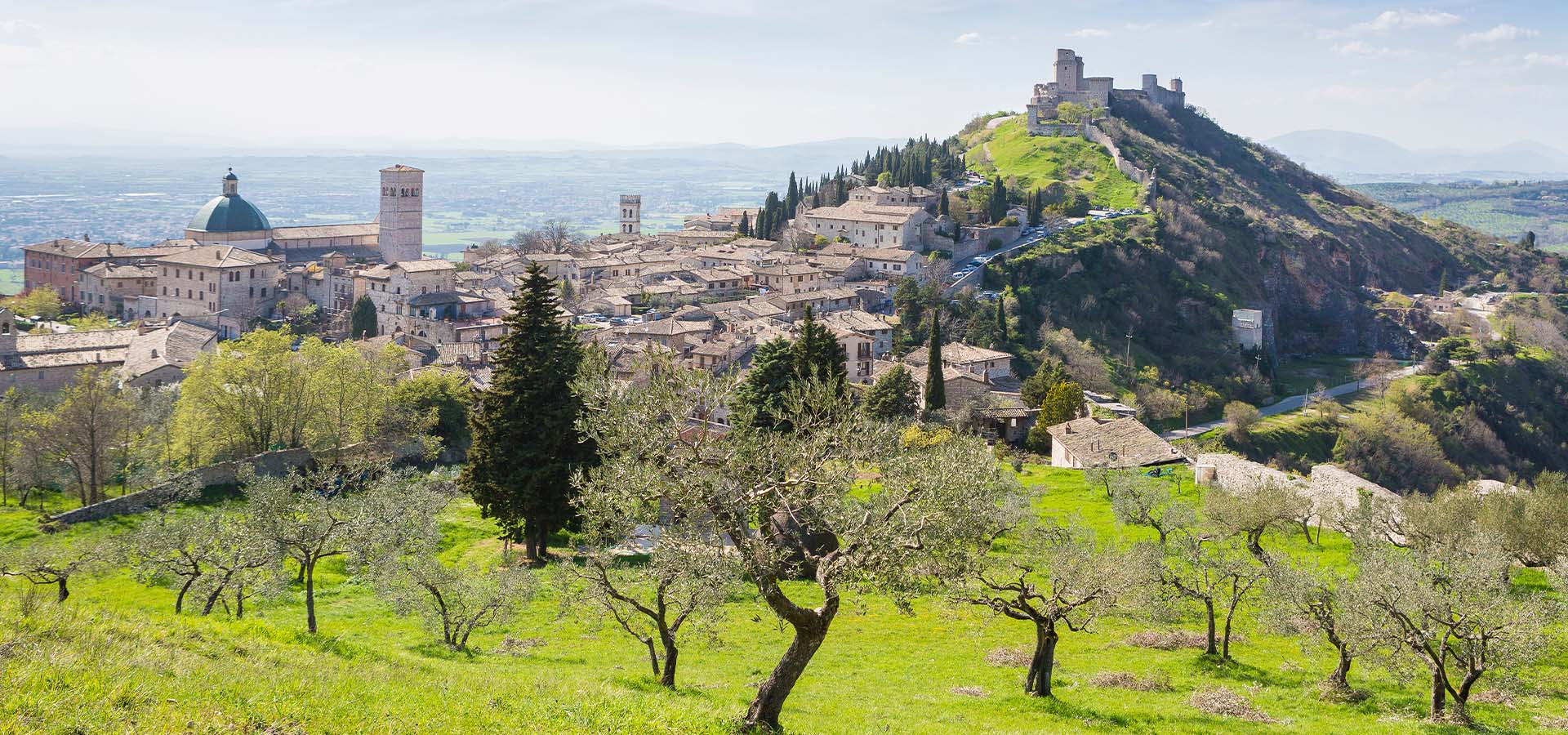
Ask most British walkers about central Italy and they'll tell you about Tuscany. Umbria, just to the south-east, sees a fraction of the visitors and rewards anyone who turns up with quieter trails, a more rustic kitchen, and a string of medieval hill towns that are still lived in rather than curated. This week-long walk follows fragments of St Francis' Way — the pilgrim route the saint himself wandered in the early 13th century — between Spoleto and Assisi, through olive groves, vineyards, oak woodland, and the broad Umbrian plain.
The route is graded 2 by Inntravel, meaning roughly 10-15km a day across varied terrain with regular ascents and descents. Not arduous, but honest walking — the sort that ends with a glass of Sagrantino and a plate of black truffle pasta rather than a recovery massage.
From Spoleto to Assisi on foot
You spend the first two nights in Spoleto, a working town with antique shops, Roman ruins, and the 14th-century Ponte delle Torri aqueduct striding across a wooded gorge. Day one is a 7km circuit out into the hills above the town and back. On day two, a short transfer takes you to the hamlet of Campello sul Clitunno; from there, 15.5km of green country brings you to Villa Santa Barbara near Montefalco — a hill-top town better known to wine drinkers than walkers, thanks to its Sagrantino vines.
Day three is the prettiest stretch: 14.5km via Bevagna, often cited among Italy's loveliest medieval towns, then a transfer up to Spello, where you stay two nights at the Hotel La Bastiglia. A loop around Spello takes in frescoed churches and the flower-strewn lanes the town is famous for in spring. The final days carry you on toward Assisi itself — fortified, basilica-crowned, and an unmistakable end-point after a week of quieter villages.
Hotels, transfers and timing
The booking is self-guided. Seven nights' bed and breakfast is included across four 4-star hotels — Hotel San Luca or Hotel Charleston in Spoleto, Villa Santa Barbara near Montefalco, La Bastiglia in Spello, and a fourth in Assisi — plus one dinner, route notes, GPS files, luggage transfers between hotels, and the two short walk transfers on days two and three. Flights are not included but can be arranged, and Inntravel will quote a train option from London if you'd rather avoid flying.
Prices start at £955pp. You can begin on any day of the week between 1 April and 31 October 2026. April and May are the strongest months for wildflowers; September gives you warmth without the August heat, when Umbrian afternoons regularly push 28-29°C.
It suits walkers who want the structure of a planned route but the freedom to potter — long lunches in Bevagna, an extra hour wandering Spello, a rest day in Spoleto if the calves complain. Pilgrim credentials optional.
The shape of the trip.
What's typically in the price, what isn't.
A general guide for walking holidays of this kind. Check the operator's booking page for the final inclusions on this specific trip.
Typically included
- ✓Hotel accommodation, double or twin en-suite rooms
- ✓Daily breakfast at each hotel
- ✓Luggage transfer between hotels on every walking day
- ✓Detailed route notes with maps and GPX files
- ✓24/7 support line in English for the duration of the trip
Typically not included
- ×Flights to and from the country of travel
- ×Travel insurance (strongly recommended)
- ×Lunches — typically a village picnic or café stop
- ×Some evening meals — depends on the specific itinerary
- ×Alcohol beyond any wine included with set dinners
- ×Optional room or transfer upgrades
Everything you might be wondering.
Q1How hard is it really?
The grading is set by the operator and usually reflects daily distance and total ascent. As a rule of thumb: if you can comfortably manage a 5-6 hour hillwalk at home on a weekend, a moderate-graded route will be fine. Read the day-by-day notes carefully, and train with a loaded pack in the months before.
Q2Can I do this solo?
Yes — self-guided walking holidays are well suited to solo travellers, and some operators waive the single-room supplement on certain departures. The route notes are written for confident independent walkers, and most operators run a 24/7 support line.
Q3Do I need to speak the language?
No. Hotels and restaurants on the route are used to English-speaking walkers. A phrasebook for menus and a few polite basics (hello, thank you, please) is all you really need. The operator's support line speaks English.
Q4Can I bring my dog?
Some routes are dog-friendly, others aren't — it depends on whether all the accommodation on the itinerary accepts dogs. Check with the operator before booking. If you do bring a dog, you'll need a pet passport, up-to-date rabies vaccination, and a lead for villages.
Q5What if it rains?
The route is walkable in rain — your luggage travels ahead regardless, so you'll always arrive somewhere dry. Some trails get slippery in wet weather and the operator's support line can arrange a taxi for any stage if conditions are properly bad.
Q6How do I get there from the UK?
Most routes are reachable by a short flight to a nearby airport, followed by train or transfer. The operator will usually point you at the nearest airport and can advise on rail connections. Some will book train tickets on your behalf for a small fee.
Q7Can I shorten or extend it?
Usually yes. Many operators offer shorter versions of a route as a standalone, and most will add extra nights at the start or end at their own rates. Ask when you enquire — they'll tailor it before booking.
Q8What about cancellation?
Typically a deposit (usually 20-25%) is taken at booking, with the balance due 8-10 weeks before departure. The operator's own terms apply — Mooch doesn't handle the booking or refunds. Travel insurance is strongly recommended.
Three walking holidays, side-by-side.
Other walking holidays on Mooch in the same spirit. All prices per person, from the operator.