Mooch
Free tool7 routesNo sign-up

Which Camino?

Seven major Camino de Santiago routes — distance, days, terrain, crowds, accommodation density, and our editorial pick-if / skip-if for each. Filter by what fits your trip and see the Mooch operators who run it.

Routes
7
Combined
3,035 km
Pilgrims (2024)
521k
§ Narrow it down
Days available
Crowds
Difficulty
Terrain
Showing all 7 routes.
Camino Francés — The classic — busy, social, full of villages
780 km · 28-35 days

Camino Francés

The classic — busy, social, full of villages

Difficulty
Moderate
Crowds
Crowded
Beds
Albergue every village

The route most people mean when they say 'the Camino'. From a Pyrenean foothold over the Roncesvalles pass and west across Pamplona, the wine country of La Rioja, the meseta plateau, and the green hills of Galicia. Albergues every few kilometres, a peer group every day, and enough infrastructure that you can walk it from a small backpack with no booking. Costs the price of admission: this is also the busiest of the lot, especially the final 100km from Sarria.

Pick if

You want the social, full-experience Camino with the most-trodden waymarks and the densest infrastructure.

Skip if

You're looking for solitude in July or August — start at Sarria and you'll be in a queue.

Best season
May, Jun, Sep, Oct
Pilgrims (2024)
263,000
Camino Portugués (Central) — Quieter, milder, vineyards and granite villages
620 km · 22-28 days

Camino Portugués (Central)

Quieter, milder, vineyards and granite villages

Difficulty
Easy-mod
Crowds
Mixed
Beds
Dense

The second-most-walked Camino, and the only one where you really notice another country before you cross. From Porto north, you walk past Romanesque churches in granite villages, vineyards rolling toward Galicia, and one of the gentlest climbs of any major route. Most people start at Porto rather than Lisbon, which gives you ~14 days at a comfortable pace, and reach Santiago via Tui or Valença.

Pick if

You want a quieter Camino with cleaner terrain than the Francés and you'd happily start with a few days in Porto.

Skip if

You want the high mountains — the Central is mostly rolling and gentle.

Best season
Apr, May, Sep, Oct
Pilgrims (2024)
100,000
Walk it with a Mooch operator
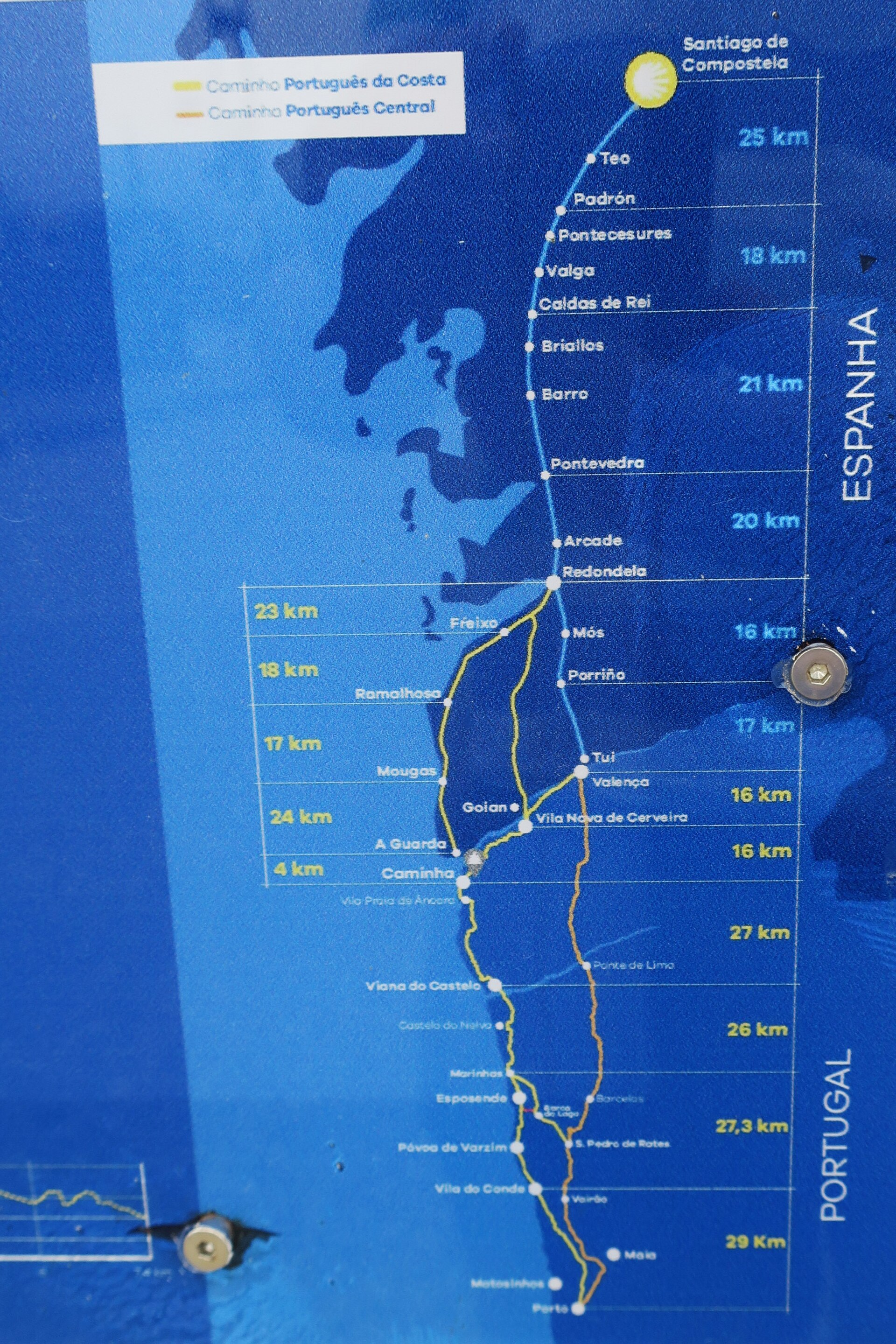
Camino Portugués (Coastal) — The Atlantic alternative — sand, cliffs, seafood
280 km · 12-14 days

Camino Portugués (Coastal)

The Atlantic alternative — sand, cliffs, seafood

Difficulty
Easy-mod
Crowds
Mixed
Beds
Dense

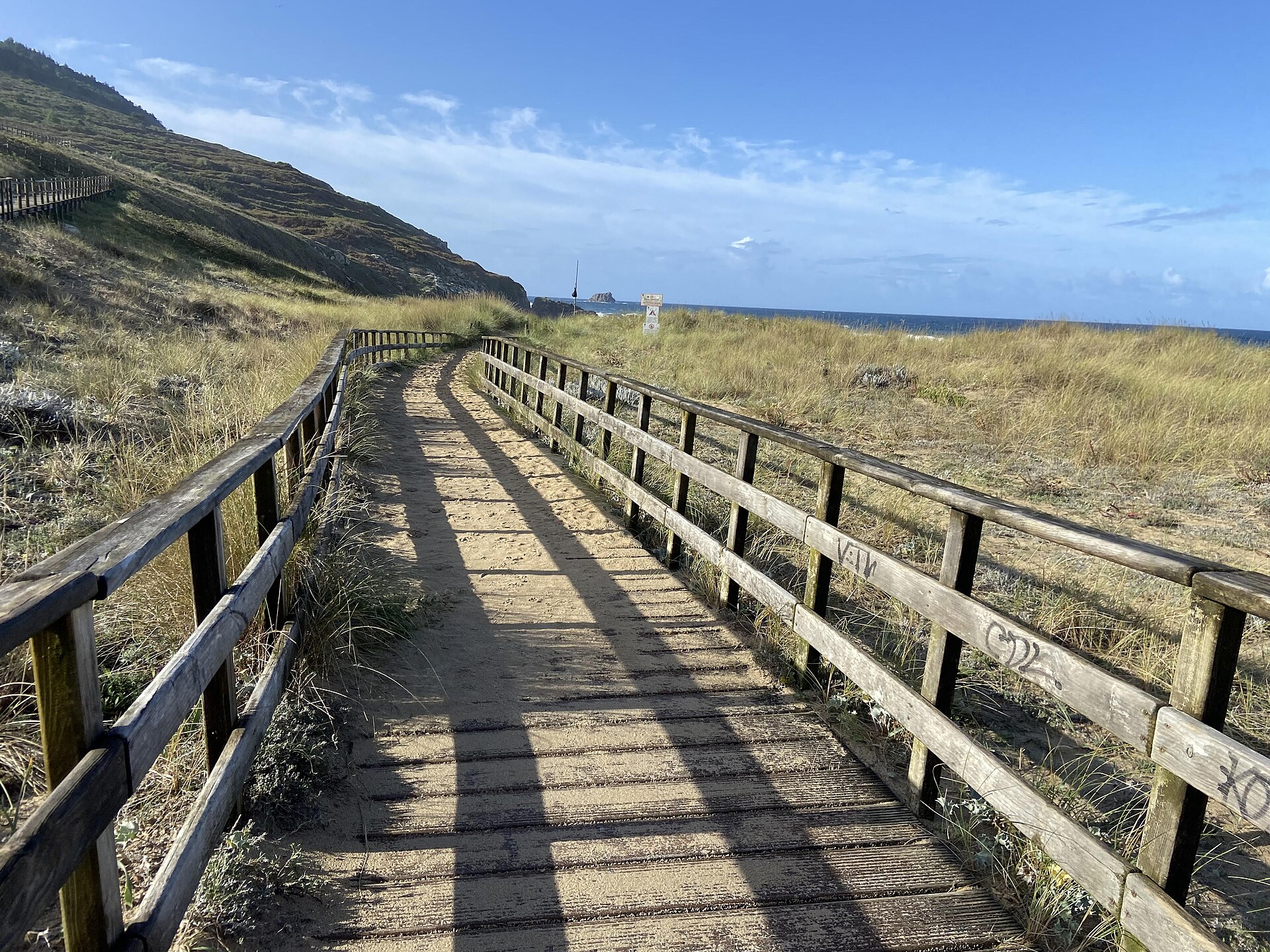
The Coastal is what you want if you have two weeks and a love of sea air. From Porto you follow the Atlantic north through fishing towns and pine-and-sand stretches before turning inland near Caminha to join the Central in Galicia. Less elevation than almost any other major Camino, the seafood is excellent, and the route shares its final 100km with the busy Sarria stretch — but the first ten days are quiet.

Pick if

You have two weeks and want to walk by the sea, with shorter daily distances and a lot of sardines.

Skip if

You want a route that earns the Compostela on its own terms — the Coastal merges with the Central for the final stretch.

Best season
Apr, May, Jun, Sep, Oct
Pilgrims (2024)
56,000
Camino del Norte — The wild, hard, beautiful one
825 km · 32-38 days

Camino del Norte

The wild, hard, beautiful one

Difficulty
Challenging
Crowds
Quiet
Beds
Mixed

The Atlantic coast version: harder, wetter, emptier, and many would say more beautiful. From Irún on the French border you follow the cliffs and beaches of the Basque country, Cantabria, and Asturias, with a serious daily climb most of the way. Albergues are spread further apart than on the Francés. You see San Sebastián, Bilbao's Guggenheim, the green of Picos de Europa to your south.

Pick if

You're a confident walker, you've done the Francés or want to skip the crowds, and you don't mind hills and rain in equal measure.

Skip if

It's your first Camino — the daily ascent and lower albergue density make this a tougher debut.

Best season
May, Jun, Sep
Pilgrims (2024)
22,000
Camino Primitivo — The original — short, mountainous, austere
320 km · 12-14 days

Camino Primitivo

The original — short, mountainous, austere

Difficulty
Mountainous
Crowds
Quiet
Beds
Mixed

Reputedly the oldest Camino, walked by King Alfonso II in the 9th century before the Francés existed. From Oviedo it climbs through the green mountains of Asturias, joins the Francés at Melide, and runs into Santiago. The terrain is the steepest of any route in this list. Two weeks. Few villages. Few pilgrims. A proper undertaking and many people's favourite.

Pick if

You want a route with serious altitude, real solitude, and a strong sense of medieval Spain — and you're a fit walker.

Skip if

You're walking with knees that don't love long descents, or you want to share the experience with a group.

Best season
Jun, Jul, Sep
Pilgrims (2024)
17,000
Camino Inglés — The shortest qualifying Camino — a long week
120 km · 5-7 days

Camino Inglés

The shortest qualifying Camino — a long week

Difficulty
Easy-mod
Crowds
Quiet
Beds
Mixed

Named for the medieval English and Irish pilgrims who landed at Ferrol or A Coruña and walked inland to Santiago. The Ferrol start hits the 100km threshold so a Compostela is on the table; the A Coruña start does not. Five or six days, mostly Galician forest with one decent rise, and you can do it as a long week off work without rearranging your life.

Pick if

You have a single week, want a Compostela, and don't want to start in a city you can't easily fly into.

Skip if

You want the bigger journey — five days won't quite do it.

Best season
Apr, May, Jun, Sep, Oct
Pilgrims (2024)
33,000
Walk it with a Mooch operator
Camino Finisterre — The route after Santiago — pilgrim epilogue
90 km · 3-5 days

Camino Finisterre

The route after Santiago — pilgrim epilogue

Difficulty
Easy-mod
Crowds
Quiet
Beds
Mixed

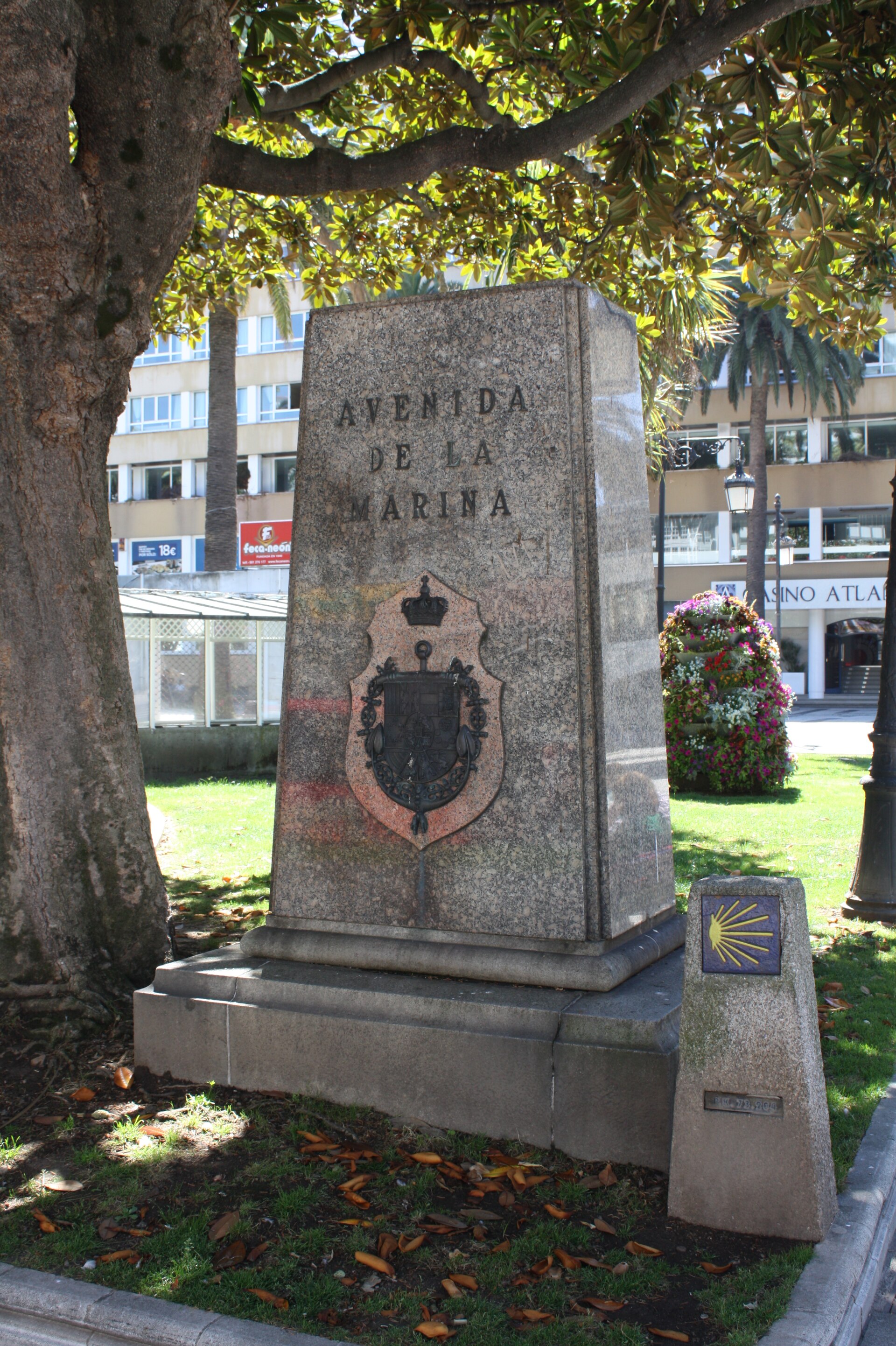
The only major Camino that begins in Santiago rather than ending there. Three to four days west to the Atlantic, walking from the cathedral square through Galician fishing country to the lighthouse at Cape Finisterre — what medieval pilgrims thought of as the end of the world. Doesn't qualify for the Compostela, so most people walk it as a coda after the Francés or Portugués.

Pick if

You've just walked into Santiago and the journey doesn't feel finished.

Skip if

You want a stand-alone Camino with the Compostela at the end of it.

Best season
May, Jun, Sep, Oct
Pilgrims (2024)
30,000
Walk it with a Mooch operator
§ All routes, side by side

The numbers, at a glance.

RouteDistanceDaysDifficultyCrowdsCompostelaPilgrims (2024)
Camino Francés780 km28-35ModerateCrowdedYes263,000
Camino Portugués (Central)620 km22-28Easy-modMixedYes100,000
Camino Portugués (Coastal)280 km12-14Easy-modMixedYes56,000
Camino del Norte825 km32-38ChallengingQuietYes22,000
Camino Primitivo320 km12-14MountainousQuietYes17,000
Camino Inglés120 km5-7Easy-modQuietYes33,000
Camino Finisterre90 km3-5Easy-modQuietNo30,000

Ready to walk it?

Browse Mooch's curated walking holidays — Camino-specific itineraries from operators we've vetted by hand.

Browse walking holidays →