Slovenia.
Walking holidays in Slovenia — self-guided and small-group weeks in the Julian Alps, around Lake Bled and Lake Bohinj, and along the Soča Valley. Picked by hand from operators we trust.
By kind of trip
Regions in Slovenia
About Slovenia
Why walk Slovenia
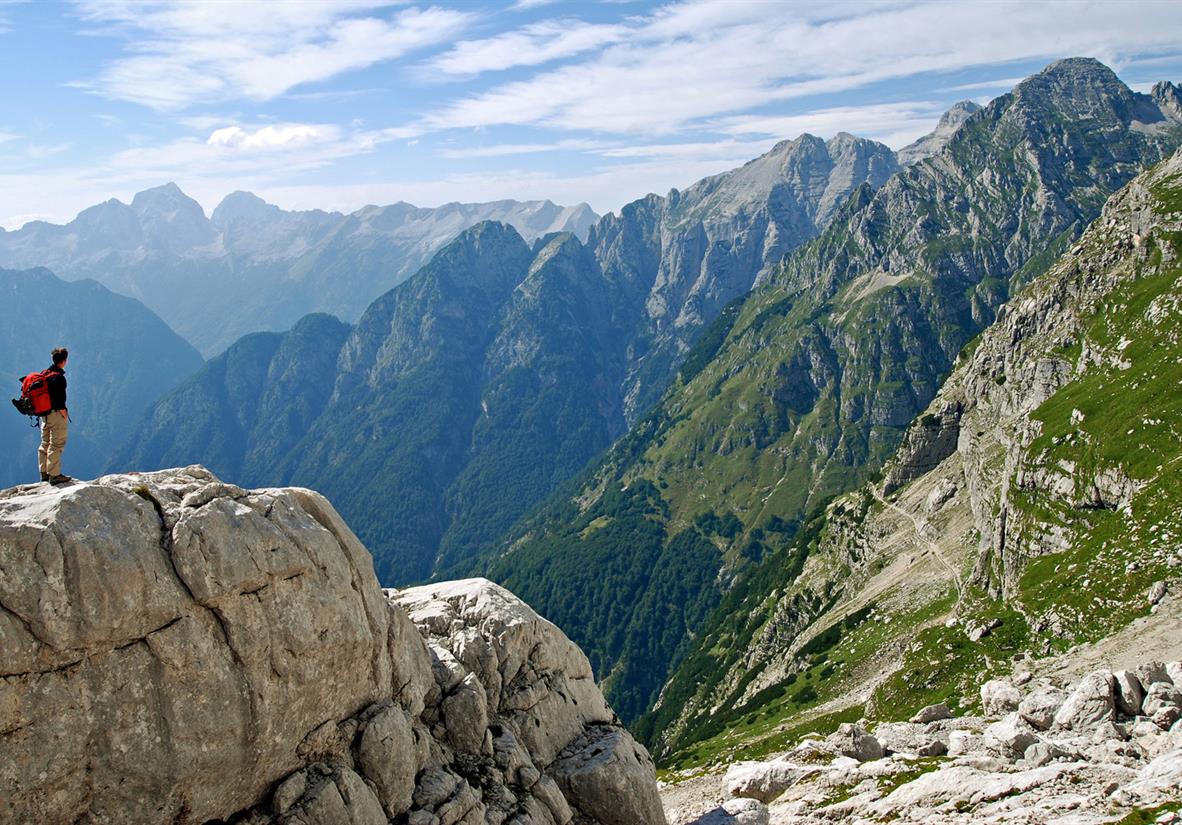
The Julian Alps are the tail of the Alpine chain — the last upthrust of limestone before the range disappears into the Pannonian basin. They sit at the quieter end of the Alps in every sense: fewer cable cars, fewer hut booking systems, fewer coachloads, and prices that look generous next to the Dolomites or the Bernese Oberland. Triglav National Park, which covers most of the range, is the only national park in the country and runs from the Italian and Austrian borders down to the Soča Valley.
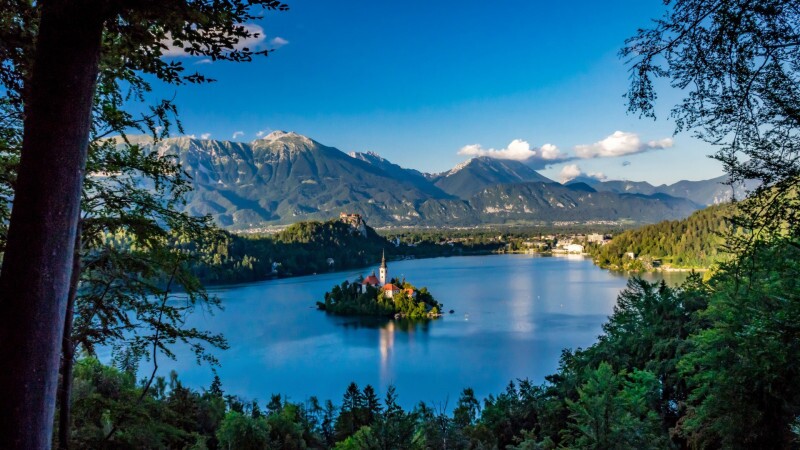
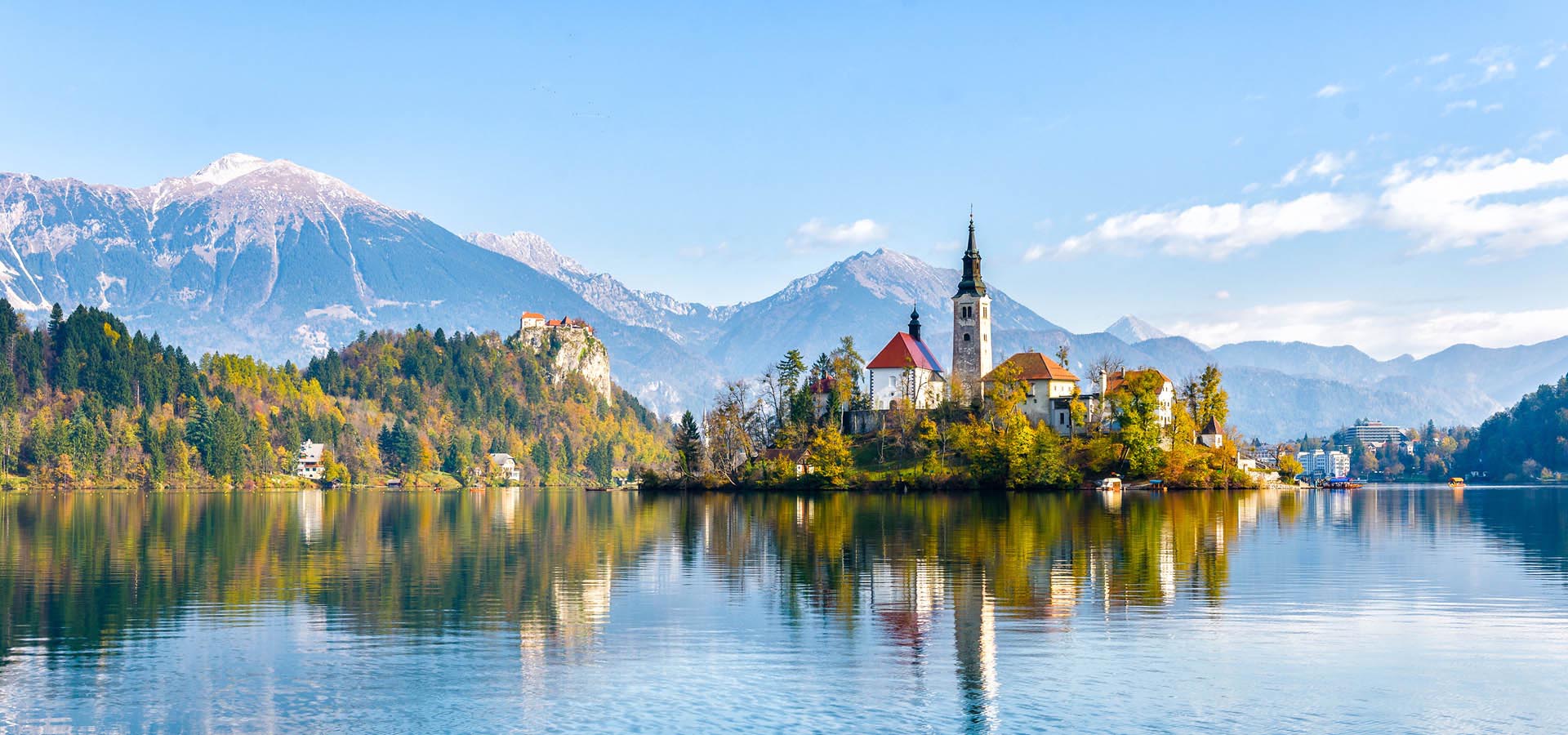
The walking is built around two lakes that look almost nothing alike. Lake Bled is the postcard one — a small island with a church on it, a clifftop castle, a perimeter path you can walk in under an hour. Lake Bohinj, ten miles to the west, is wilder: bigger, longer, ringed by the high peaks of the Triglav range, with a single quiet village at its eastern end and forest closing in around the rest. Most weeks here use one or both as a base.
What the walking is actually like
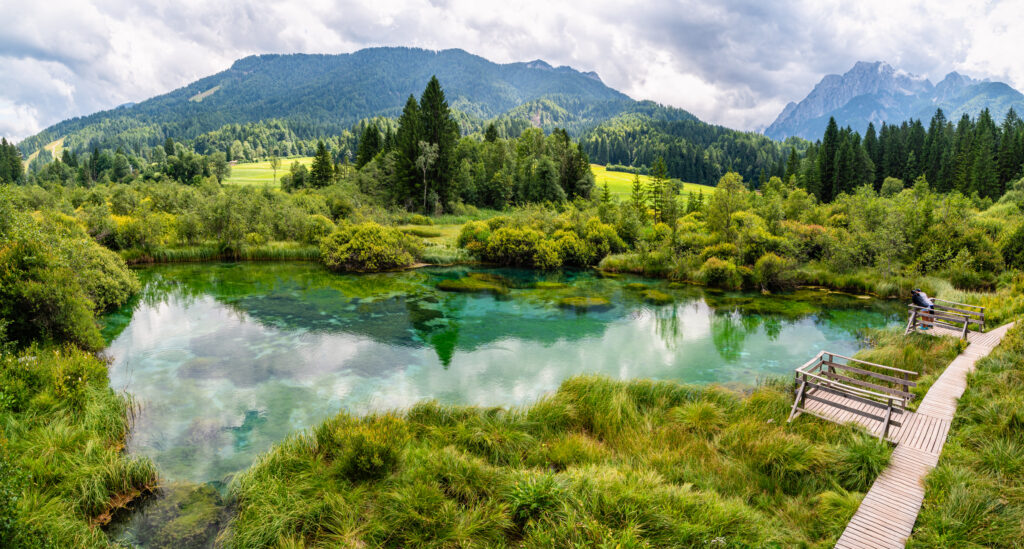
There's a wide span. At the gentle end, valley and lakeshore walks from a single base — Headwater and Inntravel both grade their main Slovenia week as 1+ or moderate, three to five hours a day on forest paths and farm tracks with the high peaks as backdrop rather than destination. The Bled-Bohinj corridor sits in this register. Day walks along the Sava Bohinjka, through Vintgar Gorge with its wooden boardwalks above the river, around the lake itself.
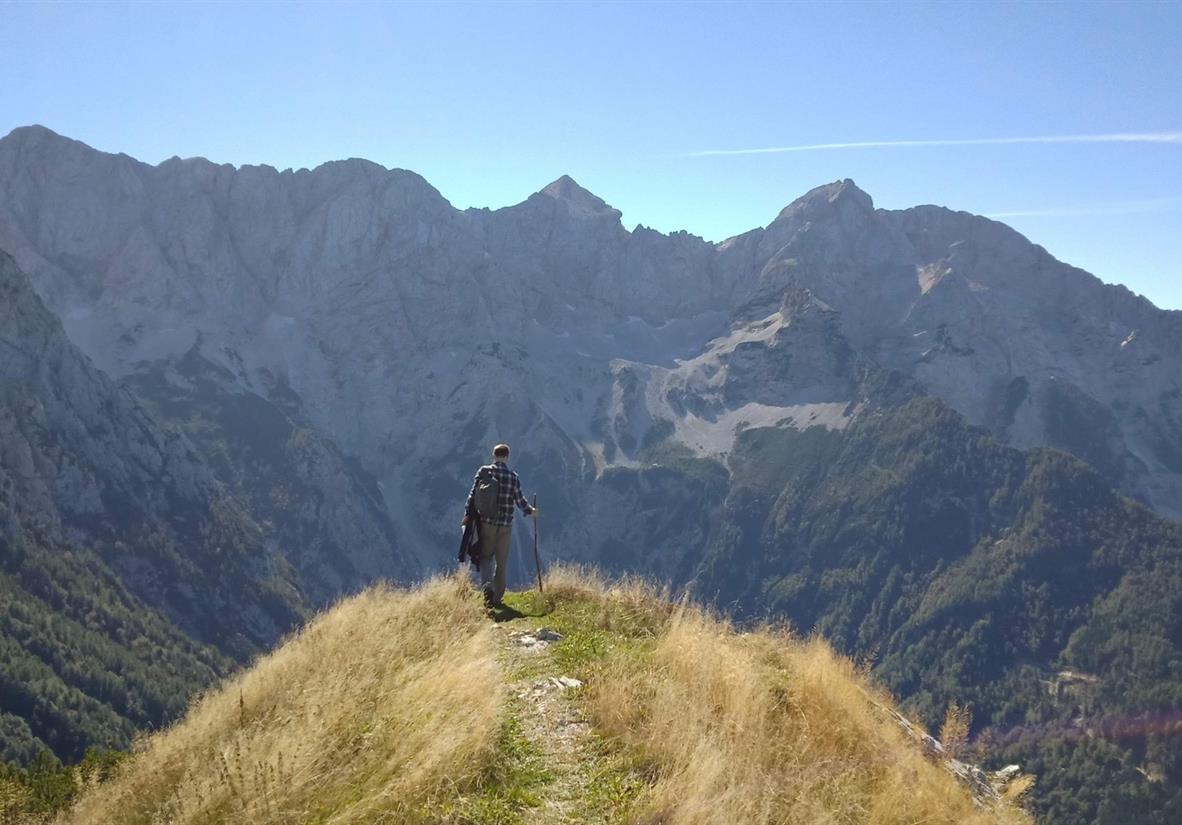
At the harder end, the Via Alpina — the long-distance trail that crosses the entire Alps — runs through here, and Macs Adventure's two Julian Alps weeks follow stages of it. Mountains & Lakes is moderate-to-strenuous (9-16km a day, ascents up to 1,025m), High Trails is properly strenuous and uses mountain huts above 1,500m rather than valley hotels. Exodus's small-group week sits between the two, with a leader, a minibus for trailhead transfers, and a base in Kranjska Gora close to the tri-border with Italy and Austria.
When to go, and where to base
Late June to mid-September is the window for high routes — earlier and the snow lingers on the passes, later and afternoon weather closes in. For the lakeshore and valley walks, May and October work too, with quieter trails and Bled in autumn light. July and August are peak tourist months for Lake Bled itself; the rest of the park stays manageable.
For a single-base week, Ribčev Laz or Bohinj Bistrica on the east shore of Lake Bohinj is the sensible choice — quieter than Bled, closer to the trailheads, with bus access to Bled if you want a day there. For point-to-point walking, the Inntravel itinerary works west-to-east from Kranjska Gora through the Sava Dolinka Valley to Bled and Bohinj. For high-trail weeks, you're moving between huts and won't see the same village twice.
Who tends to come, and why
Slovenia suits walkers who want Alpine scenery without the price tag or the crowds of the western Alps — the comparison most operators draw, fairly. It also works for mixed parties: the same week can pair a Lake Bohinj base with day walks of very different lengths, so one person can take the longer high route while another does the lakeshore loop. The food is good, the accommodation is unfussy, and the country runs on time. It's also the right call for a first proper Alpine walking week, where the gradient and altitude are manageable and the safety net is short. If you want true mountaineering, the Bernese Oberland or the Tour du Mont Blanc are better; if you want Alpine character at a sensible cost, Slovenia is hard to beat.