Andalucia
About this trip.
The white villages west of Ronda
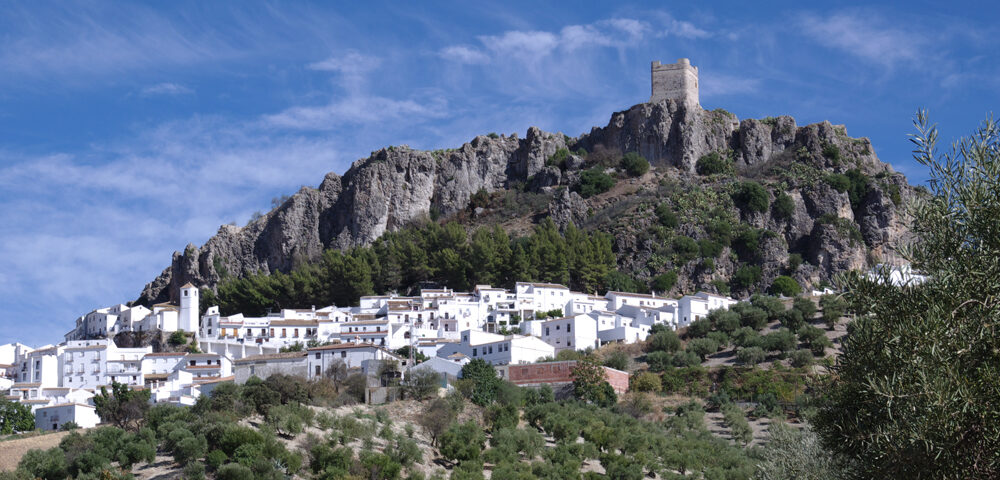
The pueblos blancos sit high on hillsides where they were originally built for defence, narrow streets of whitewashed houses dropping steeply down the slopes, most fronted with wrought iron rejas. This is a quieter corner of Andalucia — the still-unspoilt mountains west of Ronda, with olive orchards, river valleys and limestone ridges where griffon vultures circle most days. The route strings together a handful of these villages: Zahara, Grazalema, Benaocaz, Montejaque and Benaojan, ending in Ronda itself. You stay two nights in most of them (one in Montejaque/Benaojan), which gives the trip its rhythm — walk in the morning, arrive on foot in time for a long lunch, then wander the streets in the evening looking for somewhere to eat. Spanish suppers rarely start before 9pm, so there is no need to hurry.
Walking through the Grazalema National Park
Full days run to 10-16 km, three to five hours on the move, and much of the going is along farm tracks, so the walking is easy underfoot rather than rough. The terrain shifts noticeably between days. Past walkers single out the third day, Grazalema to Benaocaz, and the fourth, Grazalema to Montejaque, as particular highlights — both varied, both properly beautiful. Wildlife is part of the appeal: ibex on the upper slopes, eagles and griffon vultures overhead, and in spring wild poppies, Spanish lavender and even wild peonies on the hillsides. The walk finishes with a dramatic descent into Ronda, where the low route with its bridge view comes recommended. The seven-night version then gives you two nights in town and a free day to look around — the cliff-top streets, the bullring, and the country that saw some of the last battles of the Reconquista.
The practical side
On Foot Holidays run this as a self-guided walk, with the small comforts that make the difference: luggage moved from village to village, taxis arranged where needed, and a navigation app that keeps you on route and lets you know if you stray. There are four lengths to choose from — five, six, seven and eight nights — with the seven-night option (five walking days plus the Ronda sightseeing day) being the standard. Prices start at £830 for five nights, £910 for six, £985 for seven and £1225 for eight. Hotels are local rather than chain; the Los Tadeos team in particular gets repeat mentions in past walkers' feedback. The route suits walkers who want decent days on their feet without scrambling or technical ground, and who'd rather arrive in a village under their own steam than be bussed in. On Foot suggest pairing it with their Catalonia – El Priorat route if you want to extend the trip.
The shape of the trip.
What's typically in the price, what isn't.
A general guide for walking holidays of this kind. Check the operator's booking page for the final inclusions on this specific trip.
Typically included
- ✓Hotel accommodation, double or twin en-suite rooms
- ✓Daily breakfast at each hotel
- ✓Luggage transfer between hotels on every walking day
- ✓Detailed route notes with maps and GPX files
- ✓24/7 support line in English for the duration of the trip
Typically not included
- ×Flights to and from the country of travel
- ×Travel insurance (strongly recommended)
- ×Lunches — typically a village picnic or café stop
- ×Some evening meals — depends on the specific itinerary
- ×Alcohol beyond any wine included with set dinners
- ×Optional room or transfer upgrades
Everything you might be wondering.
Q1How hard is it really?
The grading is set by the operator and usually reflects daily distance and total ascent. As a rule of thumb: if you can comfortably manage a 5-6 hour hillwalk at home on a weekend, a moderate-graded route will be fine. Read the day-by-day notes carefully, and train with a loaded pack in the months before.
Q2Can I do this solo?
Yes — self-guided walking holidays are well suited to solo travellers, and some operators waive the single-room supplement on certain departures. The route notes are written for confident independent walkers, and most operators run a 24/7 support line.
Q3Do I need to speak the language?
No. Hotels and restaurants on the route are used to English-speaking walkers. A phrasebook for menus and a few polite basics (hello, thank you, please) is all you really need. The operator's support line speaks English.
Q4Can I bring my dog?
Some routes are dog-friendly, others aren't — it depends on whether all the accommodation on the itinerary accepts dogs. Check with the operator before booking. If you do bring a dog, you'll need a pet passport, up-to-date rabies vaccination, and a lead for villages.
Q5What if it rains?
The route is walkable in rain — your luggage travels ahead regardless, so you'll always arrive somewhere dry. Some trails get slippery in wet weather and the operator's support line can arrange a taxi for any stage if conditions are properly bad.
Q6How do I get there from the UK?
Most routes are reachable by a short flight to a nearby airport, followed by train or transfer. The operator will usually point you at the nearest airport and can advise on rail connections. Some will book train tickets on your behalf for a small fee.
Q7Can I shorten or extend it?
Usually yes. Many operators offer shorter versions of a route as a standalone, and most will add extra nights at the start or end at their own rates. Ask when you enquire — they'll tailor it before booking.
Q8What about cancellation?
Typically a deposit (usually 20-25%) is taken at booking, with the balance due 8-10 weeks before departure. The operator's own terms apply — Mooch doesn't handle the booking or refunds. Travel insurance is strongly recommended.
Three walking holidays, side-by-side.
Other walking holidays on Mooch in the same spirit. All prices per person, from the operator.