Via Francigena: Stage 1: Bourg St Pierre-St Martin
About this trip.
A mediaeval pilgrim route through the high Alps
The Via Francigena is one of the oldest documented pilgrim roads in Europe, followed since at least the tenth century by walkers heading between Canterbury and Rome. Stage 1 covers the section most people picture when they think of the route — the high Alpine crossing between Switzerland and Italy, starting at Bourg-St-Pierre in the Swiss canton of Valais and finishing at St Martin in the Aosta Valley. Over eight days, with seven nights on the trail, the walk takes you out of French-speaking Switzerland and into Italian-speaking Aosta, with the landscape and the cooking shifting accordingly.
From the Valais to the Aosta Valley on foot
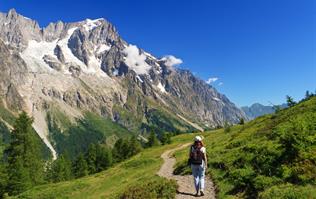
This is the part of the Francigena that still feels properly mountainous. Bourg-St-Pierre sits high in the Swiss Alps and the route climbs higher still before dropping down the Italian side — a traverse walked on foot for more than a thousand years. The rhythm is unhurried by design. You walk in the morning, you take the altitude and the weather as they come, and you arrive somewhere to stop, eat and sleep. On the descent, the language changes, the architecture softens, and lunch starts to involve polenta, Fontina and the sturdy reds of the Aosta Valley. It is a proper Alpine crossing rather than a gentle Sunday stroll, and the route rewards people who understand that.
Self-guided in practice
The holiday runs as a self-guided walk, which means you set off each morning on your own with route notes and move from one pre-booked hotel or guesthouse to the next. Your main luggage is transferred ahead for you, so you carry only a day pack. The appeal is the independence of walking alone, or with a partner or friend, without the grind of organising beds, bag transfers and logistics for every night. It suits a fit adult walker who wants a serious section of the Francigena without the structure of a group tour or a guide.
Bookings and price
The trip is eight days and seven nights, with prices starting from £940. That covers the walking arrangements along the route — accommodation, luggage transfers and route notes — but getting yourself to Switzerland at the start and home from Italy at the end is booked separately, as are meals beyond those specified and any rest days you want to build in at either end.
It is not a first multi-day walk. The Alpine terrain, the altitude and the distances set the tone, and it is better suited to people who already have a few long-distance routes behind them and want to take on the mountain stage of a historic pilgrim road at their own pace.
The shape of the trip.
What's typically in the price, what isn't.
A general guide for walking holidays of this kind. Check the operator's booking page for the final inclusions on this specific trip.
Typically included
- ✓Hotel accommodation, double or twin en-suite rooms
- ✓Daily breakfast at each hotel
- ✓Luggage transfer between hotels on every walking day
- ✓Detailed route notes with maps and GPX files
- ✓24/7 support line in English for the duration of the trip
Typically not included
- ×Flights to and from the country of travel
- ×Travel insurance (strongly recommended)
- ×Lunches — typically a village picnic or café stop
- ×Some evening meals — depends on the specific itinerary
- ×Alcohol beyond any wine included with set dinners
- ×Optional room or transfer upgrades
Everything you might be wondering.
Q1How hard is it really?
The grading is set by the operator and usually reflects daily distance and total ascent. As a rule of thumb: if you can comfortably manage a 5-6 hour hillwalk at home on a weekend, a moderate-graded route will be fine. Read the day-by-day notes carefully, and train with a loaded pack in the months before.
Q2Can I do this solo?
Yes — self-guided walking holidays are well suited to solo travellers, and some operators waive the single-room supplement on certain departures. The route notes are written for confident independent walkers, and most operators run a 24/7 support line.
Q3Do I need to speak the language?
No. Hotels and restaurants on the route are used to English-speaking walkers. A phrasebook for menus and a few polite basics (hello, thank you, please) is all you really need. The operator's support line speaks English.
Q4Can I bring my dog?
Some routes are dog-friendly, others aren't — it depends on whether all the accommodation on the itinerary accepts dogs. Check with the operator before booking. If you do bring a dog, you'll need a pet passport, up-to-date rabies vaccination, and a lead for villages.
Q5What if it rains?
The route is walkable in rain — your luggage travels ahead regardless, so you'll always arrive somewhere dry. Some trails get slippery in wet weather and the operator's support line can arrange a taxi for any stage if conditions are properly bad.
Q6How do I get there from the UK?
Most routes are reachable by a short flight to a nearby airport, followed by train or transfer. The operator will usually point you at the nearest airport and can advise on rail connections. Some will book train tickets on your behalf for a small fee.
Q7Can I shorten or extend it?
Usually yes. Many operators offer shorter versions of a route as a standalone, and most will add extra nights at the start or end at their own rates. Ask when you enquire — they'll tailor it before booking.
Q8What about cancellation?
Typically a deposit (usually 20-25%) is taken at booking, with the balance due 8-10 weeks before departure. The operator's own terms apply — Mooch doesn't handle the booking or refunds. Travel insurance is strongly recommended.
Three walking holidays, side-by-side.
Other walking holidays on Mooch in the same spirit. All prices per person, from the operator.