Porto & the Douro Valley
About this trip.
Where port wine actually comes from
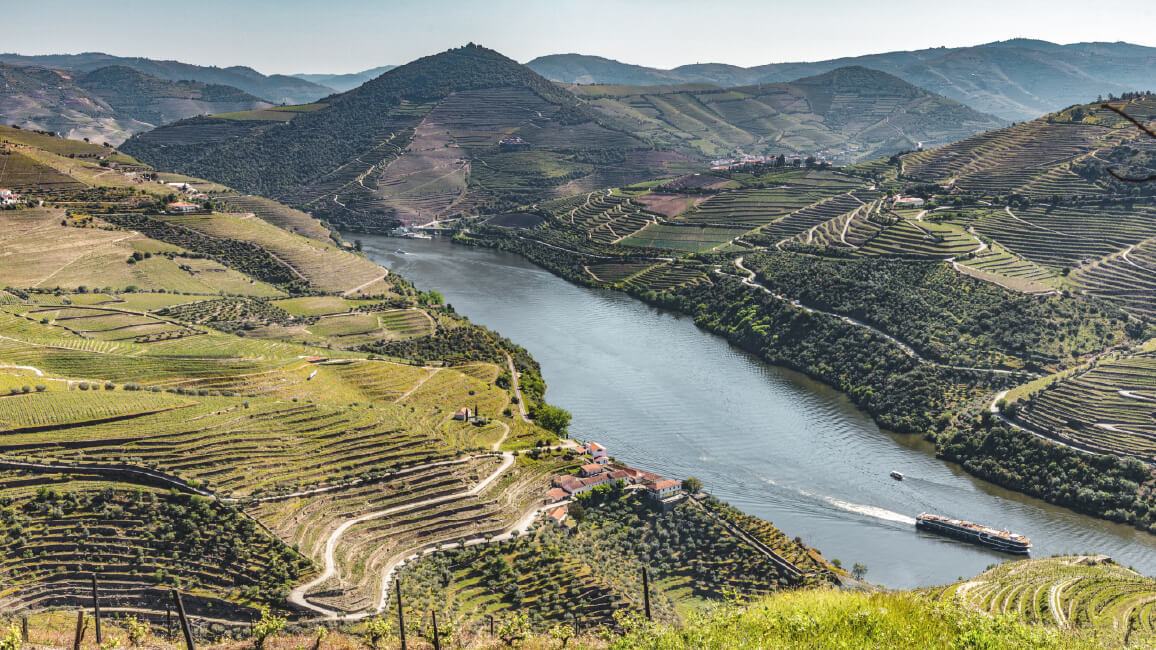
The Douro Valley sits inland from Porto, and the contrast between the two is the point of this trip. Porto is a working seaport with a UNESCO-listed riverbank, plenty of azulejo tilework and the port lodges of Vila Nova de Gaia across the water. The valley upriver is something else entirely: terraced hillsides striped with vines and olive trees, white-washed villages with red roofs, and the wide brown river itself, plied by the painted long boats that once carried the wine down to the coast. Calling it tranquil is accurate without being a stretch — the working life of the quintas is quiet, slow, and largely unchanged.
You spend a night in Porto first, then take the Linha do Douro east. It is one of the more scenic rail lines in Europe, hugging the river for the final stretch into Pinhão.
The walking and what to expect
Once upriver, the format is hotel-to-hotel, self-guided, with luggage transfers and route notes provided (GPS navigation included). Days run to roughly 10-15km on Inntravel's grade 2 — moderate, with regular ascents and descents through vineyards, riverbank paths and the ridges above them. Picnic lunches are arranged for three of the days; dinners are taken at the hotels on five evenings.
The signature stop is a guided visit and tasting at Quinta de la Rosa, a family-run vineyard set above the river. If you want a second port lesson, an optional tour and tasting at Graham's Wine Lodge in Vila Nova de Gaia can be pre-booked for your time in Porto. Late September brings the harvest, when workers sing as they pick and tread the grapes — worth knowing if you want the valley at its most animated, though early autumn can still be hot.
Accommodation and the practical side
You stay in five places over seven nights: the Hotel Pestana Vintage Porto for the first, then two country houses, a manor house and two four-star hotels in the valley. These are small, family-run places where someone will tell you about the wine and the weather in roughly equal measure. Transfers between Pinhão station and your accommodation are taken care of.
Bookings are flexible: any start day, with extra nights bookable at either end. The season runs 1 March to 30 June 2026 and 1 September to 15 December 2026 — winter is excluded, sensibly, as the valley is cold and wet from December onwards. Prices begin at £1,373 per person, excluding flights; Inntravel can arrange flights or rail travel from London. The carbon footprint, excluding travel, is calculated at 128kg CO₂e per person.
It suits walkers who like a clear plan handed to them but their days unsupervised, and who would rather end an afternoon at a vineyard table than at a hotel buffet.
The shape of the trip.
What's typically in the price, what isn't.
A general guide for walking holidays of this kind. Check the operator's booking page for the final inclusions on this specific trip.
Typically included
- ✓Hotel accommodation, double or twin en-suite rooms
- ✓Daily breakfast at each hotel
- ✓Luggage transfer between hotels on every walking day
- ✓Detailed route notes with maps and GPX files
- ✓24/7 support line in English for the duration of the trip
Typically not included
- ×Flights to and from the country of travel
- ×Travel insurance (strongly recommended)
- ×Lunches — typically a village picnic or café stop
- ×Some evening meals — depends on the specific itinerary
- ×Alcohol beyond any wine included with set dinners
- ×Optional room or transfer upgrades
Everything you might be wondering.
Q1How hard is it really?
The grading is set by the operator and usually reflects daily distance and total ascent. As a rule of thumb: if you can comfortably manage a 5-6 hour hillwalk at home on a weekend, a moderate-graded route will be fine. Read the day-by-day notes carefully, and train with a loaded pack in the months before.
Q2Can I do this solo?
Yes — self-guided walking holidays are well suited to solo travellers, and some operators waive the single-room supplement on certain departures. The route notes are written for confident independent walkers, and most operators run a 24/7 support line.
Q3Do I need to speak the language?
No. Hotels and restaurants on the route are used to English-speaking walkers. A phrasebook for menus and a few polite basics (hello, thank you, please) is all you really need. The operator's support line speaks English.
Q4Can I bring my dog?
Some routes are dog-friendly, others aren't — it depends on whether all the accommodation on the itinerary accepts dogs. Check with the operator before booking. If you do bring a dog, you'll need a pet passport, up-to-date rabies vaccination, and a lead for villages.
Q5What if it rains?
The route is walkable in rain — your luggage travels ahead regardless, so you'll always arrive somewhere dry. Some trails get slippery in wet weather and the operator's support line can arrange a taxi for any stage if conditions are properly bad.
Q6How do I get there from the UK?
Most routes are reachable by a short flight to a nearby airport, followed by train or transfer. The operator will usually point you at the nearest airport and can advise on rail connections. Some will book train tickets on your behalf for a small fee.
Q7Can I shorten or extend it?
Usually yes. Many operators offer shorter versions of a route as a standalone, and most will add extra nights at the start or end at their own rates. Ask when you enquire — they'll tailor it before booking.
Q8What about cancellation?
Typically a deposit (usually 20-25%) is taken at booking, with the balance due 8-10 weeks before departure. The operator's own terms apply — Mooch doesn't handle the booking or refunds. Travel insurance is strongly recommended.
Three walking holidays, side-by-side.
Other walking holidays on Mooch in the same spirit. All prices per person, from the operator.