Cornwall’s Forgotten Corner
If you've never been past Penzance, this is the Cornwall walk to book — Inntravel's Lizard-and-South-West-Coast itinerary stays rural and routes you through the bits the day-trippers skip.
About this trip.
Southeast Cornwall away from the crowds
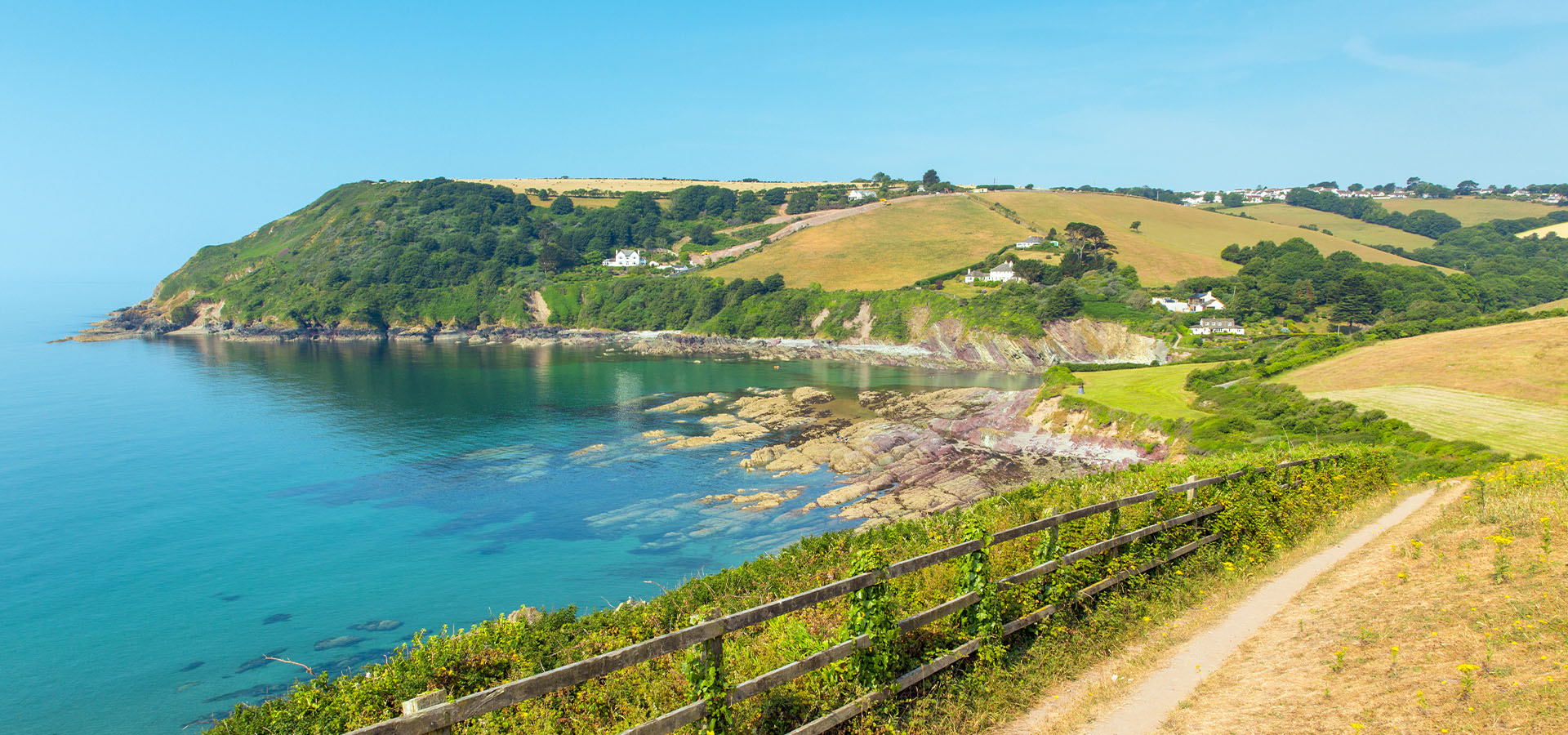
The stretch of coast between Looe and Plymouth Sound is the corner of Cornwall the postcards tend to skip — quieter than Padstow, less polished than St Ives, but cut from the same cliffs and pastel-cottage harbours. The fishing villages here still feel like working places: Cawsand turned in towards its own narrow streets, Portwrinkle a row of slate roofs above a tidal beach, Looe still a serious harbour with boats coming and going.
The history runs underneath all of it. The route takes in WWII coastal defences, the Royal William Yard at the eastern end, and the Mayflower Steps in Plymouth. Mount Edgcumbe, ancestral home of the Earls of Mount Edgcumbe, sits on the Rame Peninsula opposite Plymouth, and its country park rolls down to the water in formal gardens and grazed parkland.
Six days, 32 miles
You begin in Looe with two nights at the Trehaven Manor Hotel, so day one is a 5.5-mile loop through Talland Bay to Polperro and back along the Coast Path past Looe Island nature reserve. Day two heads east to Crafthole — either 4.5 miles using a bus to Seaton, or the full 7.5 miles via Plaidy Beach, Millendreath and the Bodigga Cliff National Trust reserve, which is the wilder, harder option. From Crafthole the route works through Portwrinkle, the long sweep of Whitsand Bay, Cawsand, and across the Mount Edgcumbe estate. The walk finishes at Plymouth's Royal William Yard.
It's a Grade 1-2 walk in Inntravel's terms — well-maintained coastal paths and country lanes, with occasional climbs rather than sustained ones. Anyone reasonably fit and used to a day on the coast path will find it manageable.
The practical side
Six nights across one 4-star hotel, one B&B, one inn and one guesthouse, chosen for character rather than chain consistency. Breakfast each morning; lunches and dinners are left to you, which is an advantage given the seafood pubs in Looe and Cawsand and the restaurants at Royal William Yard. Luggage is moved between the properties, and you walk with route notes and GPS navigation rather than a guide.
You can start any day between 1 March and 31 October 2026, and prices begin from £1,000 per person. Both the first and last hotels are within walking distance of a railway station, which makes this one of the easier UK walking holidays to do without a car. The estimated carbon footprint is 62kg CO₂e per person, excluding travel to and from the start.
It suits walkers who want a full week on the coast path without the queues at the well-known Cornish honeypots, and who'd rather end the day in a fishing-village pub than a resort hotel.
The shape of the trip.
What's typically in the price, what isn't.
A general guide for walking holidays of this kind. Check the operator's booking page for the final inclusions on this specific trip.
Typically included
- ✓Hotel accommodation, double or twin en-suite rooms
- ✓Daily breakfast at each hotel
- ✓Luggage transfer between hotels on every walking day
- ✓Detailed route notes with maps and GPX files
- ✓24/7 support line in English for the duration of the trip
Typically not included
- ×Flights to and from the country of travel
- ×Travel insurance (strongly recommended)
- ×Lunches — typically a village picnic or café stop
- ×Some evening meals — depends on the specific itinerary
- ×Alcohol beyond any wine included with set dinners
- ×Optional room or transfer upgrades
Everything you might be wondering.
Q1How hard is it really?
The grading is set by the operator and usually reflects daily distance and total ascent. As a rule of thumb: if you can comfortably manage a 5-6 hour hillwalk at home on a weekend, a moderate-graded route will be fine. Read the day-by-day notes carefully, and train with a loaded pack in the months before.
Q2Can I do this solo?
Yes — self-guided walking holidays are well suited to solo travellers, and some operators waive the single-room supplement on certain departures. The route notes are written for confident independent walkers, and most operators run a 24/7 support line.
Q3Do I need to speak the language?
No. Hotels and restaurants on the route are used to English-speaking walkers. A phrasebook for menus and a few polite basics (hello, thank you, please) is all you really need. The operator's support line speaks English.
Q4Can I bring my dog?
Some routes are dog-friendly, others aren't — it depends on whether all the accommodation on the itinerary accepts dogs. Check with the operator before booking. If you do bring a dog, you'll need a pet passport, up-to-date rabies vaccination, and a lead for villages.
Q5What if it rains?
The route is walkable in rain — your luggage travels ahead regardless, so you'll always arrive somewhere dry. Some trails get slippery in wet weather and the operator's support line can arrange a taxi for any stage if conditions are properly bad.
Q6How do I get there from the UK?
Most routes are reachable by a short flight to a nearby airport, followed by train or transfer. The operator will usually point you at the nearest airport and can advise on rail connections. Some will book train tickets on your behalf for a small fee.
Q7Can I shorten or extend it?
Usually yes. Many operators offer shorter versions of a route as a standalone, and most will add extra nights at the start or end at their own rates. Ask when you enquire — they'll tailor it before booking.
Q8What about cancellation?
Typically a deposit (usually 20-25%) is taken at booking, with the balance due 8-10 weeks before departure. The operator's own terms apply — Mooch doesn't handle the booking or refunds. Travel insurance is strongly recommended.
Three walking holidays, side-by-side.
Other walking holidays on Mooch in the same spirit. All prices per person, from the operator.