Coast to Coast: St Bees to Robin Hood's Bay
About this trip.
Comparing firms? Every Coast to Coast holiday on Mooch, side by side.
Before you book: Walking holidays vs cycling holidays — when each one is the right answer · Which Camino route is right for you — an honest opinion on each of the seven
From St Bees to Robin Hood's Bay
This walk begins beside the Irish Sea at St Bees and finishes at the North Sea in Robin Hood's Bay, crossing northern England on foot in between. Few walks give such a clear sense of progress. Each landscape takes you further from one coast and closer to the other.
Alfred Wainwright devised the Coast to Coast in 1973, linking existing paths across northern England into one continuous crossing. In March 2026 it became a National Trail. That brought improved waymarking and long-term protection, and the route keeps the character of Wainwright's original.
Mountains first, then dales and moors
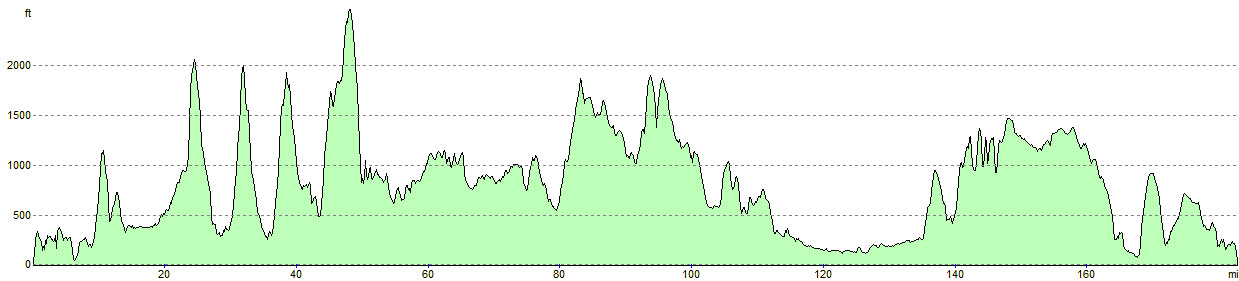
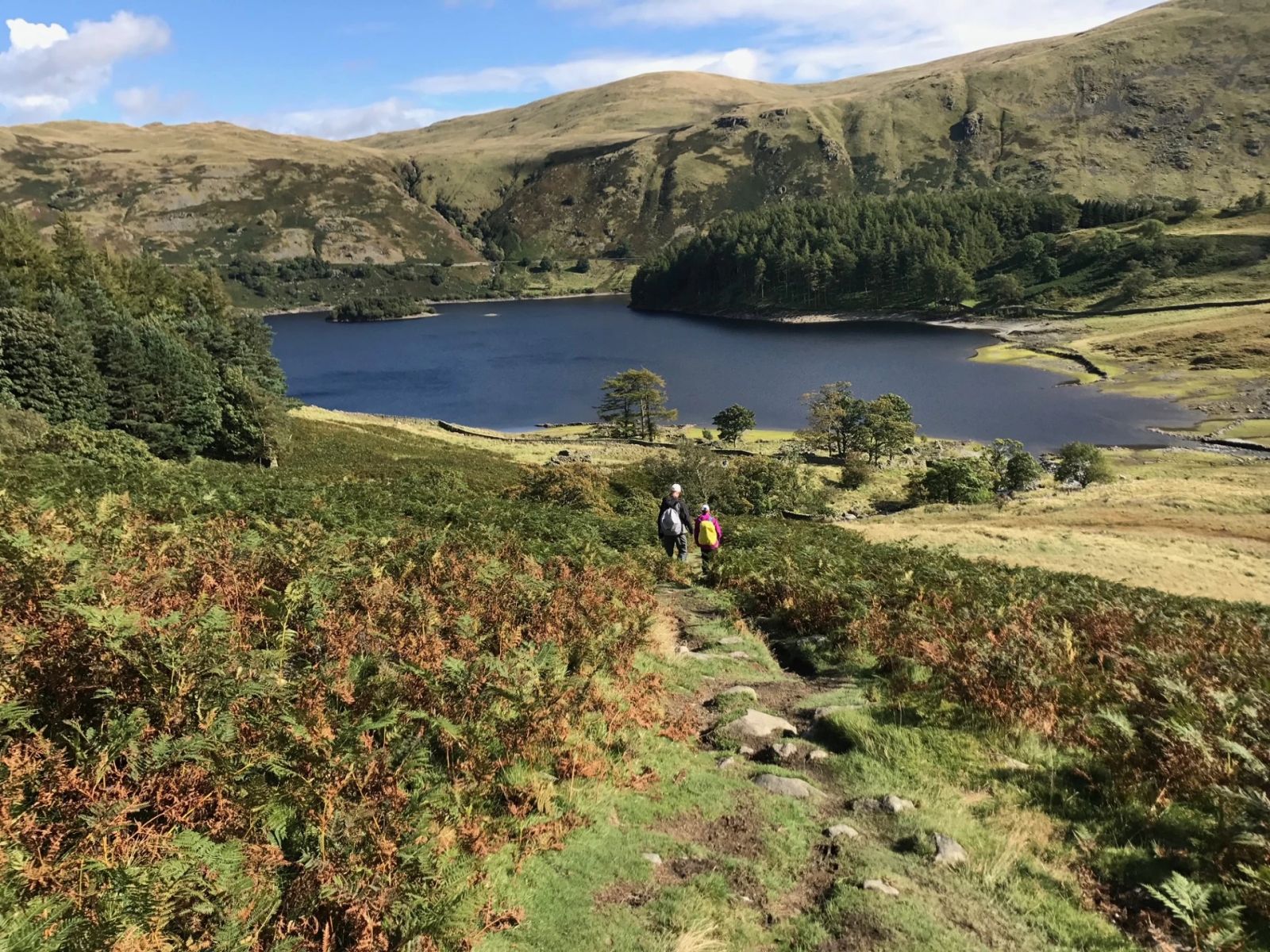
The tougher walking comes early. Steep climbs, rocky ground and long descents take you through the Lake District, crossing Ennerdale, Borrowdale, Grasmere and Patterdale on mountain paths. The route also reaches the Pennine watershed beneath its line of stone cairns. Beyond Kirkby Stephen it opens into Swaledale, farmland and long stretches of moorland. Between Keld and Reeth you can choose high moorland or gentler riverside walking. Later you climb steeply onto the North York Moors above the Vale of Mowbray and cross the Cleveland Hills, where poor weather can make the exposed ground harder going.
The walking stages are St Bees to Ennerdale Bridge (14.5 miles), Ennerdale Bridge to Rosthwaite (14.5 miles), Rosthwaite to Patterdale (17.5 miles), Patterdale to Shap (16 miles), Shap to Kirkby Stephen (20.5 miles), Kirkby Stephen to Keld (13 miles), Keld to Reeth (11 miles), Reeth to Richmond (10.5 miles), Richmond to Ingleby Cross (22.5 miles), Ingleby Cross to Clay Bank Top (12 miles), Clay Bank Top to Glaisdale (18 miles) and Glaisdale to Robin Hood's Bay (20 miles).
Grasmere and Richmond along the way
If you add time in Grasmere, Dove Cottage gives useful context to the Lake District you have just crossed. William Wordsworth lived there from 1799, and the museum next door holds manuscripts, journals and personal objects connected with William and Dorothy Wordsworth. Check current opening information and tickets with Wordsworth Grasmere before you visit.
Richmond Castle stands above the River Swale, close to the route through Richmond. The Norman castle dates from the 11th century. Its exhibition also tells the later story of the conscientious objectors held there during the First World War. It's a good reason to allow extra time in Richmond before heading east.
What the holiday includes
You stay in good standard accommodation, a mix of guesthouses, farmhouses, local inns and B&Bs, all with en-suite or private facilities. Breakfast is included each morning. Your luggage is moved between overnight stops, and any personal transfers shown on the itinerary are covered. The route planning is done for you. You also get a walk pack with a trail guide and mapping, your itinerary, directions to your accommodation, route notes, information on lunch and dinner, restaurant recommendations and holiday planning details.
Help is on call seven days a week while you're walking. If you'd like different daily mileages or a different number of nights, the itinerary can be adjusted to suit.
The shape of the trip.
Everything you might be wondering.
Q1How hard is it really?
The grading is set by the operator and usually reflects daily distance and total ascent. As a rule of thumb: if you can comfortably manage a 5-6 hour hillwalk at home on a weekend, a moderate-graded route will be fine. Read the day-by-day notes carefully, and train with a loaded pack in the months before.
Q2Can I do this solo?
Yes — self-guided walking holidays are well suited to solo travellers, and some operators waive the single-room supplement on certain departures. The route notes are written for confident independent walkers, and most operators run a 24/7 support line.
Q3Do I need to speak the language?
No. Hotels and restaurants on the route are used to English-speaking walkers. A phrasebook for menus and a few polite basics (hello, thank you, please) is all you really need. The operator's support line speaks English.
Q4Can I bring my dog?
Some routes are dog-friendly, others aren't — it depends on whether all the accommodation on the itinerary accepts dogs. Check with the operator before booking. If you do bring a dog, you'll need a pet passport, up-to-date rabies vaccination, and a lead for villages.
Q5What if it rains?
The route is walkable in rain — your luggage travels ahead regardless, so you'll always arrive somewhere dry. Some trails get slippery in wet weather and the operator's support line can arrange a taxi for any stage if conditions are properly bad.
Q6How do I get there from the UK?
Most routes are reachable by a short flight to a nearby airport, followed by train or transfer. The operator will usually point you at the nearest airport and can advise on rail connections. Some will book train tickets on your behalf for a small fee.
Q7Can I shorten or extend it?
Usually yes. Many operators offer shorter versions of a route as a standalone, and most will add extra nights at the start or end at their own rates. Ask when you enquire — they'll tailor it before booking.
Q8What about cancellation?
Typically a deposit (usually 20-25%) is taken at booking, with the balance due 8-10 weeks before departure. The operator's own terms apply — Mooch doesn't handle the booking or refunds. Travel insurance is strongly recommended.
Three walking holidays, side-by-side.
The two closest walking holidays on Mooch, both on the Coast to Coast. Prices are the operators' own, per person.