About this trip.
Comparing firms? Every Coast to Coast holiday on Mooch, side by side.
Before you book: Walking holidays vs cycling holidays — when each one is the right answer · Which Camino route is right for you — an honest opinion on each of the seven
St Bees to Robin Hood's Bay in ten days
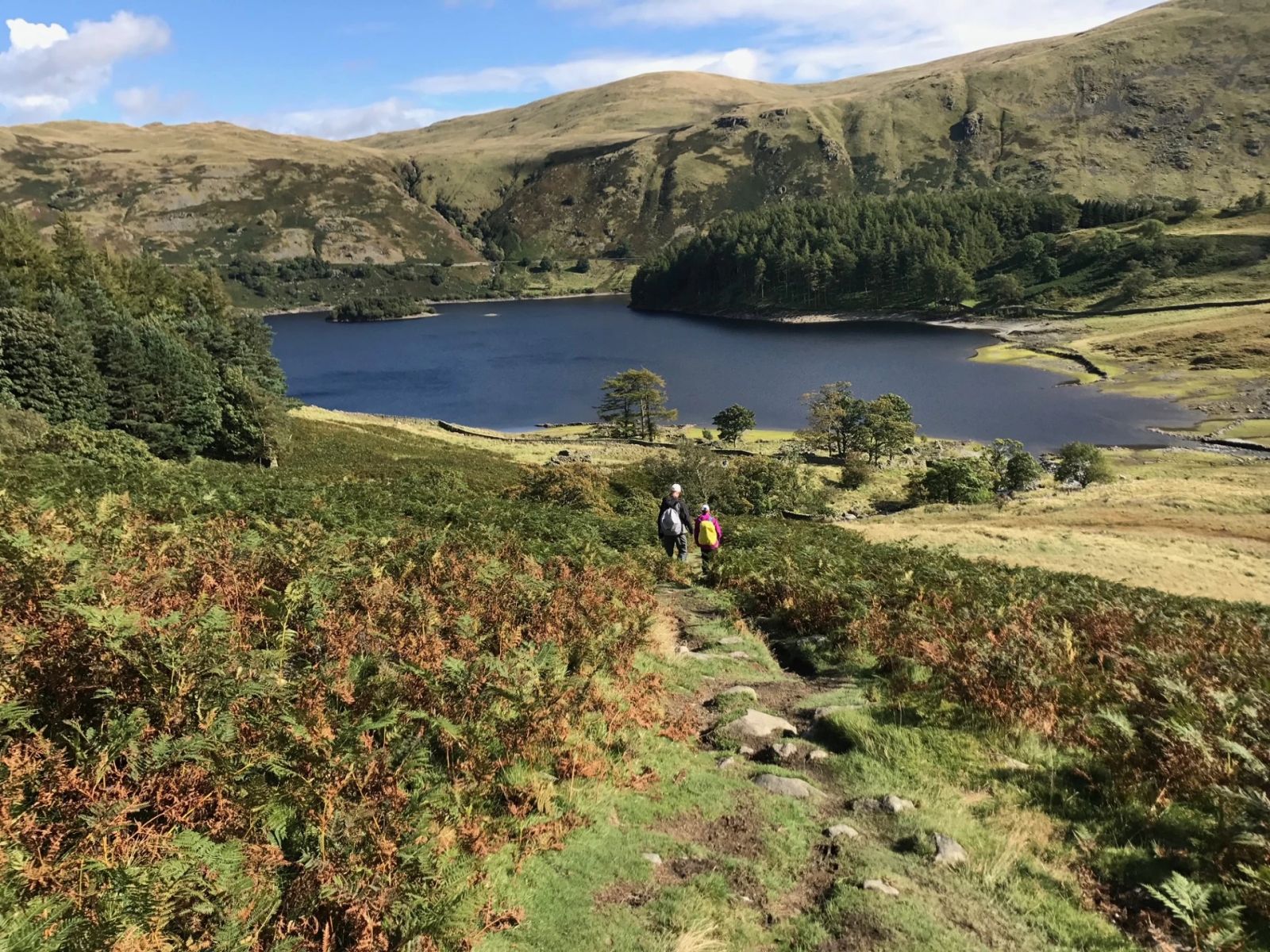
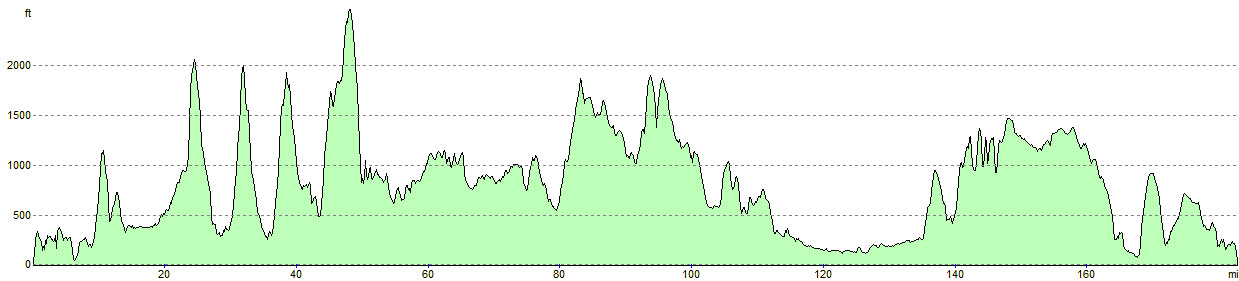
This version of the Coast to Coast covers about 183 miles of northern England in 10 walking days and 11 nights. It starts at St Bees on the Irish Sea and finishes at Robin Hood's Bay on the North Sea. On the way it crosses three National Parks: the Lake District, the Yorkshire Dales and the North York Moors. The daily stages are fairly long. The first day runs 14.5 miles from St Bees to Ennerdale Bridge, then the route goes on through Rosthwaite in Borrowdale, Patterdale and Shap. The middle days are the longest, with 20.5 miles to Kirkby Stephen, 21.8 miles to Reeth and 23.8 miles to Danby Wiske. After that come Clay Bank Top and Glaisdale, and the last day is an 18.9-mile walk to the coast at Robin Hood's Bay.
The route is usually walked from west to east, so the prevailing wind and weather are behind you, and most guidebooks describe it in that direction. You'll pass ancient castles, medieval abbeys and picturesque villages, and the scenery and terrain keep changing.
What the walking involves
The Coast to Coast isn't an official National Trail and mostly isn't waymarked, although it's fairly easy to follow through the National Parks. The valleys in the middle section and the farmland in the east are straightforward walking. The hills of the Lake District and the Yorkshire Dales are high, though, and some gradients are steep. You need to be physically fit and properly equipped. Your boots should be well broken in, and you should be able to carry a rucksack with waterproofs and whatever else you need for the day. Unless you're an experienced long-distance walker, it's best to bring a companion. On many sections there's nowhere to buy food or drink once you've set off, so carry enough of both, along with warm clothing and wet-weather gear. Thousands of people walk the route each year. When walkers don't finish, it's usually because they underestimated the fitness and stamina it takes.
For navigation, the route needs OS Explorer maps OL4, OL5, OL19, OL26, OL27 and OL30, plus 303 and 304. Cicerone publishes a "Coast to Coast" guidebook. If you use a phone app, pick one that supports Ordnance Survey 1:25k or 1:50k maps and works offline. The two main providers are Ordnance Survey and Memory Map.
What's included and how to book
Brigantes chooses each night's accommodation from B&Bs, guest houses, inns and small hotels, with en-suite rooms where available. Breakfast is included every day, and so are booking fees. Brigantes' own local drivers move your bags each day, so you walk with just a daypack and your dry clothes are waiting at the next stop.
You can add rest days to the package. If you want a different itinerary, send Brigantes your proposed plan and the number of walkers for a quote. Solo walkers should send their proposed dates and itinerary to get a price. Package prices are based on starting the walk after 1 April and finishing before 30 September.
The shape of the trip.
Everything you might be wondering.
Q1How hard is it really?
The grading is set by the operator and usually reflects daily distance and total ascent. As a rule of thumb: if you can comfortably manage a 5-6 hour hillwalk at home on a weekend, a moderate-graded route will be fine. Read the day-by-day notes carefully, and train with a loaded pack in the months before.
Q2Can I do this solo?
Yes — self-guided walking holidays are well suited to solo travellers, and some operators waive the single-room supplement on certain departures. The route notes are written for confident independent walkers, and most operators run a 24/7 support line.
Q3Do I need to speak the language?
No. Hotels and restaurants on the route are used to English-speaking walkers. A phrasebook for menus and a few polite basics (hello, thank you, please) is all you really need. The operator's support line speaks English.
Q4Can I bring my dog?
Some routes are dog-friendly, others aren't — it depends on whether all the accommodation on the itinerary accepts dogs. Check with the operator before booking. If you do bring a dog, you'll need a pet passport, up-to-date rabies vaccination, and a lead for villages.
Q5What if it rains?
The route is walkable in rain — your luggage travels ahead regardless, so you'll always arrive somewhere dry. Some trails get slippery in wet weather and the operator's support line can arrange a taxi for any stage if conditions are properly bad.
Q6How do I get there from the UK?
Most routes are reachable by a short flight to a nearby airport, followed by train or transfer. The operator will usually point you at the nearest airport and can advise on rail connections. Some will book train tickets on your behalf for a small fee.
Q7Can I shorten or extend it?
Usually yes. Many operators offer shorter versions of a route as a standalone, and most will add extra nights at the start or end at their own rates. Ask when you enquire — they'll tailor it before booking.
Q8What about cancellation?
Typically a deposit (usually 20-25%) is taken at booking, with the balance due 8-10 weeks before departure. The operator's own terms apply — Mooch doesn't handle the booking or refunds. Travel insurance is strongly recommended.
Three walking holidays, side-by-side.
The two closest walking holidays on Mooch, both on the Coast to Coast. Prices are the operators' own, per person.