About this trip.
Two rivers, linked
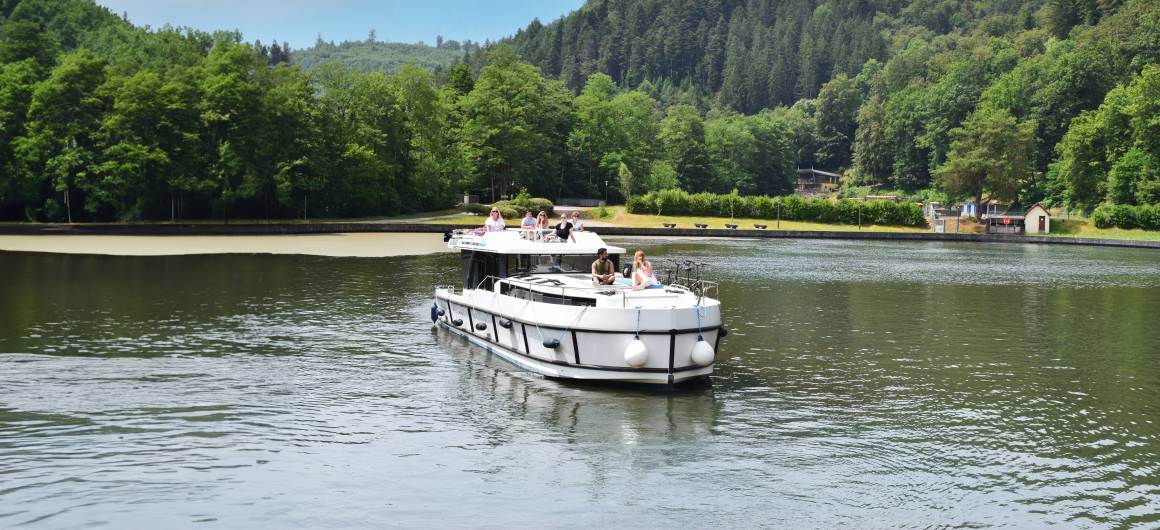
The Shannon is Ireland's longest river; the Erne, joined to it by canal, adds a second system of broad loughs and quieter channels. Between them you have an unusually generous cruising ground — slow, green, sparsely built-up — where the point is to meander rather than to tick off a route. You drive the boat yourself, and no licence is needed; first-timers get thorough handover training at the base before casting off.
The character of the cruise
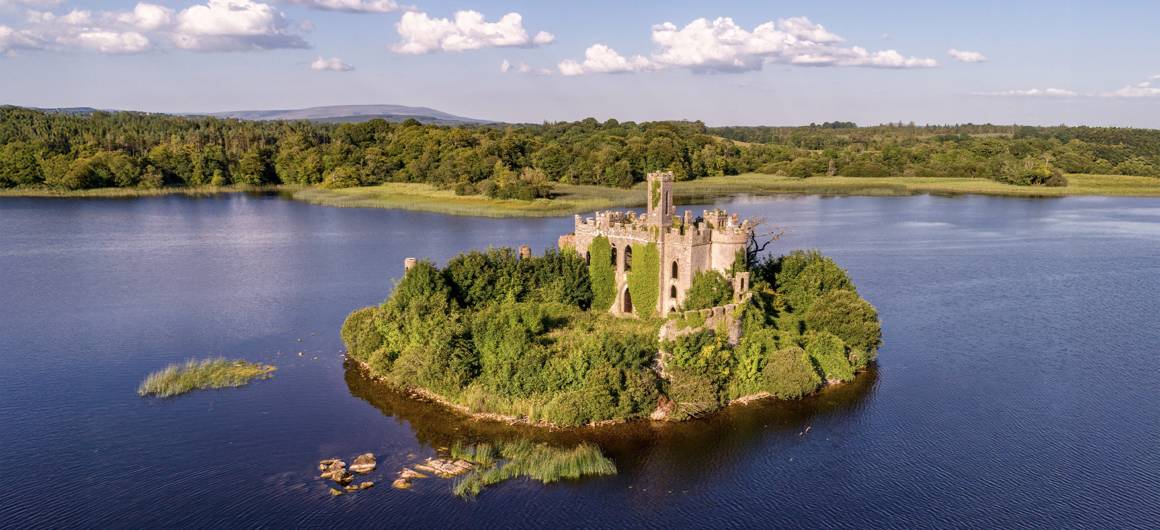
This is river boating in a calm, low-key Irish register rather than the postcard-perfect French one. Days tend to run long and unhurried: a morning's cruise between villages, a stop ashore for lunch, an afternoon drifting past castle ruins and pasture with herons and swans for company.
Be honest about what the villages are like. They range from lively riverside hubs to unvarnished rural stops where a weekday in the shoulder season might find the pub closed and not much else open — guests on Lough Derg have flagged this more than once. Portumna, on the northern shore of Lough Derg, has a pleasant compact centre with The Boatman pub and a well-liked chipper — the sort of detail that makes an evening. Carrick-on-Shannon, the usual base, is busier: a market town with enough going on for a pre-cruise dinner.
Route and what the days look like
Most trips work outward from Carrick-on-Shannon. Head south down the Shannon and you reach Lough Derg, the largest of the river's loughs, with Portumna at its northern end and a string of quiet harbours around its shoulders. Head north and east and the waterway threads you toward the Erne system, with its own set of lakes at the far end. A one-week hire realistically covers one direction well; a fortnight opens up both.
Expect to make good use of friendly lock keepers — several past guests mention them as one of the small pleasures of the trip — and to share the water with a small, courteous community of other crews rather than any real crowd.
The practical side
Le Boat operates the fleet out of Carrick-on-Shannon. The boats are self-catering cruisers with well-furnished cabins, kitchens and bathrooms, kitted out for cooking full meals aboard — most crews use the villages for a pub dinner or two and do the rest on board. Check-in at the base includes handling and safety training, and the team are on call for technical help once you're cruising.
Fuel and mooring fees away from the base are typically extra, and a security deposit is taken against the boat. The operator runs a UK phone line Mondays to Fridays 9am to 11pm and Saturdays 10am to 5pm for booking queries.
It suits couples, families and small groups of friends who want a holiday that sets its own pace. Those expecting waterfront nightlife in every village will be disappointed; those who want a week of slow water, good scenery and the occasional Irish pub evening will find it a quiet pleasure.
The shape of the trip.
What's typically in the price, what isn't.
A general guide for canal holidays of this kind. Check the operator's booking page for the final inclusions on this specific trip.
Typically included
- ✓The boat itself, booked by the night or week
- ✓Fuel for the engine at typical cruising pace
- ✓Handover briefing at the base — no licence needed
- ✓Mooring ropes, fenders, lifejackets and a basic starter pack
- ✓24/7 technical support line for the duration of the hire
Typically not included
- ×Travel to and from the base (train, flights, transfers)
- ×Travel insurance with cruise cover (strongly recommended)
- ×Bedding, towels, or end-of-hire cleaning on some fleets (a modest supplement if required)
- ×Food, drink, and groceries — stock up at towpath-side villages
- ×Lock and mooring fees on some European waterways
- ×Pet supplement (typically £20-30 per dog per week if allowed)
Everything you might be wondering.
Q1Do I need a licence?
No. The hire base gives you a short handover covering steering, locks, and safety before you set off. Speed limit is 4 mph on UK narrowboats — slower than a walking pace. If you can drive a car, you can drive a canal boat.
Q2How many locks will I do?
Depends on the route. The Llangollen has about 20 over a week — leisurely. The Caen Hill flight on the Kennet & Avon has 29 in one stretch — a full day's work. Some European routes (Canal du Midi, Camargue) have almost none. The operator's map shows lock counts per day so you can pace yourself.
Q3Can I travel solo?
Most hire companies require two adults on board, mainly so one person can work locks while the other steers. A few allow solo hire on quieter routes — ask the operator before booking.
Q4What's included?
Typically the boat, fuel for the engine, a handover briefing, mooring ropes, fenders and a starter pack (tea, coffee, washing-up kit). Bedding is sometimes included, sometimes £10-20 extra. Food is your own, shopped from towpath-side villages.
Q5What if something breaks?
The hire base has a 24/7 support line. A fitter will usually come out within a few hours. Engines are robust and well-maintained — the most common failures are blocked weed hatches (clearable yourself) and flat domestic batteries.
Q6Is it good for kids?
Yes — lifejackets are provided and kids love working locks. Older children (6+) can help steer under supervision. Toddlers need constant watching near open decks. A reinforced guard rail helps.
Q7Can I bring my dog?
Most hire companies allow one or two dogs for a small supplement (£20-30 per dog per week). They love the towpath walks. The boat will lose its deposit if the dog damages upholstery — bring a blanket.
Q8What about cancellation?
Typically a 25% deposit at booking, balance 8-12 weeks before departure. Each operator has its own cancellation ladder (steeper close to departure). Travel insurance with cruise cover is recommended.
Three canal holidays, side-by-side.
Other canal holidays on Mooch in the same spirit. All prices per person, from the operator.