Holland, Amsterdam and Friesland
About this trip.
Two waterways, two moods
Friesland and Holland are both laced with canals, but cruising them is quite different. Friesland's appeal is that it's essentially lock-free — a network of lakes and broad waterways across the north, linking small towns like Hindeloopen, Heeg and Lemmer. Holland, out of Vinkeveen south-east of Amsterdam, is the busier, more technical option: bridges, signals and sluices to work through, but also close to Edam, Zaanse Schaans and Maarssen.
No licence is needed on either. You sit through a briefing at the base, take notes, and work out the rhythm of the waterway. Most crews find the second day is when it starts feeling natural.
The Friesland route
A typical Friesland loop runs Hindeloopen, Heeg, Lemmer, Sneek (worth two nights), Bolsward, Workum and back to Hindeloopen — chosen precisely for the absence of locks. Shore power is available most nights and moorings sit a short walk from the town. It's a low-effort week on the water: no lock-keeping to learn, no convoys, just open lakes and a run of small Frisian ports.
The Holland route from Vinkeveen
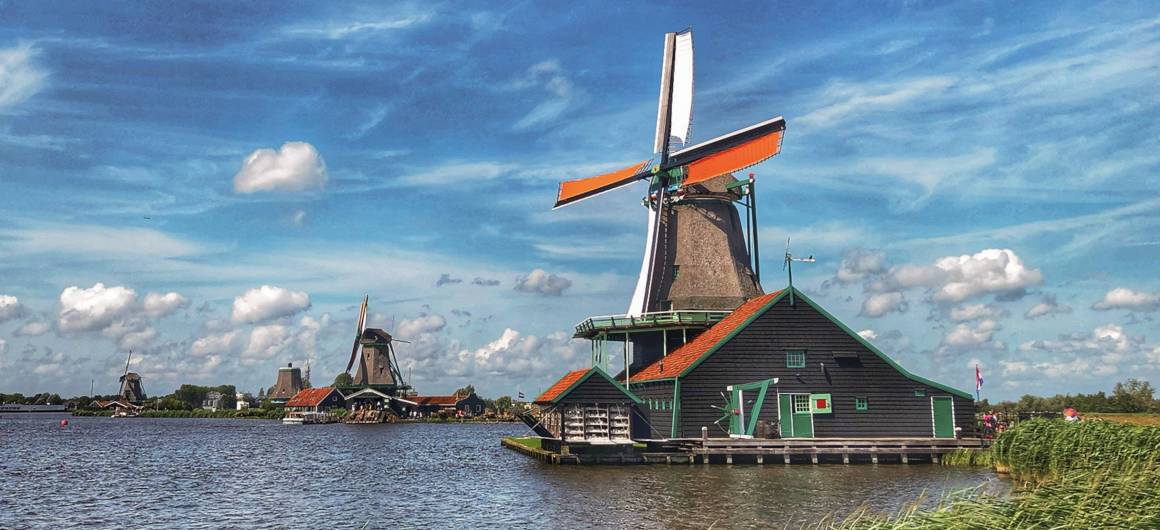
Vinkeveen lies south-east of Amsterdam, and the canals from the base reach Maarssen along the Vecht, Edam to the north and Zaanse Schaans in the Zaan district. Days tend to move between boat, bike and foot — pulling into a small-town marina, scanning a QR code to pay the fee on the phone, then walking or cycling into the centre. Zaanse Schaans has the working windmills, Edam the cheese streets, Maarssen the river frontage. Bridges, signals and sluices are all part of the routine here; the base briefing covers them and it clicks by day two.
Bookings and logistics
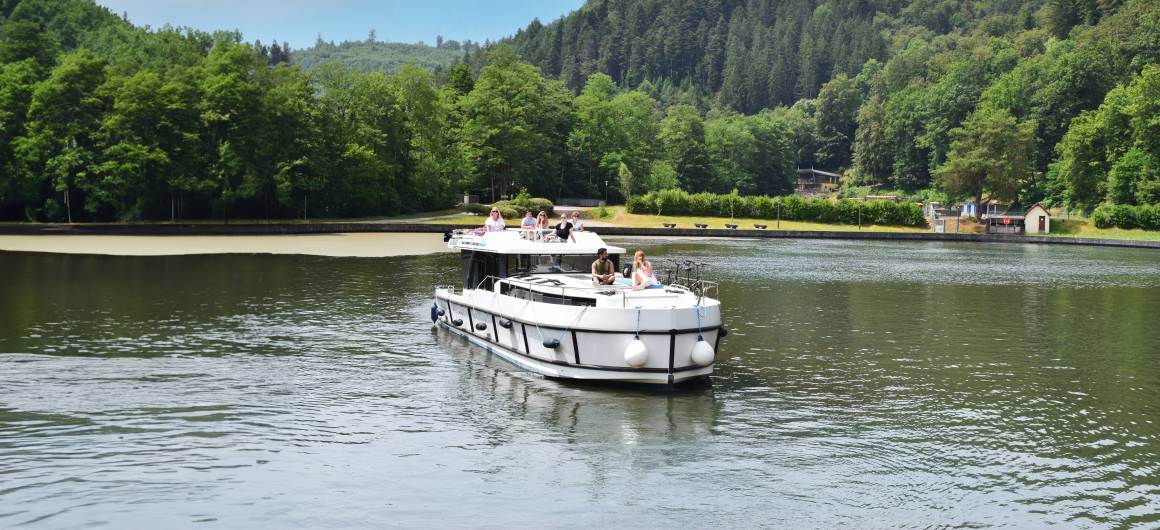
Le Boat's Vinkeveen base runs Clippers and Elegance-class boats, both comfortable for a family or two couples. Crews tend to rate the Vinkeveen handover well — staff flag good moorings and walks before you leave, and briefings are methodical rather than rushed. Friesland is the sister option for anyone who'd rather skip the locks and stick to the lakes.
Foldable bikes can be added to the booking and are worth taking: towns sit a short pedal from the mooring, and many are walkable once you're ashore. Shore power is available at most marinas, and an extension lead is useful if you end up bow-first at a smaller pontoon. A week is the standard duration. The setup suits families, groups of friends, and anyone who's enjoyed a narrowboat, motorhome or other self-paced trip — the mechanics take a day or so to learn, and the rest of the week is yours.
The shape of the trip.
What's typically in the price, what isn't.
A general guide for canal holidays of this kind. Check the operator's booking page for the final inclusions on this specific trip.
Typically included
- ✓The boat itself, booked by the night or week
- ✓Fuel for the engine at typical cruising pace
- ✓Handover briefing at the base — no licence needed
- ✓Mooring ropes, fenders, lifejackets and a basic starter pack
- ✓24/7 technical support line for the duration of the hire
Typically not included
- ×Travel to and from the base (train, flights, transfers)
- ×Travel insurance with cruise cover (strongly recommended)
- ×Bedding, towels, or end-of-hire cleaning on some fleets (a modest supplement if required)
- ×Food, drink, and groceries — stock up at towpath-side villages
- ×Lock and mooring fees on some European waterways
- ×Pet supplement (typically £20-30 per dog per week if allowed)
Everything you might be wondering.
Q1Do I need a licence?
No. The hire base gives you a short handover covering steering, locks, and safety before you set off. Speed limit is 4 mph on UK narrowboats — slower than a walking pace. If you can drive a car, you can drive a canal boat.
Q2How many locks will I do?
Depends on the route. The Llangollen has about 20 over a week — leisurely. The Caen Hill flight on the Kennet & Avon has 29 in one stretch — a full day's work. Some European routes (Canal du Midi, Camargue) have almost none. The operator's map shows lock counts per day so you can pace yourself.
Q3Can I travel solo?
Most hire companies require two adults on board, mainly so one person can work locks while the other steers. A few allow solo hire on quieter routes — ask the operator before booking.
Q4What's included?
Typically the boat, fuel for the engine, a handover briefing, mooring ropes, fenders and a starter pack (tea, coffee, washing-up kit). Bedding is sometimes included, sometimes £10-20 extra. Food is your own, shopped from towpath-side villages.
Q5What if something breaks?
The hire base has a 24/7 support line. A fitter will usually come out within a few hours. Engines are robust and well-maintained — the most common failures are blocked weed hatches (clearable yourself) and flat domestic batteries.
Q6Is it good for kids?
Yes — lifejackets are provided and kids love working locks. Older children (6+) can help steer under supervision. Toddlers need constant watching near open decks. A reinforced guard rail helps.
Q7Can I bring my dog?
Most hire companies allow one or two dogs for a small supplement (£20-30 per dog per week). They love the towpath walks. The boat will lose its deposit if the dog damages upholstery — bring a blanket.
Q8What about cancellation?
Typically a 25% deposit at booking, balance 8-12 weeks before departure. Each operator has its own cancellation ladder (steeper close to departure). Travel insurance with cruise cover is recommended.
Three canal holidays, side-by-side.
Other canal holidays on Mooch in the same spirit. All prices per person, from the operator.