About this trip.
Nieuwpoort and the Flanders waterways
Nieuwpoort sits on the Belgian coast where the canals of inland Flanders meet the North Sea, and it's the starting point for Le Boat's Flanders routes. The town itself is unvarnished — a working fishing port with a handful of cafes and a Spar about twenty minutes on foot from the Westhoek Marina. What makes this corner of Flanders unusual for canal cruising is the sheer variety packed into a small area: medieval cities, First World War battlefields, flat polder landscape, and cycling country all within a few days' reach of the boat.
The canals run through quiet farmland and reedbeds full of wildlife, then open into the great historic cities of the region. Distances are modest and the going is gentle, which suits first-time skippers.
Route 1 and Route 2
Two set itineraries run from Nieuwpoort, and most guests end up choosing between them depending on how much city time they want. Both pass through Diksmuide, a small town worth the stop, and on to Ieper (Ypres), which is interesting for the Menin Gate and the wider battlefields context rather than for any canalside charm.
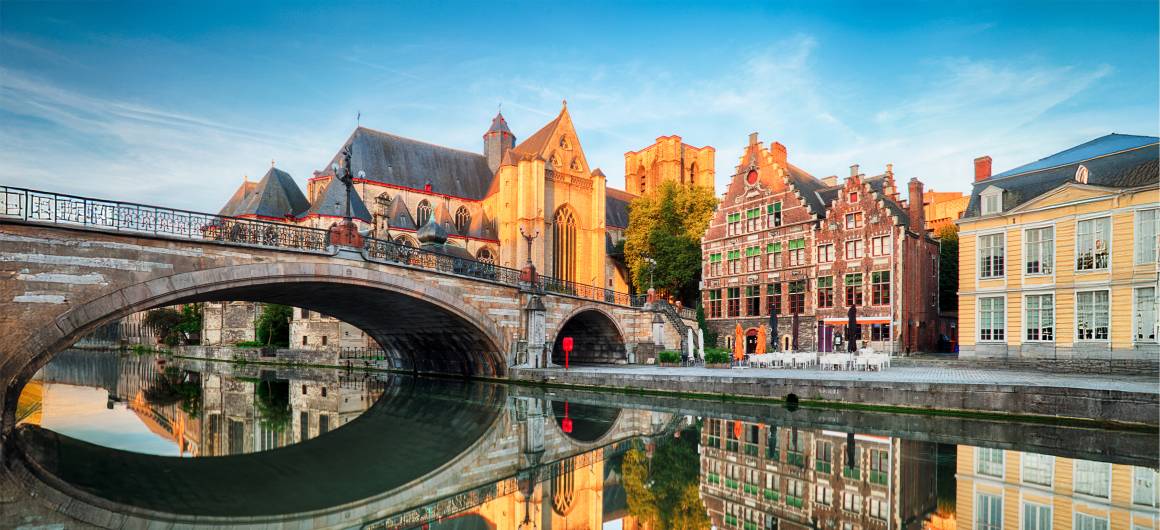
The longer runs reach Bruges and Ghent, the two cities past guests single out. Bruges is the postcard one: canal-laced, crowded in season, but genuinely beautiful if you arrive by water. Ghent is the city canal boaters tend to prefer, less packaged and more lived-in. If you have time you can press on to Antwerp or Brussels, though these are longer undertakings and you'll want to check mooring availability in advance. Past reviewers have flagged that moorings on some stretches need forward planning rather than blind optimism.
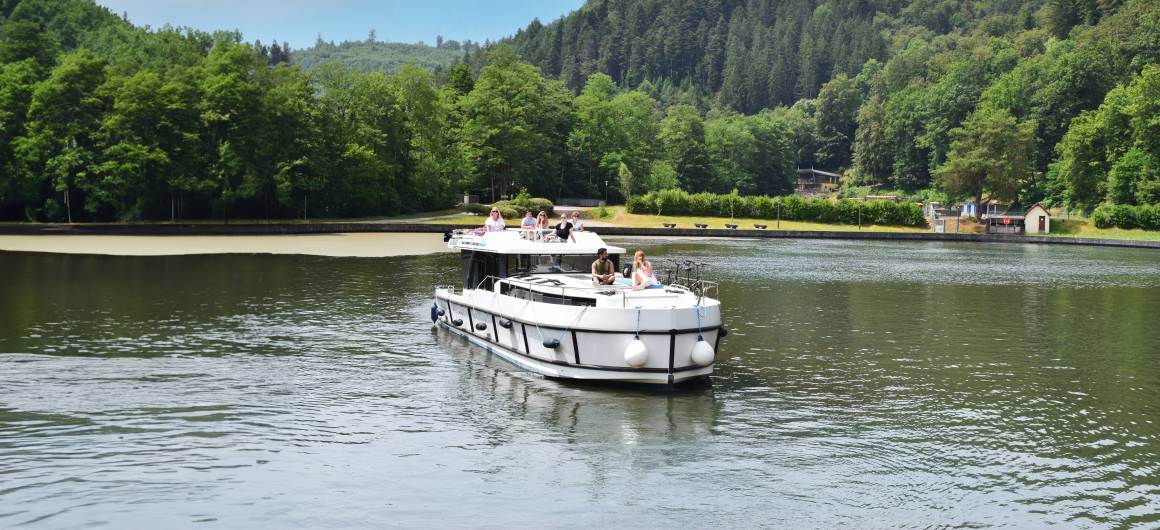
Days on board tend to follow the same rhythm: a few hours cruising in the morning, tie up in a town for lunch, and explore on foot or by the bikes carried on the boat. The towpaths are flat and well maintained, and cycling ahead to the next lock or town is part of how most people use these boats.
Bookings and logistics from Westhoek Marina
Boats are collected from Westhoek Marina in Nieuwpoort. The easiest way in is the train to Ostend followed by the coastal tram, which costs around €3 per person and drops you close to the base. The marina runs a thorough handover, and technical support is on call throughout the cruise, which matters if you've never skippered a boat before — most first-timers haven't.
Neptune's, the on-site restaurant, does a reliable welcome meal of local fare. No licence is required to hire the boats, and crews of four to eight are the usual configuration. The season runs broadly from late spring through early autumn. July and August bring the warmest weather and the busiest moorings; May and September give you more space along the quays.
The shape of the trip.
What's typically in the price, what isn't.
A general guide for canal holidays of this kind. Check the operator's booking page for the final inclusions on this specific trip.
Typically included
- ✓The boat itself, booked by the night or week
- ✓Fuel for the engine at typical cruising pace
- ✓Handover briefing at the base — no licence needed
- ✓Mooring ropes, fenders, lifejackets and a basic starter pack
- ✓24/7 technical support line for the duration of the hire
Typically not included
- ×Travel to and from the base (train, flights, transfers)
- ×Travel insurance with cruise cover (strongly recommended)
- ×Bedding, towels, or end-of-hire cleaning on some fleets (a modest supplement if required)
- ×Food, drink, and groceries — stock up at towpath-side villages
- ×Lock and mooring fees on some European waterways
- ×Pet supplement (typically £20-30 per dog per week if allowed)
Everything you might be wondering.
Q1Do I need a licence?
No. The hire base gives you a short handover covering steering, locks, and safety before you set off. Speed limit is 4 mph on UK narrowboats — slower than a walking pace. If you can drive a car, you can drive a canal boat.
Q2How many locks will I do?
Depends on the route. The Llangollen has about 20 over a week — leisurely. The Caen Hill flight on the Kennet & Avon has 29 in one stretch — a full day's work. Some European routes (Canal du Midi, Camargue) have almost none. The operator's map shows lock counts per day so you can pace yourself.
Q3Can I travel solo?
Most hire companies require two adults on board, mainly so one person can work locks while the other steers. A few allow solo hire on quieter routes — ask the operator before booking.
Q4What's included?
Typically the boat, fuel for the engine, a handover briefing, mooring ropes, fenders and a starter pack (tea, coffee, washing-up kit). Bedding is sometimes included, sometimes £10-20 extra. Food is your own, shopped from towpath-side villages.
Q5What if something breaks?
The hire base has a 24/7 support line. A fitter will usually come out within a few hours. Engines are robust and well-maintained — the most common failures are blocked weed hatches (clearable yourself) and flat domestic batteries.
Q6Is it good for kids?
Yes — lifejackets are provided and kids love working locks. Older children (6+) can help steer under supervision. Toddlers need constant watching near open decks. A reinforced guard rail helps.
Q7Can I bring my dog?
Most hire companies allow one or two dogs for a small supplement (£20-30 per dog per week). They love the towpath walks. The boat will lose its deposit if the dog damages upholstery — bring a blanket.
Q8What about cancellation?
Typically a 25% deposit at booking, balance 8-12 weeks before departure. Each operator has its own cancellation ladder (steeper close to departure). Travel insurance with cruise cover is recommended.
Three canal holidays, side-by-side.
Other canal holidays on Mooch in the same spirit. All prices per person, from the operator.