About this trip.
Flat delta and bright light
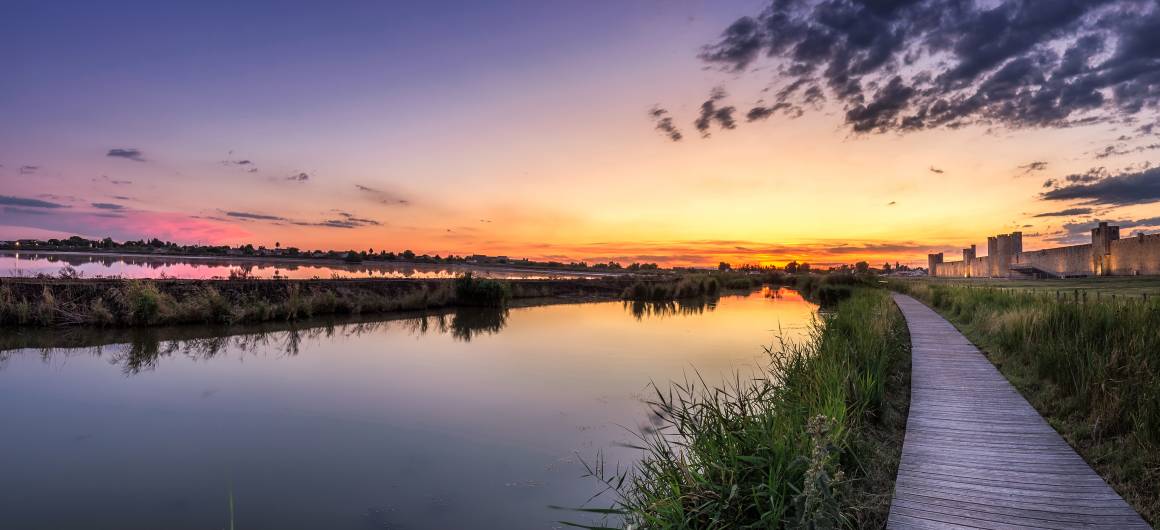
The Camargue is the salt-washed plain where the Rhône meets the Mediterranean, and it counts as one of the sunniest regions of France. The landscape is horizontal in a way that can feel close to empty — lagoons, reedbeds and salt pans — with the wildlife, sandy beaches, ancient ports and old fishing villages that define this stretch of coast. Cruising here means inland canals and broad shallow lagoons rather than the hedged, wooded feel of more northerly French waterways. The medieval walled town of Aigues-Mortes is the set piece.
Lock-light from St-Gilles
The main one-way runs from the base at St-Gilles down to Port Cassafières. What sets this route apart is how few locks it has — two, in a week — almost unheard of on French waterways. Most crews earmark two nights at Aigues-Mortes: the walls enclose a proper working town of shops and restaurants, and just outside, the salt works turn the water a famous pink. The Étang de Thau is the other highlight, the big lagoon where Mèze and Marseillan are the two moorings repeat customers keep naming. Bouzigues, Agde and Frontignan fill in the gaps, though mooring can get fiddly at weekends when marina offices aren't staffed. Return itineraries bring in the Fonserannes staircase — a flight of locks a few crews enjoy enough to tackle twice. Restaurant de l'Écluse at the second lock is the one they come back for.
Picking up the boat and who it suits
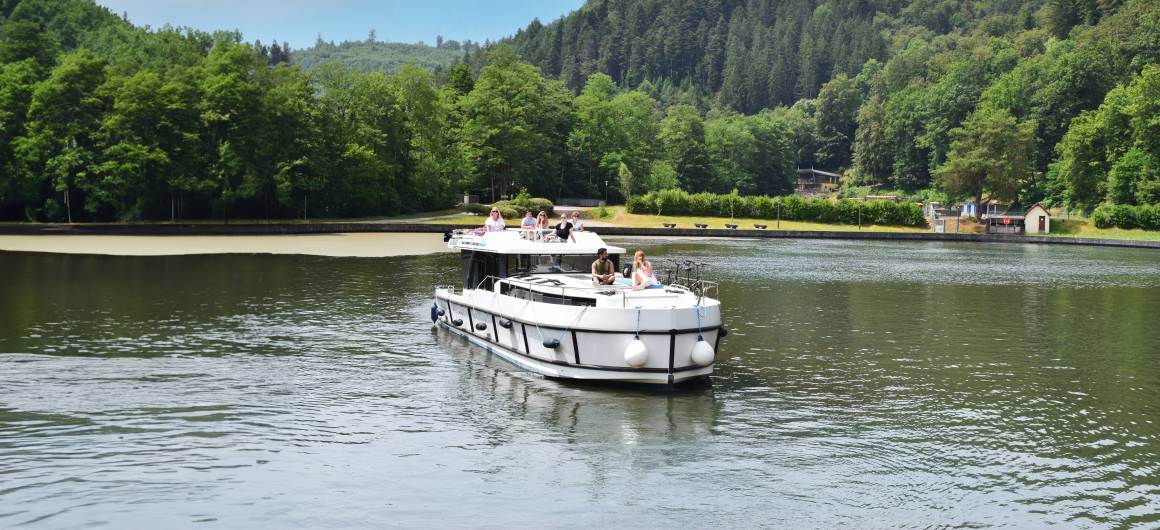
Bases at both ends mean one-way and return trips both work. Boats are self-drive and come with a handover briefing on the day. Smaller budget cruisers are comfortable for two, with two steering positions and room enough to carry a couple of bikes on board; larger boats step up in size for families. Mooring fees, food and extras sit on top of the charter price, so it's worth checking what's bundled in line by line when booking.
This isn't the gentlest first canal holiday. The lagoons bring Mediterranean-style mooring, some open water where wind dictates your day, and the weekend scramble for berths. A day or two of prior canal handling makes a real difference, and past crews have been frank about that. If you've got that bit of experience, the reward is the shape of the thing — setting your own pace through one of the warmer, more singular corners of southern France, and finishing with a meal at O'Ranch back at Port Cassafières.
The shape of the trip.
What's typically in the price, what isn't.
A general guide for canal holidays of this kind. Check the operator's booking page for the final inclusions on this specific trip.
Typically included
- ✓The boat itself, booked by the night or week
- ✓Fuel for the engine at typical cruising pace
- ✓Handover briefing at the base — no licence needed
- ✓Mooring ropes, fenders, lifejackets and a basic starter pack
- ✓24/7 technical support line for the duration of the hire
Typically not included
- ×Travel to and from the base (train, flights, transfers)
- ×Travel insurance with cruise cover (strongly recommended)
- ×Bedding, towels, or end-of-hire cleaning on some fleets (a modest supplement if required)
- ×Food, drink, and groceries — stock up at towpath-side villages
- ×Lock and mooring fees on some European waterways
- ×Pet supplement (typically £20-30 per dog per week if allowed)
Everything you might be wondering.
Q1Do I need a licence?
No. The hire base gives you a short handover covering steering, locks, and safety before you set off. Speed limit is 4 mph on UK narrowboats — slower than a walking pace. If you can drive a car, you can drive a canal boat.
Q2How many locks will I do?
Depends on the route. The Llangollen has about 20 over a week — leisurely. The Caen Hill flight on the Kennet & Avon has 29 in one stretch — a full day's work. Some European routes (Canal du Midi, Camargue) have almost none. The operator's map shows lock counts per day so you can pace yourself.
Q3Can I travel solo?
Most hire companies require two adults on board, mainly so one person can work locks while the other steers. A few allow solo hire on quieter routes — ask the operator before booking.
Q4What's included?
Typically the boat, fuel for the engine, a handover briefing, mooring ropes, fenders and a starter pack (tea, coffee, washing-up kit). Bedding is sometimes included, sometimes £10-20 extra. Food is your own, shopped from towpath-side villages.
Q5What if something breaks?
The hire base has a 24/7 support line. A fitter will usually come out within a few hours. Engines are robust and well-maintained — the most common failures are blocked weed hatches (clearable yourself) and flat domestic batteries.
Q6Is it good for kids?
Yes — lifejackets are provided and kids love working locks. Older children (6+) can help steer under supervision. Toddlers need constant watching near open decks. A reinforced guard rail helps.
Q7Can I bring my dog?
Most hire companies allow one or two dogs for a small supplement (£20-30 per dog per week). They love the towpath walks. The boat will lose its deposit if the dog damages upholstery — bring a blanket.
Q8What about cancellation?
Typically a 25% deposit at booking, balance 8-12 weeks before departure. Each operator has its own cancellation ladder (steeper close to departure). Travel insurance with cruise cover is recommended.
Three canal holidays, side-by-side.
Other canal holidays on Mooch in the same spirit. All prices per person, from the operator.