Le Puy Camino: Conques to Cahors
About this trip.
Comparing firms? Every Camino holiday on Mooch, route by route.
Before you book: Walking holidays vs cycling holidays — when each one is the right answer · Which Camino route is right for you — an honest opinion on each of the seven
From Conques to Cahors on the Le Puy route
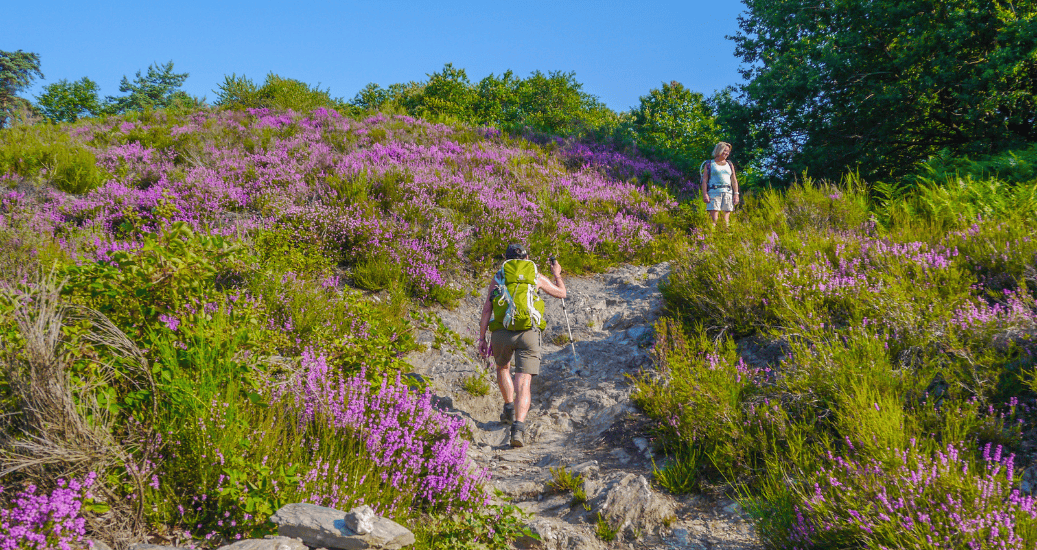
This third section of the Via Podiensis links Conques and Cahors, two of the prettiest towns on the whole Le Puy route. You leave the cobbled streets of Conques and its Romanesque abbey and cross the Pont sur le Dourdou. The Camino then runs through the gentle hills of the Aveyron before crossing the river into the Lot. The walking here is gentle, which leaves plenty of time for looking around once the day's hike is done. Typical days mean following wall-lined tracks across the high plateaux, stopping for coffee on shaded terraces in peaceful villages and visiting UNESCO World Heritage sites.
There are a lot of those on this section. Besides the abbey at Conques, the whole stretch from Montredon to Figeac is listed as a World Heritage site, and so are the sections between Faycelles and Cajarc and between Lalbenque and Cahors.
Cajarc and the Lot Valley
Cajarc sits on a bend in the river in the Lot Valley, and both its old buildings and its natural setting are well preserved. Saint-Etienne church is simple but beautiful. The tourist information centre was once a neo-Gothic chapel. Down by the river, the old railway station is now a railway museum with model trains, and a suspension bridge crosses the Lot. If you're interested in modern art, the Maison des Arts Georges and Claude Pompidou honours the statesman, who had a holiday home here.
Cahors and its cathedral
Many pilgrims say Cahors is worth an extra night. The town has Roman origins but really flourished in the Middle Ages. Its medieval streets of red brick, grey limestone and ochre sandstone make a good backdrop for photographs. Don't miss the cathedral at the centre of town. It's a national monument and a fine example of the shift from late Romanesque to early Gothic architecture.
What's included and what to carry
The holiday includes bed and breakfast in hand-picked accommodation, a holiday or pilgrim pack, 24/7 on-call support and a virtual face-to-face briefing before you leave. Luggage transfers between hotels aren't included in the starting price but can be added.
There are enough facilities along the way, though with some noticeable gaps. Carry at least two or three snacks, or a light lunch or sandwich, for the longer stretches, and drink plenty between stops.
The shape of the trip.
Everything you might be wondering.
Q1How hard is it really?
The grading is set by the operator and usually reflects daily distance and total ascent. As a rule of thumb: if you can comfortably manage a 5-6 hour hillwalk at home on a weekend, a moderate-graded route will be fine. Read the day-by-day notes carefully, and train with a loaded pack in the months before.
Q2Can I do this solo?
Yes — self-guided walking holidays are well suited to solo travellers, and some operators waive the single-room supplement on certain departures. The route notes are written for confident independent walkers, and most operators run a 24/7 support line.
Q3Do I need to speak the language?
No. Hotels and restaurants on the route are used to English-speaking walkers. A phrasebook for menus and a few polite basics (hello, thank you, please) is all you really need. The operator's support line speaks English.
Q4Can I bring my dog?
Some routes are dog-friendly, others aren't — it depends on whether all the accommodation on the itinerary accepts dogs. Check with the operator before booking. If you do bring a dog, you'll need a pet passport, up-to-date rabies vaccination, and a lead for villages.
Q5What if it rains?
The route is walkable in rain — your luggage travels ahead regardless, so you'll always arrive somewhere dry. Some trails get slippery in wet weather and the operator's support line can arrange a taxi for any stage if conditions are properly bad.
Q6How do I get there from the UK?
Most routes are reachable by a short flight to a nearby airport, followed by train or transfer. The operator will usually point you at the nearest airport and can advise on rail connections. Some will book train tickets on your behalf for a small fee.
Q7Can I shorten or extend it?
Usually yes. Many operators offer shorter versions of a route as a standalone, and most will add extra nights at the start or end at their own rates. Ask when you enquire — they'll tailor it before booking.
Q8What about cancellation?
Typically a deposit (usually 20-25%) is taken at booking, with the balance due 8-10 weeks before departure. The operator's own terms apply — Mooch doesn't handle the booking or refunds. Travel insurance is strongly recommended.
Three walking holidays, side-by-side.
The two closest walking holidays on Mooch, both on the Camino. Prices are the operators' own, per person.
Le Puy Camino: Conques to Cahors
Le Puy Camino: Aire Sur L’adour to Saint Jean Pied De Port
Le Puy Camino: Aumont-aubrac to Conques
More walking holidays on the Camino.
 Walking · France
Le Puy Camino: Cahors to Lectoure
 Walking · France
Le Puy Camino: Le Puy En Velay to Aumont-aubrac
 Walking · France