Le Puy Camino: Cahors to Lectoure
About this trip.
Comparing firms? Every Camino holiday on Mooch, route by route.
Before you book: Walking holidays vs cycling holidays — when each one is the right answer · Which Camino route is right for you — an honest opinion on each of the seven
From Cahors to Lectoure on the Le Puy route
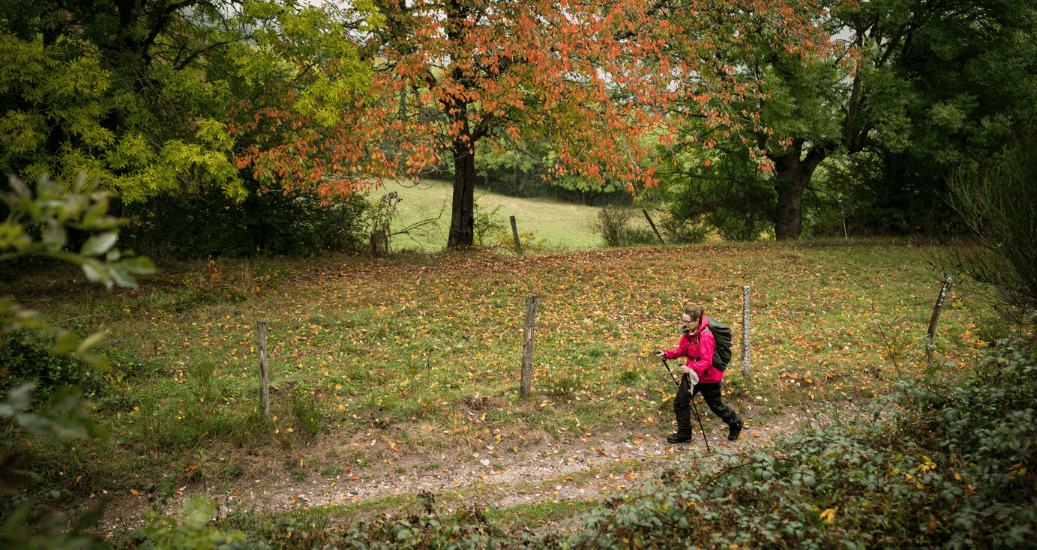
This is the fourth section of the Le Puy route of the Camino. It runs from Cahors to Lectoure and crosses both the Lot and Garonne valleys. The country is green and gently rounded, and almost every overnight stop has medieval buildings to see, so this leg suits walkers who want both countryside and history.
Facilities along the way are adequate, but there are some noticeable gaps between them. As a minimum, each person should carry two or three snacks, or a light lunch or sandwich, for the longer stretches. Drink plenty and keep eating between places where you can get food.
Montcuq and Moissac
Montcuq is a key stop on the Le Puy Camino. The Tower of Montcuq was built at the beginning of the 13th century for the Counts of Toulouse, and the town grew up around it. You can visit the tower for views over the town and the countryside around it. The English took Montcuq during the Hundred Years War and left it in ruins, and the town you see today is the result of the rebuilding. The church of Saint-Hilaire has a set of brightly coloured stained-glass windows that tell the lives of Christ and Saint-Hilaire. The church of Saint-Privat has a stained-glass window that shows the First World War.
Moissac Abbey is a masterpiece of Romanesque architecture. Its best-known features are the south door of the Church of Saint-Pierre and the cloister. The door dates from the 12th century, and its finely carved tympanum shows Christ in Majesty and the Apocalypse according to St John. The cloister has 76 carved capitals from the late 11th century, with scenes from the lives of the saints and from the Bible. A cedar tree more than 200 years old stands in the cloister. Many classical music concerts take place there in the summer months.
Arriving in Lectoure
At first sight Lectoure looks much like the other towns you will have walked through. The town centre is where its history shows. It has Gallo-Roman remains from the 2nd and 3rd centuries and the ancient Fountain of Diana, which was restored in the 13th century. Its finest building is the Cathedral of St Gervais and St Protais. Since the 1950s Lectoure has been best known for growing melons, because the local climate and limestone-clay soil suit them well. The town holds its annual Melon Festival on 15 August.
What's included
The holiday includes bed and breakfast in hand-picked accommodation, a holiday or pilgrim pack, 24/7 on-call support and a pre-departure briefing held face to face by video call. Luggage transfers between hotels are not part of the starting price but can be added.
The shape of the trip.
Everything you might be wondering.
Q1How hard is it really?
The grading is set by the operator and usually reflects daily distance and total ascent. As a rule of thumb: if you can comfortably manage a 5-6 hour hillwalk at home on a weekend, a moderate-graded route will be fine. Read the day-by-day notes carefully, and train with a loaded pack in the months before.
Q2Can I do this solo?
Yes — self-guided walking holidays are well suited to solo travellers, and some operators waive the single-room supplement on certain departures. The route notes are written for confident independent walkers, and most operators run a 24/7 support line.
Q3Do I need to speak the language?
No. Hotels and restaurants on the route are used to English-speaking walkers. A phrasebook for menus and a few polite basics (hello, thank you, please) is all you really need. The operator's support line speaks English.
Q4Can I bring my dog?
Some routes are dog-friendly, others aren't — it depends on whether all the accommodation on the itinerary accepts dogs. Check with the operator before booking. If you do bring a dog, you'll need a pet passport, up-to-date rabies vaccination, and a lead for villages.
Q5What if it rains?
The route is walkable in rain — your luggage travels ahead regardless, so you'll always arrive somewhere dry. Some trails get slippery in wet weather and the operator's support line can arrange a taxi for any stage if conditions are properly bad.
Q6How do I get there from the UK?
Most routes are reachable by a short flight to a nearby airport, followed by train or transfer. The operator will usually point you at the nearest airport and can advise on rail connections. Some will book train tickets on your behalf for a small fee.
Q7Can I shorten or extend it?
Usually yes. Many operators offer shorter versions of a route as a standalone, and most will add extra nights at the start or end at their own rates. Ask when you enquire — they'll tailor it before booking.
Q8What about cancellation?
Typically a deposit (usually 20-25%) is taken at booking, with the balance due 8-10 weeks before departure. The operator's own terms apply — Mooch doesn't handle the booking or refunds. Travel insurance is strongly recommended.
Three walking holidays, side-by-side.
The two closest walking holidays on Mooch, both on the Camino. Prices are the operators' own, per person.
Le Puy Camino: Cahors to Lectoure
Le Puy Camino: Aire Sur L’adour to Saint Jean Pied De Port
Le Puy Camino: Aumont-aubrac to Conques
More walking holidays on the Camino.
 Walking · France
Le Puy Camino: Conques to Cahors
 Walking · France
Le Puy Camino: Le Puy En Velay to Aumont-aubrac
 Walking · France