West Highland Way: Milngavie to Fort William
About this trip.
Comparing firms? Every West Highland Way holiday on Mooch, side by side.
Before you book: Walking holidays vs cycling holidays — when each one is the right answer · Which Camino route is right for you — an honest opinion on each of the seven
Milngavie to Fort William over seven walking days
The walk starts with a night's accommodation in Milngavie. From there the stages run to Drymen (12 miles), Rowardennan (14 miles), Inverarnan (14 miles), Tyndrum (13 miles), Kingshouse (19 miles), Kinlochleven (9 miles) and finally Fort William (15 miles). You leave after breakfast on day nine.
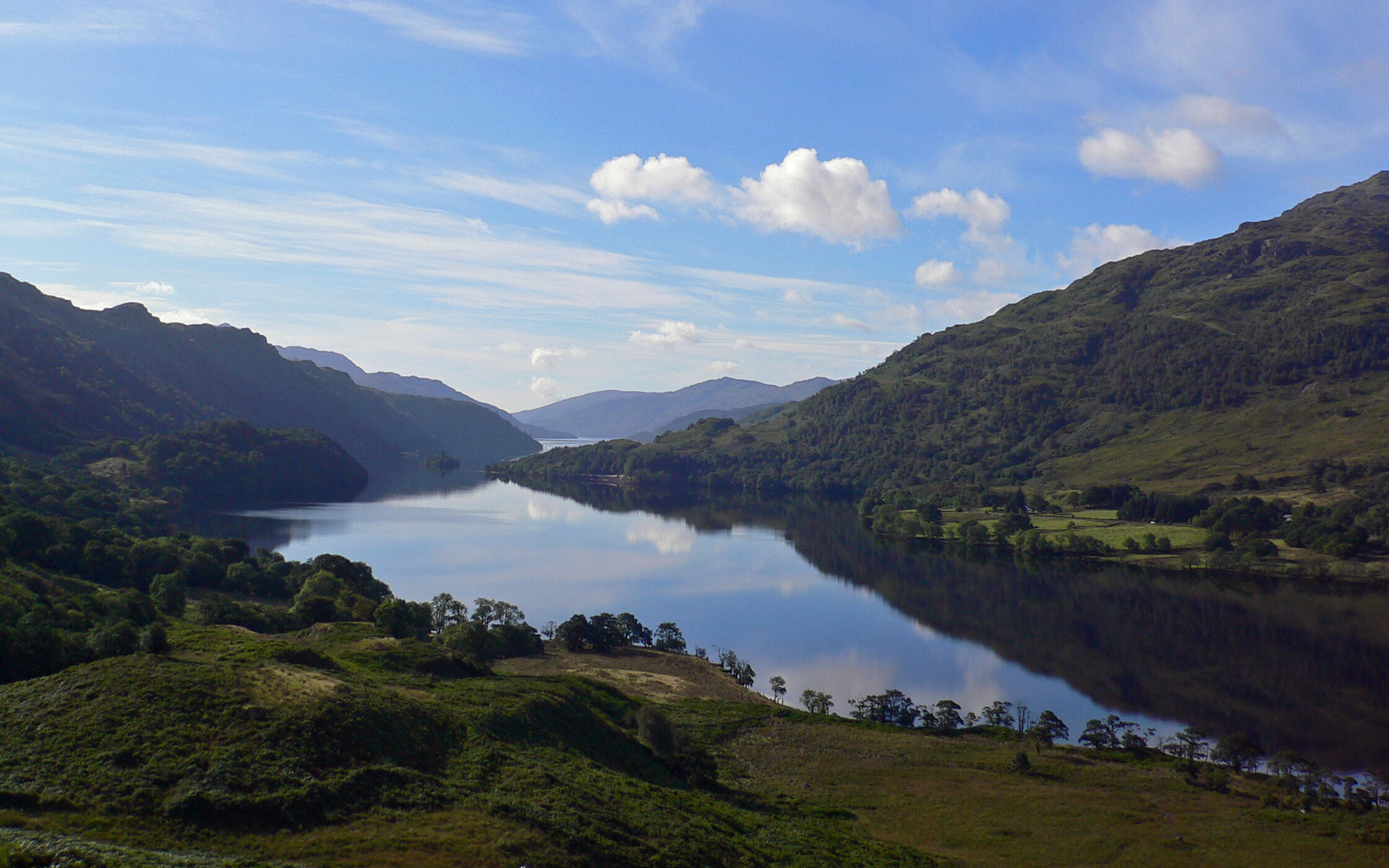
The first stretch is on lowland ground, through Mugdock Wood to Craigallian Loch and past the Dumgoyach Standing Stones. For the best part of two days you follow the shores of Loch Lomond, under the slopes of Ben Lomond. The scenery turns more Highland as you go up Glen Fillan, and the route winds across the valley and its sides to Tyndrum, just over halfway. After that you pass Loch Tulla at Inveroran and enter Glen Coe. At Altnafeadh you climb the Devil's Staircase, the highest point on the walk at 548 metres. From there the path descends gradually to Kinlochleven, back at sea level. On the last day you get views across the glen to Ben Nevis, Britain's highest peak, before dropping into Glen Nevis and following it to the finish in the busy town of Fort William.
Terrain and waymarking
The route is popular and well signposted with Scottish thistle waymarks, and the path is generally well trodden and easy to follow. You'll walk on rocky and gravelled paths beside the lochs and grassy tracks across moorland. Many walkers find the section between Rowardennan and Inverarnan the toughest because the ground is uneven, with rocks and tree roots underfoot. There are some sizeable climbs and descents, especially in the later stages, but a walker with good fitness can manage them. In total you climb 3335 metres and descend 3384 metres.
What the package includes
You stay in en-suite bed and breakfast accommodation. If every en-suite option is booked, a room with a private bathroom is sought instead, and you'll be asked before anything is confirmed. Your luggage is moved between overnight stops each day. That covers one bag per walker up to 20kg, and extra bags can go for an additional charge.
You get all the maps and guidebooks you need, plus route notes and maps showing how to reach each B&B. If a B&B can't be booked within easy walking distance of the trail, any transfers between the route and your accommodation are included. You'll also get details of special facilities your hosts offer, such as a hot tub or a licensed bar, suggestions and contact details for an evening meal each day, telephone support, and advice on getting to the start and home from the finish.
The shape of the trip.
Everything you might be wondering.
Q1How hard is it really?
The grading is set by the operator and usually reflects daily distance and total ascent. As a rule of thumb: if you can comfortably manage a 5-6 hour hillwalk at home on a weekend, a moderate-graded route will be fine. Read the day-by-day notes carefully, and train with a loaded pack in the months before.
Q2Can I do this solo?
Yes — self-guided walking holidays are well suited to solo travellers, and some operators waive the single-room supplement on certain departures. The route notes are written for confident independent walkers, and most operators run a 24/7 support line.
Q3Do I need to speak the language?
No. Hotels and restaurants on the route are used to English-speaking walkers. A phrasebook for menus and a few polite basics (hello, thank you, please) is all you really need. The operator's support line speaks English.
Q4Can I bring my dog?
Some routes are dog-friendly, others aren't — it depends on whether all the accommodation on the itinerary accepts dogs. Check with the operator before booking. If you do bring a dog, you'll need a pet passport, up-to-date rabies vaccination, and a lead for villages.
Q5What if it rains?
The route is walkable in rain — your luggage travels ahead regardless, so you'll always arrive somewhere dry. Some trails get slippery in wet weather and the operator's support line can arrange a taxi for any stage if conditions are properly bad.
Q6How do I get there from the UK?
Most routes are reachable by a short flight to a nearby airport, followed by train or transfer. The operator will usually point you at the nearest airport and can advise on rail connections. Some will book train tickets on your behalf for a small fee.
Q7Can I shorten or extend it?
Usually yes. Many operators offer shorter versions of a route as a standalone, and most will add extra nights at the start or end at their own rates. Ask when you enquire — they'll tailor it before booking.
Q8What about cancellation?
Typically a deposit (usually 20-25%) is taken at booking, with the balance due 8-10 weeks before departure. The operator's own terms apply — Mooch doesn't handle the booking or refunds. Travel insurance is strongly recommended.
Three walking holidays, side-by-side.
The two closest walking holidays on Mooch, both on the West Highland Way. Prices are the operators' own, per person.
West Highland Way: Milngavie to Fort William
West Highland Way
West Highland Way Escape
More walking holidays on the West Highland Way.
 Walking · Scotland
West Highland Way: Milngavie to Fort William
 Walking · Scotland
West Highland Way: Milngavie to Fort William
 Walking · Scotland