Short Camino Francés: From Saint-Jean to Pamplona (4 Days)
About this trip.
Comparing firms? Every Camino holiday on Mooch, route by route.
Before you book: Walking holidays vs cycling holidays — when each one is the right answer · Which Camino route is right for you — an honest opinion on each of the seven
Over the Pyrenees from Saint-Jean-Pied-de-Port
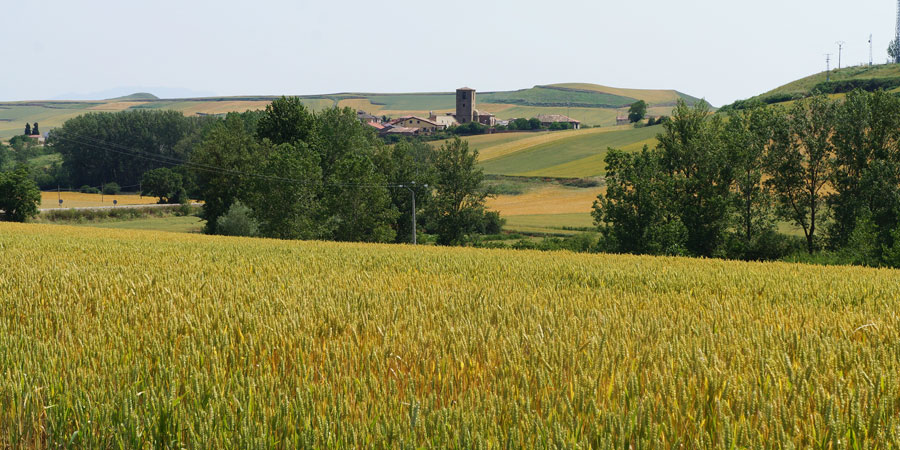
The walled town of Saint-Jean-Pied-de-Port, in the French Basque Country, is the starting point of the Camino Francés. This short break covers its first section, a 67-kilometre walk over the Pyrenees to Pamplona. It suits anyone who is short of time but still wants to walk a proper stretch of the Camino. Saint-Jean is one of the most popular places to start the Camino, so you'll meet pilgrims from all over the world along the way.
The trip lasts four nights, with three days of walking. The route is described as moderately challenging overall, but this is also one of the hardest stretches of the whole Camino de Santiago, and one of the most spectacular. You'll need a reasonable level of fitness and some hiking experience.
Day by day to Pamplona
After your first night in Saint-Jean, the first day's walk is 25 km to Roncesvalles. If you take the Napoleon Route over the Roncesvalles Pass (1450m), the day starts with a steep climb past country houses, then reaches mountain meadows, a cross and wide views of the Pyrenees. There's also a gentler option that splits the day into two stages of 12km and 13km, with a night in the village of Valcarlos. This option is recommended in winter, when snow can make the higher route impassable. In Roncesvalles, a popular starting point for Spanish pilgrims, it's worth visiting the St James chapel and the Royal Collegiate Church of Saint Mary.
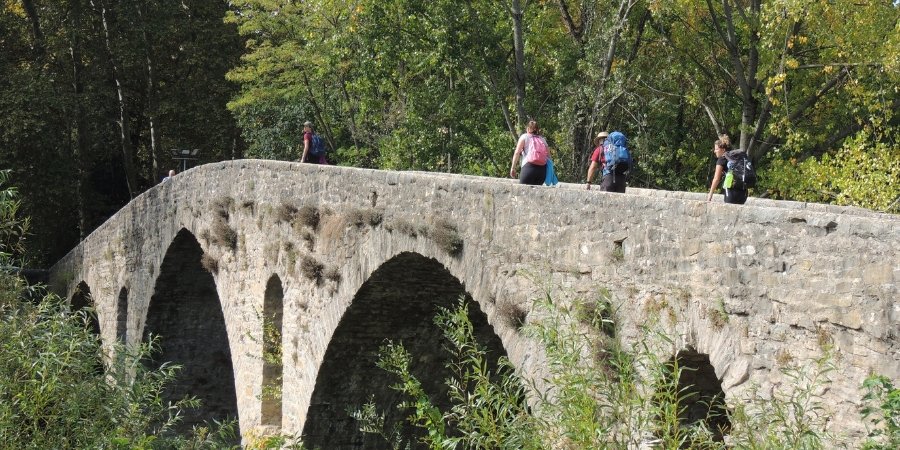
On the second day you walk 21 km through beech and oak woods to Espinal. You then cross two mountain passes, the Alto de Mezquiriz and the Alto de Erro, and descend to Zubiri and its medieval Puente de la Rabia over the River Arga. On the third day you walk another 21 km, following the Arga to Larrasoaña, an important stop for pilgrims in medieval times. The second half of the day gets busier as you approach Pamplona. The city has medieval streets, a cathedral and good local food and wine. Hemingway fans can have a coffee in one of his favourite haunts on the Plaza del Castillo. If you travel in July, you may be able to catch the San Fermín festival.
Because this section is under 100km, it doesn't qualify for the Compostela certificate. That needs the final 100km into Santiago de Compostela, for example from Sarria.
Where you stay and getting there
There are three levels of accommodation. The standard collection uses hand-picked hotels and guesthouses of up to 3 stars, in town centres and close to the trail. The Country Cottage option uses restored casas rurales in rural communities. The Superior Collection includes 4- and 5-star hotels, boutique guesthouses and heritage Parador hotels. Where the cottage or superior options aren't available, standard hotels are used instead. All rooms are en-suite. If your accommodation is a few kilometres from the trail, transport to and from it is arranged.
Biarritz Airport is 55km from Saint-Jean. A shuttle bus takes about 25 minutes to Bayonne station, and from there trains run to Saint-Jean-Pied-de-Port five times a day. The whole journey takes between 1h40 and 2h25. From Pau Airport, 90km away, a shuttle bus runs to the town's train station every hour, except on Sundays and public holidays. Airport and private transfers can also be arranged.
The shape of the trip.
Everything you might be wondering.
Q1How hard is it really?
The grading is set by the operator and usually reflects daily distance and total ascent. As a rule of thumb: if you can comfortably manage a 5-6 hour hillwalk at home on a weekend, a moderate-graded route will be fine. Read the day-by-day notes carefully, and train with a loaded pack in the months before.
Q2Can I do this solo?
Yes — self-guided walking holidays are well suited to solo travellers, and some operators waive the single-room supplement on certain departures. The route notes are written for confident independent walkers, and most operators run a 24/7 support line.
Q3Do I need to speak the language?
No. Hotels and restaurants on the route are used to English-speaking walkers. A phrasebook for menus and a few polite basics (hello, thank you, please) is all you really need. The operator's support line speaks English.
Q4Can I bring my dog?
Some routes are dog-friendly, others aren't — it depends on whether all the accommodation on the itinerary accepts dogs. Check with the operator before booking. If you do bring a dog, you'll need a pet passport, up-to-date rabies vaccination, and a lead for villages.
Q5What if it rains?
The route is walkable in rain — your luggage travels ahead regardless, so you'll always arrive somewhere dry. Some trails get slippery in wet weather and the operator's support line can arrange a taxi for any stage if conditions are properly bad.
Q6How do I get there from the UK?
Most routes are reachable by a short flight to a nearby airport, followed by train or transfer. The operator will usually point you at the nearest airport and can advise on rail connections. Some will book train tickets on your behalf for a small fee.
Q7Can I shorten or extend it?
Usually yes. Many operators offer shorter versions of a route as a standalone, and most will add extra nights at the start or end at their own rates. Ask when you enquire — they'll tailor it before booking.
Q8What about cancellation?
Typically a deposit (usually 20-25%) is taken at booking, with the balance due 8-10 weeks before departure. The operator's own terms apply — Mooch doesn't handle the booking or refunds. Travel insurance is strongly recommended.
Three walking holidays, side-by-side.
The two closest walking holidays on Mooch, both on the Camino. Prices are the operators' own, per person.