About this trip.
Comparing firms? Every Camino holiday on Mooch, route by route.
Before you book: Walking holidays vs cycling holidays — when each one is the right answer · Which Camino route is right for you — an honest opinion on each of the seven
Muxía to Santiago de Compostela
The Camino de Fisterra usually starts in Santiago and heads west to the Atlantic. This route runs the other way. You start on the Galician coast and walk east to Santiago de Compostela. You can begin in Fisterra, long believed to be the "end of the world", or in the fishing village of Muxía. Starting in Muxía adds a walk along the rugged coast. Pilgrims know this stretch for the sanctuary by the ocean and its "magic" stones. If you want your Compostela certificate in Santiago, you need to start in Muxía to cover the minimum distance required.
The route is also offered in the usual direction, from Santiago to Fisterra or Muxía. There is a guided version too, and you can cycle it as well as walk it.
From the coast to the cathedral
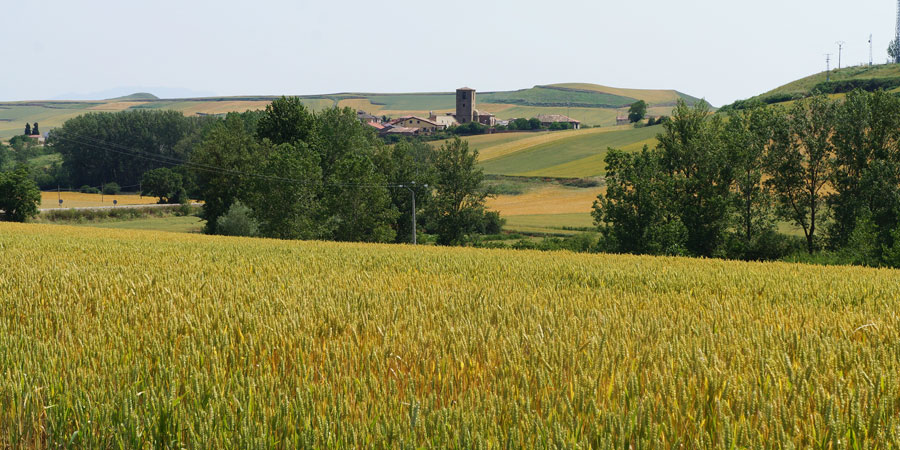
The first stage leaves Muxía and climbs gently away from the Atlantic, past small farms, stone walls and open fields. It ends in Lires, a small, traditional place where the valley opens out to a wide estuary. The next day is one of the finest stretches of the route. Wide Atlantic views open up as you go, and sandy paths and rocky tracks lead into Fisterra. Carry on up to the Cape Finisterre Lighthouse for sweeping views of the ocean, and if you like, follow pilgrim tradition with a swim in the sea.
From Fisterra the path climbs steadily inland through woods and shaded tracks. It reaches Cee, on the Ría de Corcubión, which feels busier after the remote coastal paths. Leaving Cee, you follow the estuary before turning inland on forest tracks and rural lanes to the small settlement of Abeleiroas. A longer stage then crosses farmland, woodland and traditional Galician villages, ending at Negreira beside the River Tambre. On the final day you cross the medieval bridge at Ponte Maceira and climb through woodland and villages into Santiago, where the cathedral towers come into view. The trip ends in the city, with time to explore its UNESCO-listed old town.
A route older than the pilgrimage
This route goes back before Christianity. Pagans travelled to Cape Fisterra on the Costa da Morte, the Coast of Death, believing the sun died there and that the worlds of the living and the dead came closer. The Romans thought it was the most westerly point in Europe and named it Finis Terrae, land's end. From the 12th century, the Codex Calixtinus linked these lands to the story of Saint James. Medieval tradition holds that the Virgin Mary came to Muxía in a stone boat, which is where the name Virxe da Barca, Our Lady of the Boat, comes from.
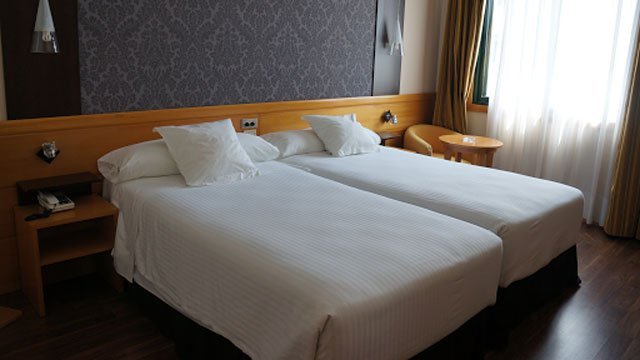
You stay in hand-picked hotels and guesthouses along the way.
The shape of the trip.
Everything you might be wondering.
Q1How hard is it really?
The grading is set by the operator and usually reflects daily distance and total ascent. As a rule of thumb: if you can comfortably manage a 5-6 hour hillwalk at home on a weekend, a moderate-graded route will be fine. Read the day-by-day notes carefully, and train with a loaded pack in the months before.
Q2Can I do this solo?
Yes — self-guided walking holidays are well suited to solo travellers, and some operators waive the single-room supplement on certain departures. The route notes are written for confident independent walkers, and most operators run a 24/7 support line.
Q3Do I need to speak the language?
No. Hotels and restaurants on the route are used to English-speaking walkers. A phrasebook for menus and a few polite basics (hello, thank you, please) is all you really need. The operator's support line speaks English.
Q4Can I bring my dog?
Some routes are dog-friendly, others aren't — it depends on whether all the accommodation on the itinerary accepts dogs. Check with the operator before booking. If you do bring a dog, you'll need a pet passport, up-to-date rabies vaccination, and a lead for villages.
Q5What if it rains?
The route is walkable in rain — your luggage travels ahead regardless, so you'll always arrive somewhere dry. Some trails get slippery in wet weather and the operator's support line can arrange a taxi for any stage if conditions are properly bad.
Q6How do I get there from the UK?
Most routes are reachable by a short flight to a nearby airport, followed by train or transfer. The operator will usually point you at the nearest airport and can advise on rail connections. Some will book train tickets on your behalf for a small fee.
Q7Can I shorten or extend it?
Usually yes. Many operators offer shorter versions of a route as a standalone, and most will add extra nights at the start or end at their own rates. Ask when you enquire — they'll tailor it before booking.
Q8What about cancellation?
Typically a deposit (usually 20-25%) is taken at booking, with the balance due 8-10 weeks before departure. The operator's own terms apply — Mooch doesn't handle the booking or refunds. Travel insurance is strongly recommended.
Three walking holidays, side-by-side.
The two closest walking holidays on Mooch, both on the Camino. Prices are the operators' own, per person.