About this trip.
Comparing firms? Every Camino holiday on Mooch, route by route.
Before you book: Walking holidays vs cycling holidays — when each one is the right answer · Which Camino route is right for you — an honest opinion on each of the seven
Oviedo's El Salvador Cathedral has drawn pilgrims for centuries, and it's where the Camino Primitivo begins. This is the oldest Camino de Santiago route, first used in the 9th century by devout pilgrims from Asturias, King Alfonso II among them. The full route is just over 300 km and runs from Oviedo to the historic centre of Santiago de Compostela over 15 nights. That leaves time to explore both Oviedo and Lugo.
Oviedo and the Asturian stages
Oviedo is the capital of Asturias and a busy university town. Its monuments include the cathedral, the 9th-century San Miguel de Lillo, the church of San Tirso and the Monastery of San Vicente, which houses the Archaeology Museum of Asturias. From the cathedral the trail heads west past the chapel of El Carmen in Lampajúa and down to Ponte de Gallegos. It then follows the Nora river before a steep climb to Escamplero, and crosses the river Nalón to reach Grado.
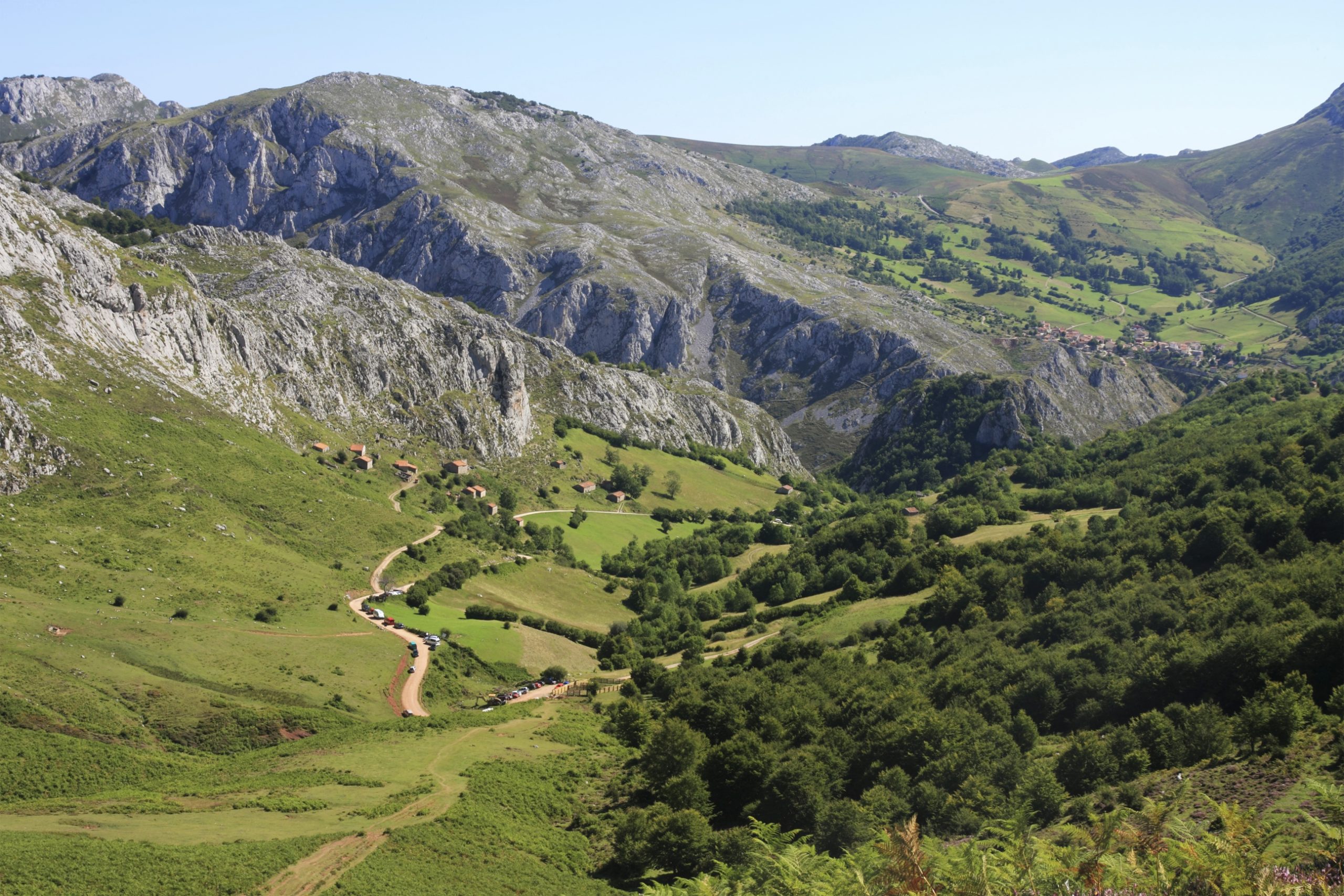
The early stages can be hard work, but the tracks are peaceful and the effort pays off. A 5 km climb to Alto del Fresnu is followed by easier walking past small villages, farmland and the San Salvador Monastery. After Cornellana there's more climbing, past the square granaries known as hórreos, on the way to Salas. Beyond La Espina the route leaves the Camino del Norte and runs through forest and Vega de Rey. A sharp 300m descent then takes you into Pola de Allande. Next comes a 600m climb to the Puerto del Palo, with views of the Cantabrian Mountains, before the Camino de los Hospitales trail leads down to Berducedo.
The stage after Berducedo is probably the toughest of the whole route, and also the most rewarding. It climbs to 1100m, looking out over the river Navia and the Embalse de Salime reservoir. It then drops 900m in just 7km to the dam before a gentle climb to Grandas de Salime.
Into Galicia and on to Lugo
A sharp climb to El Acebo, at 1050m, takes you from Asturias into Galicia. The route continues through Fonfría and Barbeitos to A Fonsagrada. Legend says St James turned the water of the town's fountain into milk for a poor woman's children. Beyond the town are the hilltop ruins of the Hospital de Montouto, once the most important of Galicia's mountain pilgrim hospitals, and the trail goes on to O Cadavo – Baleira. Later it passes the convent of San Francisco de Vilabade, Castroverde and the abandoned village of Soutomerille before reaching Lugo.
Lugo marks the halfway point. Its UNESCO-listed Roman wall wraps around the old town for more than 2km and is the best preserved in Europe. You can walk along the top of it, and the bars near Praza de Santa María serve pinchos, usually free. The city is considered one of the best places to eat in Galicia. If you're there in October, look out for the San Froilán festivities.
From Lugo to Santiago
After Lugo the route follows an old Roman paved road through hamlets, woodland and medieval bridges. In the market town of Melide, about 50km from Santiago, it joins the Camino Francés. The quiet early stages give way to a more sociable final few days.
Planning your Camino
You don't have to walk the full route. You can start at any point and adapt the itinerary, and the trip can be walked or cycled. To receive the Compostela certificate in Santiago, you need to walk at least 100 km, starting from Lugo or earlier.
The shape of the trip.
Everything you might be wondering.
Q1How hard is it really?
The grading is set by the operator and usually reflects daily distance and total ascent. As a rule of thumb: if you can comfortably manage a 5-6 hour hillwalk at home on a weekend, a moderate-graded route will be fine. Read the day-by-day notes carefully, and train with a loaded pack in the months before.
Q2Can I do this solo?
Yes — self-guided walking holidays are well suited to solo travellers, and some operators waive the single-room supplement on certain departures. The route notes are written for confident independent walkers, and most operators run a 24/7 support line.
Q3Do I need to speak the language?
No. Hotels and restaurants on the route are used to English-speaking walkers. A phrasebook for menus and a few polite basics (hello, thank you, please) is all you really need. The operator's support line speaks English.
Q4Can I bring my dog?
Some routes are dog-friendly, others aren't — it depends on whether all the accommodation on the itinerary accepts dogs. Check with the operator before booking. If you do bring a dog, you'll need a pet passport, up-to-date rabies vaccination, and a lead for villages.
Q5What if it rains?
The route is walkable in rain — your luggage travels ahead regardless, so you'll always arrive somewhere dry. Some trails get slippery in wet weather and the operator's support line can arrange a taxi for any stage if conditions are properly bad.
Q6How do I get there from the UK?
Most routes are reachable by a short flight to a nearby airport, followed by train or transfer. The operator will usually point you at the nearest airport and can advise on rail connections. Some will book train tickets on your behalf for a small fee.
Q7Can I shorten or extend it?
Usually yes. Many operators offer shorter versions of a route as a standalone, and most will add extra nights at the start or end at their own rates. Ask when you enquire — they'll tailor it before booking.
Q8What about cancellation?
Typically a deposit (usually 20-25%) is taken at booking, with the balance due 8-10 weeks before departure. The operator's own terms apply — Mooch doesn't handle the booking or refunds. Travel insurance is strongly recommended.
Three walking holidays, side-by-side.
The two closest walking holidays on Mooch, both on the Camino. Prices are the operators' own, per person.