About this trip.
Comparing firms? Every Camino holiday on Mooch, route by route.
Before you book: Walking holidays vs cycling holidays — when each one is the right answer · Which Camino route is right for you — an honest opinion on each of the seven
Ferrol to Santiago on the English Way
The Camino Inglés runs from Ferrol to Santiago de Compostela and is often called the English Way. It was the traditional route for pilgrims from the British Isles and Ireland, who landed by boat at Ferrol or A Coruña and walked the final stretch to the cathedral of Santiago, home to the relics of St James. Starting at Ferrol means walking the last 100 km, which is enough to earn the Compostela certificate. You can request it at the official pilgrim office when you arrive. The route is rated moderate, and it suits anyone who wants a shorter Camino. It is less crowded than the Camino Francés but still has plenty of other pilgrims.
Ferrol holds one of Galicia's most important Holy Week festivals, the Semana Santa de Ferrol. Walking in spring lets you see its religious processions.
From the Galician coast to Sigüeiro
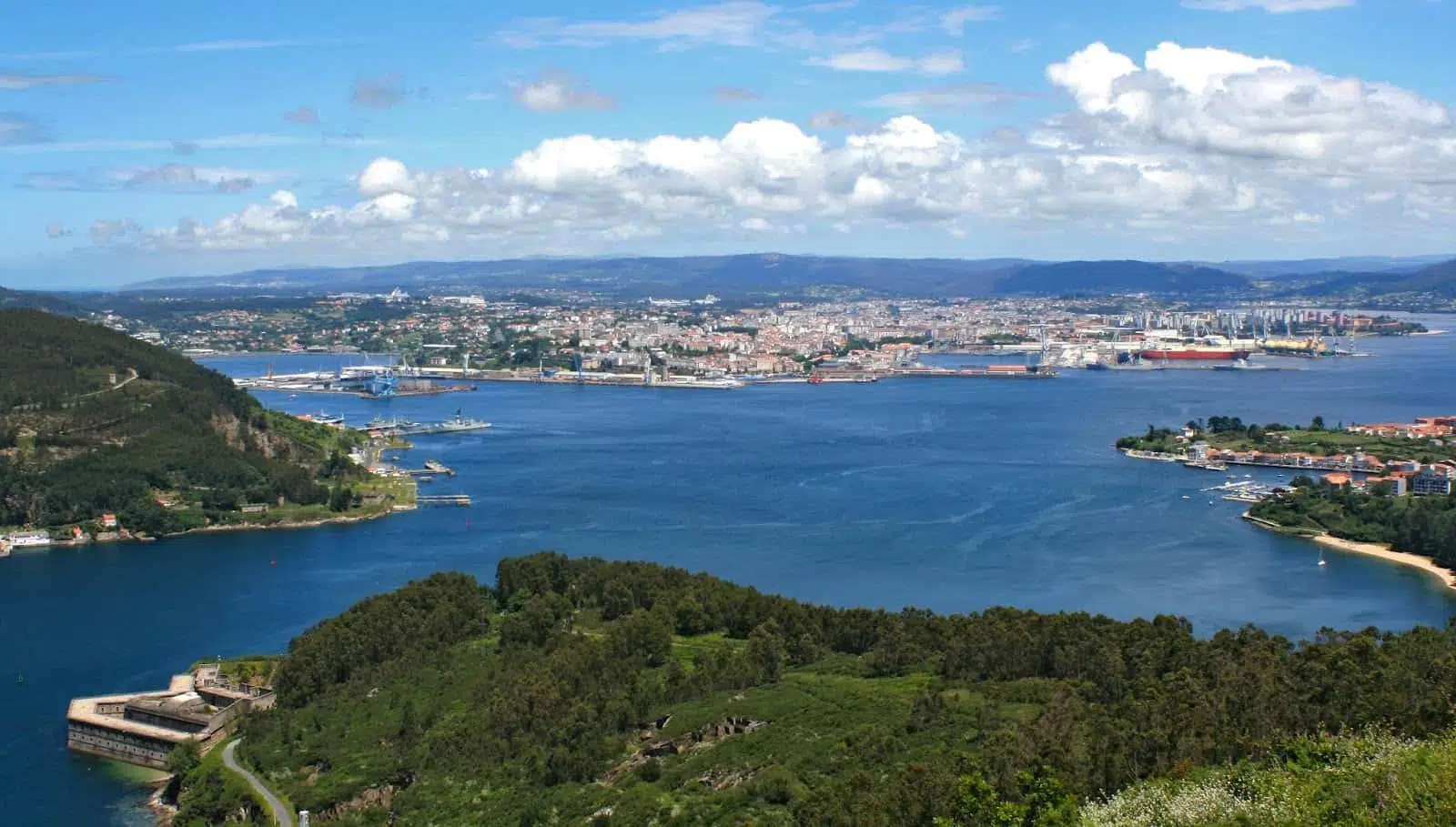
The early stages follow the coast. The track meets the Way of O Salto and then joins the Camino Real, or Royal Way, on the banks of the Eume estuary. The beach at A Magdalena makes a good place to rest. From Pontedeume the trail climbs to views over Betanzos, Ares and Ferrol, then continues to Miño, crossing a medieval stone bridge over the Baxoi river. It then runs along the coast to the wide estuary of the Lambre river, with views of the Rías de Betanzos and the surrounding marshland. Betanzos has some of the most interesting historic buildings in Galicia.
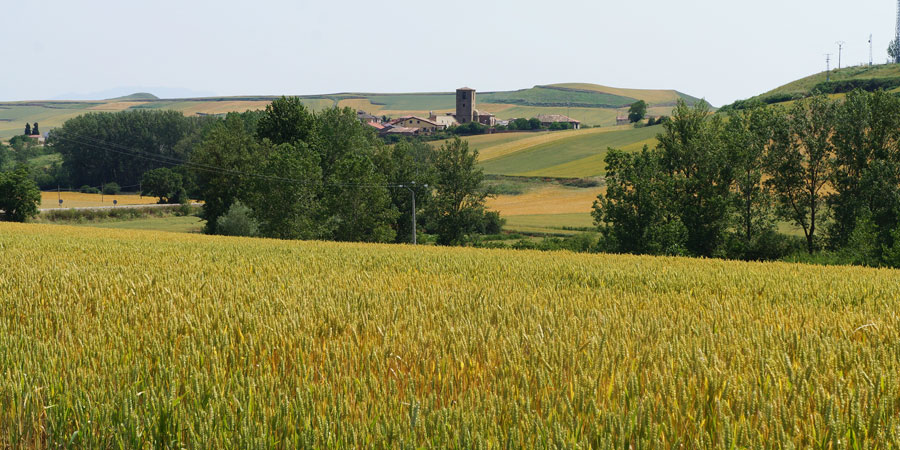
The route then turns inland. You cross the Mendo river on the old bridge of As Cascas and pass the villages of Matino and Boucello and the abandoned hermitage of San Paio. Farmland leads on to Bruma, where there was once a medieval hospital. From the chapel at Bruma the Camino heads into the green area of Ordes, past the church of San Xiao and the village of Casanova, to Sigüeiro. The walk ends in Santiago de Compostela. Its UNESCO-listed old town is full of pilgrims, locals and students, and has plenty of bars, restaurants and cafés.
Where you stay and what's included
You stay in hotels and guesthouses of up to 3 stars, chosen for their character. They are in town centres close to the trail, and every room has a private bathroom. Family packages use places with outdoor space and swimming pools where possible. Most accommodation is within walking distance of the Camino. On the rare occasions it is a few kilometres away, transport to and from the trail is arranged. The package also includes a Holiday Pack on your mobile phone, with a route ebook and Google Maps, and a 24/7 support number.
Getting to Ferrol and home from Santiago
A Coruña Airport is 45km from Ferrol. A bus links the airport with A Coruña train station, and direct trains run to Ferrol five times a day, taking 1h20. Santiago de Compostela Airport is 85km away and has a shuttle bus into Santiago. From Santiago bus station a direct bus goes to Ferrol seven times a day, taking 1h30. Vigo Airport is 180km away, about four hours by bus or train.
At the end of the walk, Santiago Airport is 11km from the city and has a shuttle every 30 minutes. A Coruña Airport (70km) and Vigo Airport (90km) can both be reached by train and bus. A direct bus runs to Porto Airport (210km) once or twice a day. Private transfers can be arranged if you prefer.
The shape of the trip.
Everything you might be wondering.
Q1How hard is it really?
The grading is set by the operator and usually reflects daily distance and total ascent. As a rule of thumb: if you can comfortably manage a 5-6 hour hillwalk at home on a weekend, a moderate-graded route will be fine. Read the day-by-day notes carefully, and train with a loaded pack in the months before.
Q2Can I do this solo?
Yes — self-guided walking holidays are well suited to solo travellers, and some operators waive the single-room supplement on certain departures. The route notes are written for confident independent walkers, and most operators run a 24/7 support line.
Q3Do I need to speak the language?
No. Hotels and restaurants on the route are used to English-speaking walkers. A phrasebook for menus and a few polite basics (hello, thank you, please) is all you really need. The operator's support line speaks English.
Q4Can I bring my dog?
Some routes are dog-friendly, others aren't — it depends on whether all the accommodation on the itinerary accepts dogs. Check with the operator before booking. If you do bring a dog, you'll need a pet passport, up-to-date rabies vaccination, and a lead for villages.
Q5What if it rains?
The route is walkable in rain — your luggage travels ahead regardless, so you'll always arrive somewhere dry. Some trails get slippery in wet weather and the operator's support line can arrange a taxi for any stage if conditions are properly bad.
Q6How do I get there from the UK?
Most routes are reachable by a short flight to a nearby airport, followed by train or transfer. The operator will usually point you at the nearest airport and can advise on rail connections. Some will book train tickets on your behalf for a small fee.
Q7Can I shorten or extend it?
Usually yes. Many operators offer shorter versions of a route as a standalone, and most will add extra nights at the start or end at their own rates. Ask when you enquire — they'll tailor it before booking.
Q8What about cancellation?
Typically a deposit (usually 20-25%) is taken at booking, with the balance due 8-10 weeks before departure. The operator's own terms apply — Mooch doesn't handle the booking or refunds. Travel insurance is strongly recommended.
Three walking holidays, side-by-side.
The two closest walking holidays on Mooch, both on the Camino. Prices are the operators' own, per person.