Camino Francés from Sarria to Santiago (Last 100km)
About this trip.
Comparing firms? Every Camino holiday on Mooch, route by route.
Before you book: Walking holidays vs cycling holidays — when each one is the right answer · Which Camino route is right for you — an honest opinion on each of the seven
Sarria to Santiago de Compostela
Sarria sits 111km from Santiago, just over the 100km minimum you need to walk to earn the Compostela pilgrim certificate. That makes this the shortest way to earn it on foot. It is also the most popular section of the Camino de Santiago and one of the best-known stretches of the Camino Francés, or French Way. This self-guided week runs all year. Your Camino starts in Sarria, a town with plenty of cafés and terraces, so you can settle in with a glass of Albariño before you set off.
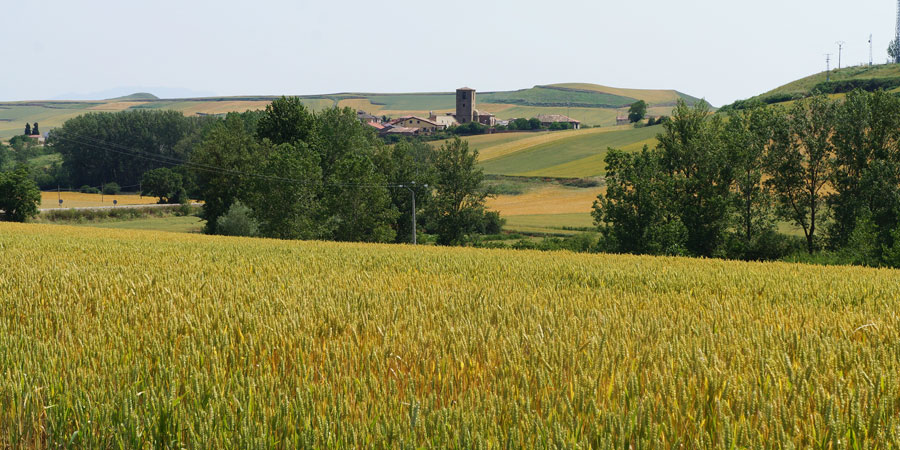
The route crosses the green rolling hills of rural Galicia on ancient paths through oak and chestnut woods, stone villages and farmland. You pass Romanesque churches and medieval bridges, and the kilometre markers count down as you get closer to Santiago. You stay overnight in Portomarín, Palas de Rei, Arzúa and Amenal, and your room and luggage are waiting at every stop.
The stages, day by day
There are five walking days of between 16 and 28km, mostly on gentle hills and good paths. The first stage covers 22km to Portomarín, through villages and hamlets, under oak trees and along country roads, with traditional Galician hórreos (granaries) along the way. Barbadelo has a Romanesque church worth stopping for.
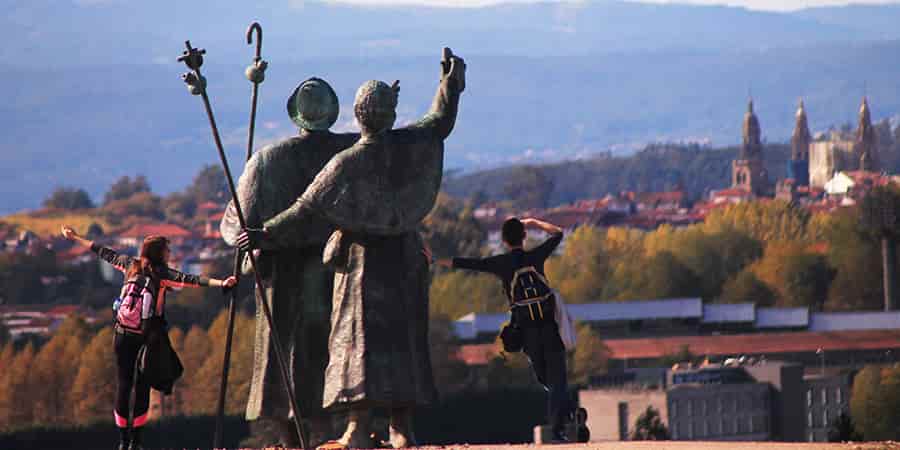
The next day, also 22km, you cross the river Miño, Galicia's longest river, and climb steadily towards the Serra de Ligonde. You pass the hamlets of Gonzar and Ventas de Narón and the Romanesque churches at Castromaior and Eirexe before reaching Palas de Rei. Then comes the longest stage, 28km, mostly downhill through Casanova and Leboreiro to the market town of Melide. Melide is known for octopus, served in its many pulperías. From there the path crosses several streams and follows a forest track to Boente and the medieval hamlet of Ribadiso, then on to Arzúa, which is famous for its local cheese. The final days take you into Santiago de Compostela. There you can collect your Compostela at the Pilgrim's Office and explore the Old Town, a UNESCO World Heritage site.
Who it suits and how to adapt it
If you can walk for 4–6 hours on gentle hills, you can do this route, and there is an 8-week fitness plan to help you prepare. The way is well waymarked, with cafés every few kilometres and plenty of fellow pilgrims, so it suits first-timers and anyone who wants a sociable walk. Support is available 24/7.
An Easy version splits the longer stages into days of 10–19km, with extra nights in places such as Morgade, Ventas de Narón and Melide. It suits active children from around 8–10. You can also shorten the walking stages or add extra nights in Santiago. If you need ground-floor rooms, say so when you book and shorter stages can be planned too.
The shape of the trip.
Everything you might be wondering.
Q1How hard is it really?
The grading is set by the operator and usually reflects daily distance and total ascent. As a rule of thumb: if you can comfortably manage a 5-6 hour hillwalk at home on a weekend, a moderate-graded route will be fine. Read the day-by-day notes carefully, and train with a loaded pack in the months before.
Q2Can I do this solo?
Yes — self-guided walking holidays are well suited to solo travellers, and some operators waive the single-room supplement on certain departures. The route notes are written for confident independent walkers, and most operators run a 24/7 support line.
Q3Do I need to speak the language?
No. Hotels and restaurants on the route are used to English-speaking walkers. A phrasebook for menus and a few polite basics (hello, thank you, please) is all you really need. The operator's support line speaks English.
Q4Can I bring my dog?
Some routes are dog-friendly, others aren't — it depends on whether all the accommodation on the itinerary accepts dogs. Check with the operator before booking. If you do bring a dog, you'll need a pet passport, up-to-date rabies vaccination, and a lead for villages.
Q5What if it rains?
The route is walkable in rain — your luggage travels ahead regardless, so you'll always arrive somewhere dry. Some trails get slippery in wet weather and the operator's support line can arrange a taxi for any stage if conditions are properly bad.
Q6How do I get there from the UK?
Most routes are reachable by a short flight to a nearby airport, followed by train or transfer. The operator will usually point you at the nearest airport and can advise on rail connections. Some will book train tickets on your behalf for a small fee.
Q7Can I shorten or extend it?
Usually yes. Many operators offer shorter versions of a route as a standalone, and most will add extra nights at the start or end at their own rates. Ask when you enquire — they'll tailor it before booking.
Q8What about cancellation?
Typically a deposit (usually 20-25%) is taken at booking, with the balance due 8-10 weeks before departure. The operator's own terms apply — Mooch doesn't handle the booking or refunds. Travel insurance is strongly recommended.
Three walking holidays, side-by-side.
The two closest walking holidays on Mooch, both on the Camino. Prices are the operators' own, per person.