About this trip.
The Falkirk Wheel as a starting point
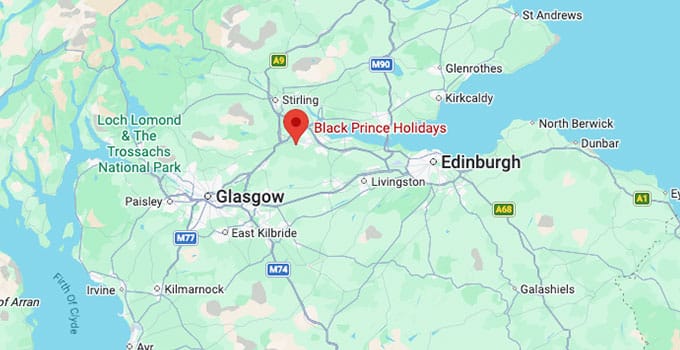
The base sits at the foot of the Falkirk Wheel, the rotating boat lift that joins the Forth and Clyde Canal to the Union Canal 115 feet above — the height of eight double-decker buses. Boats are loaded into a gondola and turned through the air rather than worked up a flight of locks, which is unusual enough to be worth doing once even if you've boated for years. The base also happens to be the literal midpoint between Edinburgh and Glasgow, which shapes most of the decisions you'll make about the week.
Heading east to Edinburgh
The eastern run is the gentler of the two. Up the Wheel, through three locks at the top, and then the Union Canal opens out — a long, lock-free contour canal that traces the hillsides towards the city. With almost no gates to work for the rest of the cruise, the days settle into something close to drifting: aqueducts, viaduct country around the Avon, sheep fields, the occasional cyclist on the towpath. You can reach the centre of Edinburgh by water and tie up within walking distance of the Old Town, which is rare for a major British city.
Heading west to Glasgow
Going the other way is more hands-on. The Forth and Clyde Canal works through a series of locks and swing bridges and threads a string of small lowland villages — Auchinstarry, Kirkintilloch, Cadder — before reaching the edge of Glasgow. Crucially, the locks and bridges are all operated by Scottish Canal staff rather than the crew, which takes the physical edge off the route and lets you concentrate on steering and on choosing where to stop. It is a less postcard-pretty stretch than the Union; more former mining country, more industrial backbone, but the villages are friendly and the canal itself is well looked after.
Boats, bookings and getting there
Black Prince keep two- to ten-berth narrowboats here, all with central heating, a galley and a proper bathroom; full handover training is given before you leave the pontoon. Standard slots are three- and four-night short breaks (with Friday or Tuesday returns) or full weeks, and a two-week trip is the natural way to do both cities without rushing either. One thing worth knowing before you book: the Kelpies — the giant horse-head sculptures about four miles east of the base — are currently not reachable by water owing to lock works due to finish in August 2026. They're an easy taxi from the base if you want to see them.
Falkirk itself is well connected. Edinburgh Airport is the nearest hub, and Falkirk High and Falkirk Grahamston stations both run frequent services from Edinburgh and Glasgow. Tesco, Asda and Morrisons all sit within a ten-minute drive for provisioning, or you can arrange a Tesco delivery direct to the base on arrival day.
The shape of the trip.
What's typically in the price, what isn't.
A general guide for canal holidays of this kind. Check the operator's booking page for the final inclusions on this specific trip.
Typically included
- ✓The boat itself, booked by the night or week
- ✓Fuel for the engine at typical cruising pace
- ✓Handover briefing at the base — no licence needed
- ✓Mooring ropes, fenders, lifejackets and a basic starter pack
- ✓24/7 technical support line for the duration of the hire
Typically not included
- ×Travel to and from the base (train, flights, transfers)
- ×Travel insurance with cruise cover (strongly recommended)
- ×Bedding, towels, or end-of-hire cleaning on some fleets (a modest supplement if required)
- ×Food, drink, and groceries — stock up at towpath-side villages
- ×Lock and mooring fees on some European waterways
- ×Pet supplement (typically £20-30 per dog per week if allowed)
Everything you might be wondering.
Q1Do I need a licence?
No. The hire base gives you a short handover covering steering, locks, and safety before you set off. Speed limit is 4 mph on UK narrowboats — slower than a walking pace. If you can drive a car, you can drive a canal boat.
Q2How many locks will I do?
Depends on the route. The Llangollen has about 20 over a week — leisurely. The Caen Hill flight on the Kennet & Avon has 29 in one stretch — a full day's work. Some European routes (Canal du Midi, Camargue) have almost none. The operator's map shows lock counts per day so you can pace yourself.
Q3Can I travel solo?
Most hire companies require two adults on board, mainly so one person can work locks while the other steers. A few allow solo hire on quieter routes — ask the operator before booking.
Q4What's included?
Typically the boat, fuel for the engine, a handover briefing, mooring ropes, fenders and a starter pack (tea, coffee, washing-up kit). Bedding is sometimes included, sometimes £10-20 extra. Food is your own, shopped from towpath-side villages.
Q5What if something breaks?
The hire base has a 24/7 support line. A fitter will usually come out within a few hours. Engines are robust and well-maintained — the most common failures are blocked weed hatches (clearable yourself) and flat domestic batteries.
Q6Is it good for kids?
Yes — lifejackets are provided and kids love working locks. Older children (6+) can help steer under supervision. Toddlers need constant watching near open decks. A reinforced guard rail helps.
Q7Can I bring my dog?
Most hire companies allow one or two dogs for a small supplement (£20-30 per dog per week). They love the towpath walks. The boat will lose its deposit if the dog damages upholstery — bring a blanket.
Q8What about cancellation?
Typically a 25% deposit at booking, balance 8-12 weeks before departure. Each operator has its own cancellation ladder (steeper close to departure). Travel insurance with cruise cover is recommended.
Three canal holidays, side-by-side.
Other canal holidays on Mooch in the same spirit. All prices per person, from the operator.