Kumano Kodo.
Curated walking, cycling and slow-travel holidays in Kumano Kodo. Self-guided trips from specialist operators, with bags transferred and routes book in hand.
Kumano Kodo, slowly.
The Kumano Kodo is a network of pilgrimage trails that has been in continuous use since at least the 10th century, threading through the forested mountains of the Kii Peninsula south of Osaka. Three Grand Shrines anchor the network — Hongū Taisha at the centre, Hayatama Taisha on the coast at Shingū, and Nachi Taisha near the 133-metre Nachi Falls. With the Camino de Santiago in Spain, it is one of only two pilgrimage routes recognised by UNESCO as a World Heritage Site, and the two route systems are formally twinned.
Most walking holidays follow the Nakahechi, the central royal route from Tanabe to Hongū. It's the historically important line, the gentlest of the main trails (still hilly, but with manageable daily ascents), and it links a string of villages that have proper minshuku and onsen for accommodation. Six to eight days of walking covers it comfortably with rest days, typically including the ferry down the Kumano River from Hongū to the coast and a transfer back to Kyoto or Osaka at the start and end. The harder routes — the Kohechi from Kōyasan, the Iseji along the coast — are taken less often by Western operators but exist for walkers who want more remote sections.
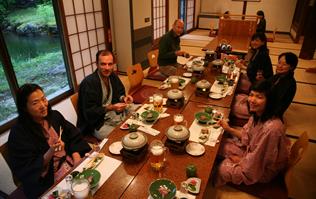
The path itself is what makes the trip. Cedar forest, stone-paved sections from the Edo period, hand-painted route markers, oji subsidiary shrines every kilometre or so. The accommodation is part of the experience — most nights are spent in family-run minshuku eating multi-course kaiseki dinners and sleeping on futon. Onsen baths at Yunomine and Kawayu have been used by pilgrims for centuries; Yunomine's Tsuboyu is the only UNESCO-listed onsen in Japan.
Spring (March-May) and autumn (October-November) are the best seasons. April brings cherry blossom in the valleys, late November the maple colour. Summer is hot, humid and prone to typhoons. Winter walking is possible at lower altitudes but limits the upper sections.
Macs Adventure runs two Nakahechi-route weeks, one including the Kyoto and Osaka cultural ends. Both are self-guided with luggage transferred between minshuku and detailed route notes. The walks tend to suit walkers who want a different kind of long-distance path — quiet, structured, with a strong sense of arrival each day.