About this trip.
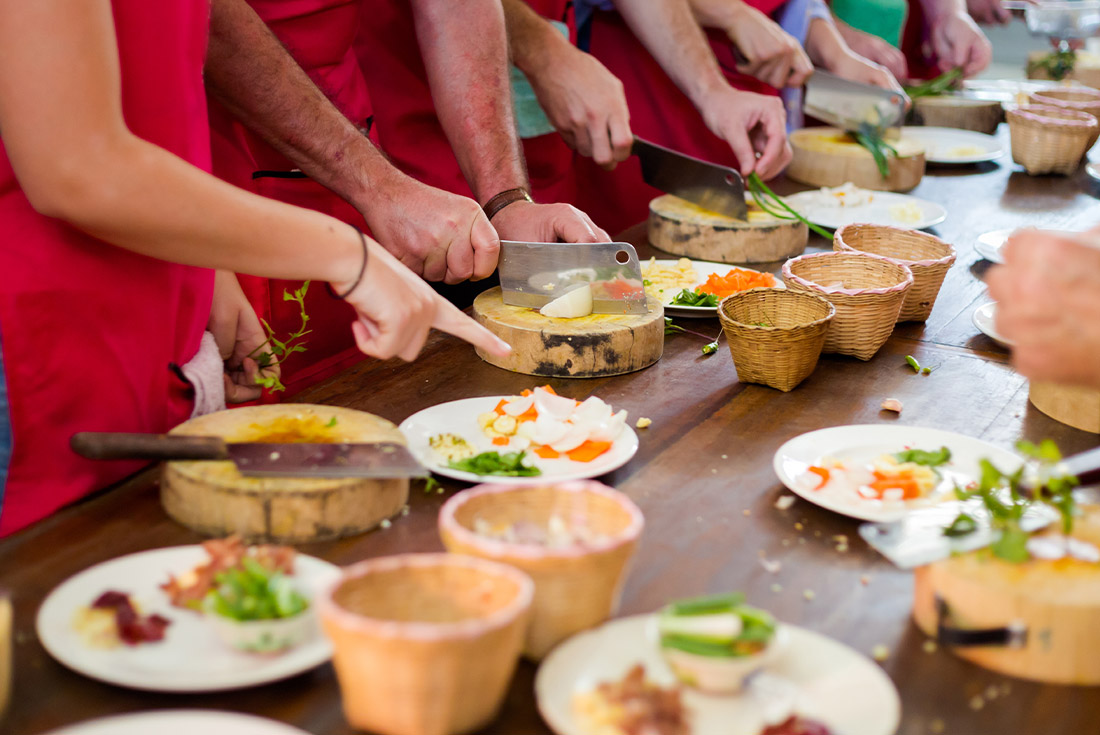
Four countries, tied together by what people eat at home. The route runs through Croatia, Montenegro, Kosovo and North Macedonia, with dinners in family kitchens in Ohrid, Lake Prespa and Dihovo, a cooking demonstration in the village of Dolno Dupeni, and stops at an olive mill near Kotor, a centuries-old smokehouse, an apple farm and a beekeeper along the way.
Food as a way of seeing the Balkans
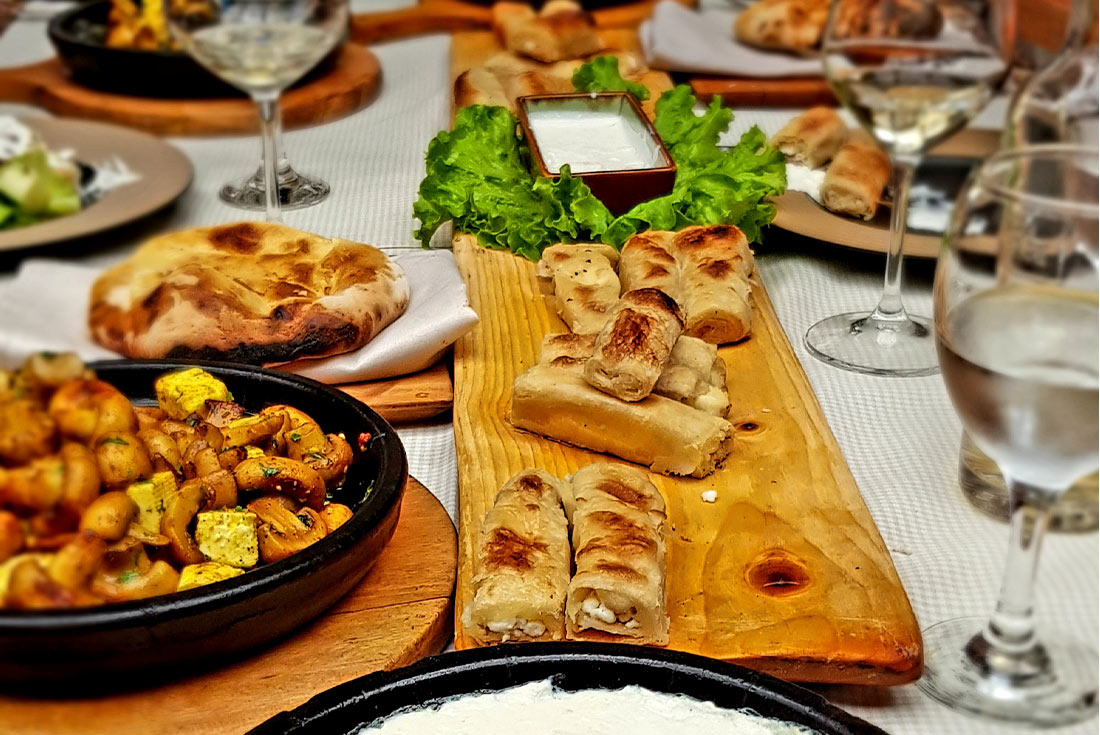
The premise is straightforward — the table is where the region tells on itself. Croatian charcuterie reflects the slow craft of pork preservation, each cured meat carrying the mark of its region. Montenegrin olive oil, pressed in stone mills that were once turned by hand, tastes of the Adriatic groves it comes from. North Macedonian home cooking — demonstrated in a village kitchen in Dolno Dupeni, then eaten at long tables in Ohrid and Dihovo — sits somewhere between Ottoman and Mediterranean. Kosovo, usually the quietest stop on a Balkan itinerary, gets proper time here: Prizren's stone lanes, and the fifteenth-century ruins at Rozafa, just across the border in Albania.
The route in outline
The trip begins in Dubrovnik with a welcome meeting at 6.30pm on day one — the old town is walkable inside its medieval walls, and most people find a dinner nearby to start things off. Day two crosses into Montenegro for Kotor and an olive farm visit in the village of Tici, in the Lustica Bay area. Second-generation growers walk you through the pressing process and serve a tasting alongside local ham, cheese and grape brandy. Back in Kotor, the afternoon is free for the ruined fortification walls above the town, or a wine bar in the evening.
From day three the route heads east — across into Kosovo via Rozafa Fortress, a stronghold of the allied Christian forces against the invading Ottomans. Prizren follows, then the days shift to North Macedonia: the Lake Prespa region, Dihovo, Ohrid, and Skopje at the end. The home-hosted meals and the cooking demonstration fall in this stretch, as do the smokehouse, the apple farm and the beekeeper. Guided tours cover Prizren and Skopje.
Bookings and logistics
This runs as a small group tour, which is what the in-home dinners and farm visits require — they don't scale. The welcome meeting on day one in Dubrovnik collects insurance details and next of kin information, so arriving in time for it matters. Only one night is scheduled in Dubrovnik, and the old town deserves longer — an extra night or two at the start is worth building in. The day-two transfer from Dubrovnik to Kotor is roughly four hours. The trip suits travellers who want the food to do the heavy lifting, rather than a sightseeing circuit with meals slotted in around it.
The shape of the trip.
What's typically in the price, what isn't.
A general guide for food holidays of this kind. Check the operator's booking page for the final inclusions on this specific trip.
Typically included
- ✓Hotel or guesthouse accommodation — double or twin rooms, often locally-owned
- ✓A local leader or tour manager throughout
- ✓Most cooking classes, market visits and producer tours on the itinerary
- ✓Some meals — typically breakfasts, a few shared lunches and the cooking-class dinners
- ✓In-country transport between towns on the route (train, minibus, driver)
Typically not included
- ×Flights to and from the start city
- ×Travel insurance (strongly recommended)
- ×Most evening meals and lunches — eat where the group or your nose leads
- ×Drinks beyond what's included with set meals — wine flights and cocktails are extra
- ×Single-room supplements on shared-room departures (often £200-500 per trip)
- ×Tips for the tour leader and host families (customary but discretionary)
Everything you might be wondering.
Q1How much cooking is there?
Varies widely. A 'real food adventure' is typically 1-2 cooking classes plus market visits, food tastings and restaurant meals on an otherwise normal small-group trip. A cooking-school week is 4-5 hands-on sessions — that's most of the holiday. Check the day-by-day.
Q2Can I get vegetarian / vegan / gluten-free?
Yes. Cooking-focused holidays handle dietary requirements well — the organiser speaks to local hosts and cooks ahead of time. Flag requirements at booking, not on arrival. Some remote itineraries (street food in Marrakech, markets in Vietnam) are harder for strict veganism — ask before paying.
Q3Is the food high-end or everyday?
Most trips we list focus on everyday local cooking — market produce, home kitchens, family-run tavernas. Michelin-tier dining holidays exist but are niche. The ones worth travelling for are the home-cook-led ones.
Q4Will I gain weight?
Probably yes — but the good ones build walking into the day so it evens out. Tours that include long walks between meals (Tuscany, Puglia) keep you honest. Pure cooking-school weeks are where the damage happens.
Q5Can I travel solo?
Cooking classes suit solo travellers well — you're in a group for the cooking, then free between sessions. Single-room supplements apply; some operators offer shared-room matching. Escorted food tours (Intrepid, Flavours) are set up for solos.
Q6Do I need to speak the language?
No. English-speaking hosts are the norm on organised trips, and a local co-translator is common. Learn a few words for ingredients — it makes the hosts smile.
Q7Is it family-friendly?
Some trips explicitly welcome families (teen+ usually); others are adult-focused. Kids love market visits and pasta-making; they hate three-hour wine tastings. Read the age policy before booking.
Q8What about cancellation?
Typically 20-25% deposit at booking, balance 8-10 weeks before departure. Check the operator's own terms — food tours sometimes have tighter windows because small-group trips have low break-even thresholds. Travel insurance strongly recommended.
Three food holidays, side-by-side.
Other food holidays on Mooch in the same spirit. All prices per person, from the operator.