Northern Spain Real Food Adventure
Northern Spain by stomach — Rioja, Bilbao pintxos, Asturian cider, the cheese caves of Picos de Europa. Intrepid's local-led format means you eat where Spaniards eat.

About this trip.
Nine days across the north
The trip runs from Barcelona to Santiago de Compostela — roughly the full width of northern Spain — following a food trail rather than a sightseeing one. You start with Catalan tapas and a cooking class, finish with Galician seafood, and in between take in the vineyards of La Rioja, the Basque coast, an Asturian cider house near the Picos de Europa, and the Atlantic shore of Galicia. It is framed as a culinary pilgrimage, with Santiago in your sights, which is fair enough: this is a part of the country where food is taken seriously and what's on the plate shifts noticeably every few hundred kilometres.
The route, market by market
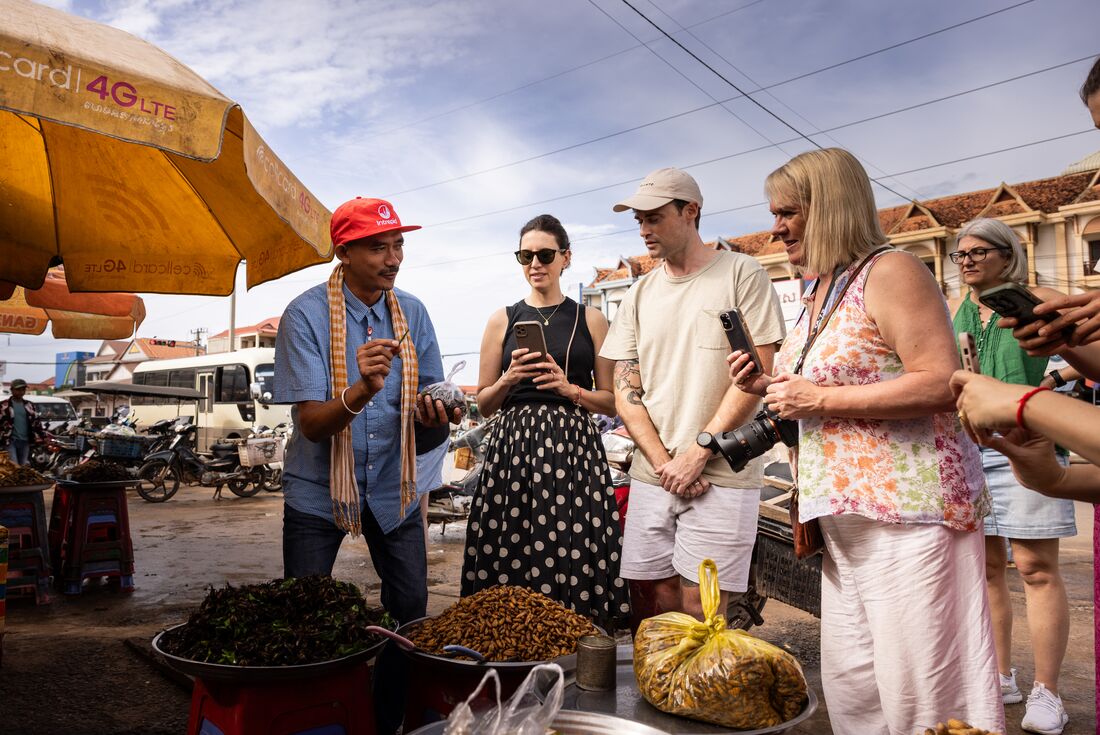
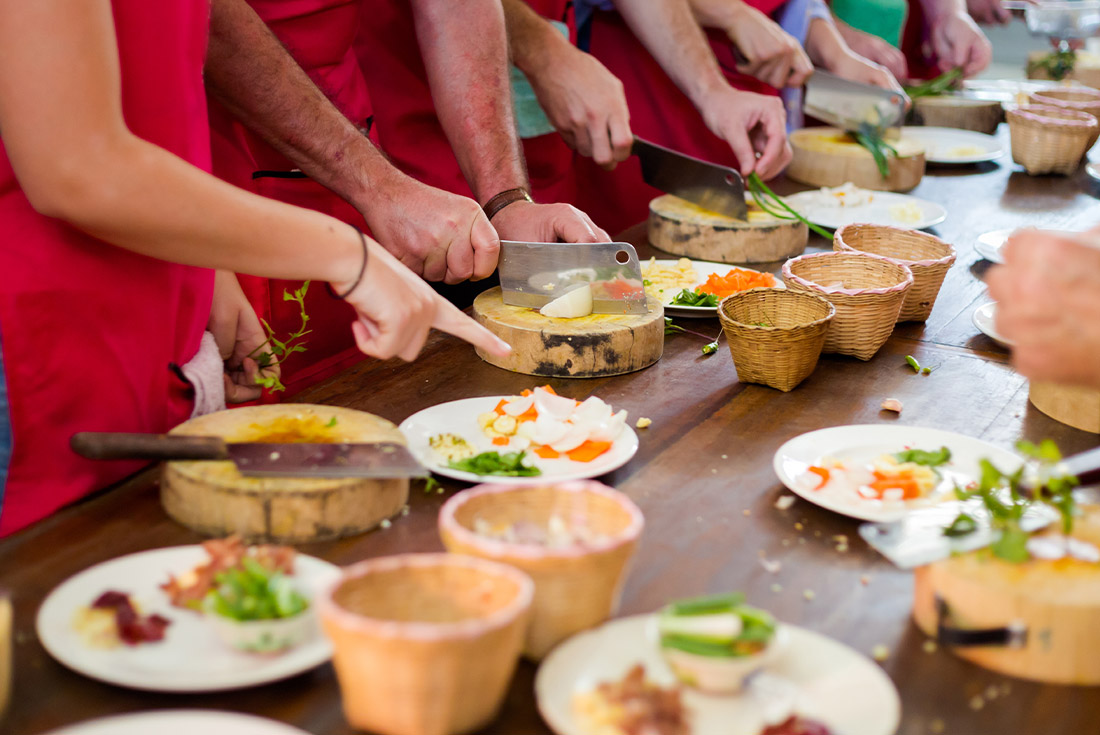
Day one is a soft start — a welcome meeting at 6pm in Barcelona, with the afternoon free for the Gothic Quarter, La Rambla or the Picasso Museum. The following day brings an Urban Adventures market visit and tapas tour, alongside a Catalan cooking class. The Sagrada Familia and Casa Mila are within reach if you want them; pre-booking Sagrada Familia tickets before you arrive is the sensible move.
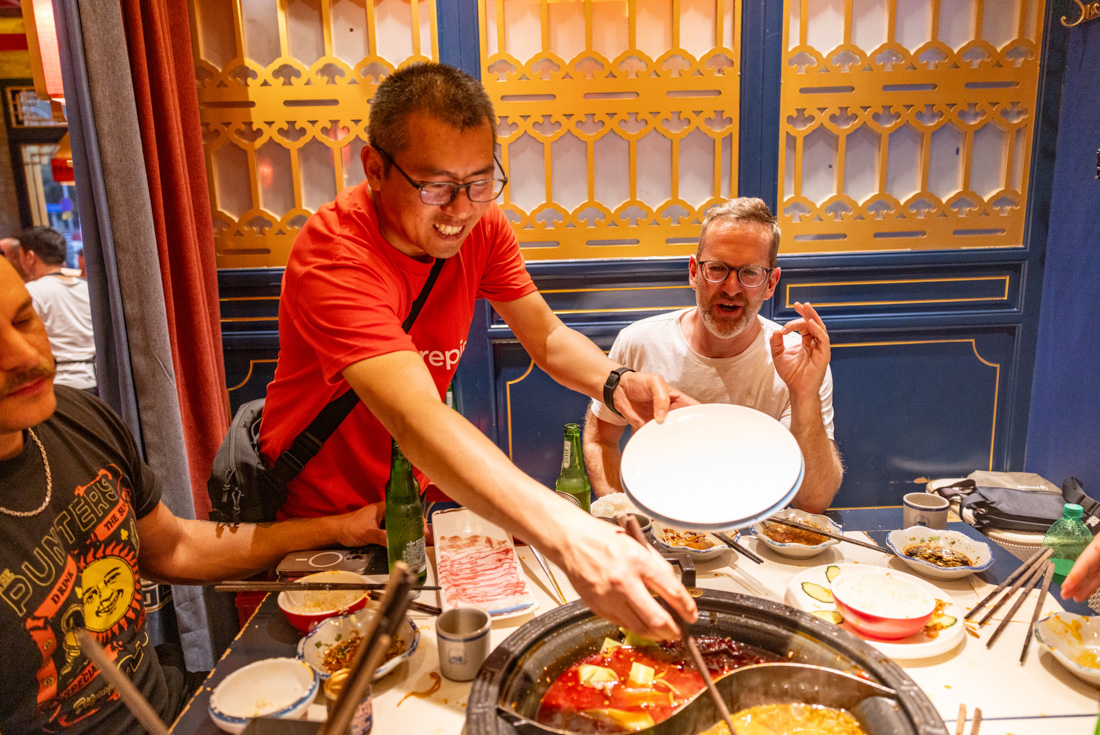
From Barcelona you take the train to Logrono, capital of La Rioja, which sits on the Ebro and has one of the most distinguished tapas-bar traditions in the country. The route then climbs into Basque Country — beaches and a thriving arts scene — and west to a traditional sidreria near the Picos de Europa, where cider is poured the local way. The final stretch reaches the Galician coast for fresh seafood before finishing in Santiago de Compostela, the historic end-point of the Camino and a natural close to a food-led trip across the north.
Group, pace and what's included
This is one of Intrepid's Original-style trips: tourist-class hotels, a relaxed pace, and a mix of included activities and free time rather than a packed itinerary. Group size is capped at twelve, with a minimum age of fifteen — old enough that this works for families with older teenagers as well as for solo travellers and couples. The trip code is ZMZZ, ratings sit at 4.8 across 26 reviews, and pricing starts from £2,688.
A handful of meals are included — notably breakfasts, the market tapas lunch, the cooking class and the sidreria visit — but several dinners are deliberately left open so you can use the local bars and restaurants the trip is built around. Internal transport (largely rail) and a local leader throughout are part of the package; international flights to Barcelona and out of Santiago de Compostela are not. The welcome meeting on day one is non-optional, as insurance and next-of-kin details are collected then.
The shape of the trip.
What's typically in the price, what isn't.
A general guide for food holidays of this kind. Check the operator's booking page for the final inclusions on this specific trip.
Typically included
- ✓Hotel or guesthouse accommodation — double or twin rooms, often locally-owned
- ✓A local leader or tour manager throughout
- ✓Most cooking classes, market visits and producer tours on the itinerary
- ✓Some meals — typically breakfasts, a few shared lunches and the cooking-class dinners
- ✓In-country transport between towns on the route (train, minibus, driver)
Typically not included
- ×Flights to and from the start city
- ×Travel insurance (strongly recommended)
- ×Most evening meals and lunches — eat where the group or your nose leads
- ×Drinks beyond what's included with set meals — wine flights and cocktails are extra
- ×Single-room supplements on shared-room departures (often £200-500 per trip)
- ×Tips for the tour leader and host families (customary but discretionary)
Everything you might be wondering.
Q1How much cooking is there?
Varies widely. A 'real food adventure' is typically 1-2 cooking classes plus market visits, food tastings and restaurant meals on an otherwise normal small-group trip. A cooking-school week is 4-5 hands-on sessions — that's most of the holiday. Check the day-by-day.
Q2Can I get vegetarian / vegan / gluten-free?
Yes. Cooking-focused holidays handle dietary requirements well — the organiser speaks to local hosts and cooks ahead of time. Flag requirements at booking, not on arrival. Some remote itineraries (street food in Marrakech, markets in Vietnam) are harder for strict veganism — ask before paying.
Q3Is the food high-end or everyday?
Most trips we list focus on everyday local cooking — market produce, home kitchens, family-run tavernas. Michelin-tier dining holidays exist but are niche. The ones worth travelling for are the home-cook-led ones.
Q4Will I gain weight?
Probably yes — but the good ones build walking into the day so it evens out. Tours that include long walks between meals (Tuscany, Puglia) keep you honest. Pure cooking-school weeks are where the damage happens.
Q5Can I travel solo?
Cooking classes suit solo travellers well — you're in a group for the cooking, then free between sessions. Single-room supplements apply; some operators offer shared-room matching. Escorted food tours (Intrepid, Flavours) are set up for solos.
Q6Do I need to speak the language?
No. English-speaking hosts are the norm on organised trips, and a local co-translator is common. Learn a few words for ingredients — it makes the hosts smile.
Q7Is it family-friendly?
Some trips explicitly welcome families (teen+ usually); others are adult-focused. Kids love market visits and pasta-making; they hate three-hour wine tastings. Read the age policy before booking.
Q8What about cancellation?
Typically 20-25% deposit at booking, balance 8-10 weeks before departure. Check the operator's own terms — food tours sometimes have tighter windows because small-group trips have low break-even thresholds. Travel insurance strongly recommended.
Three food holidays, side-by-side.
Other food holidays on Mooch in the same spirit. All prices per person, from the operator.