About this trip.
Tsukiji outer market and the welcome dinner
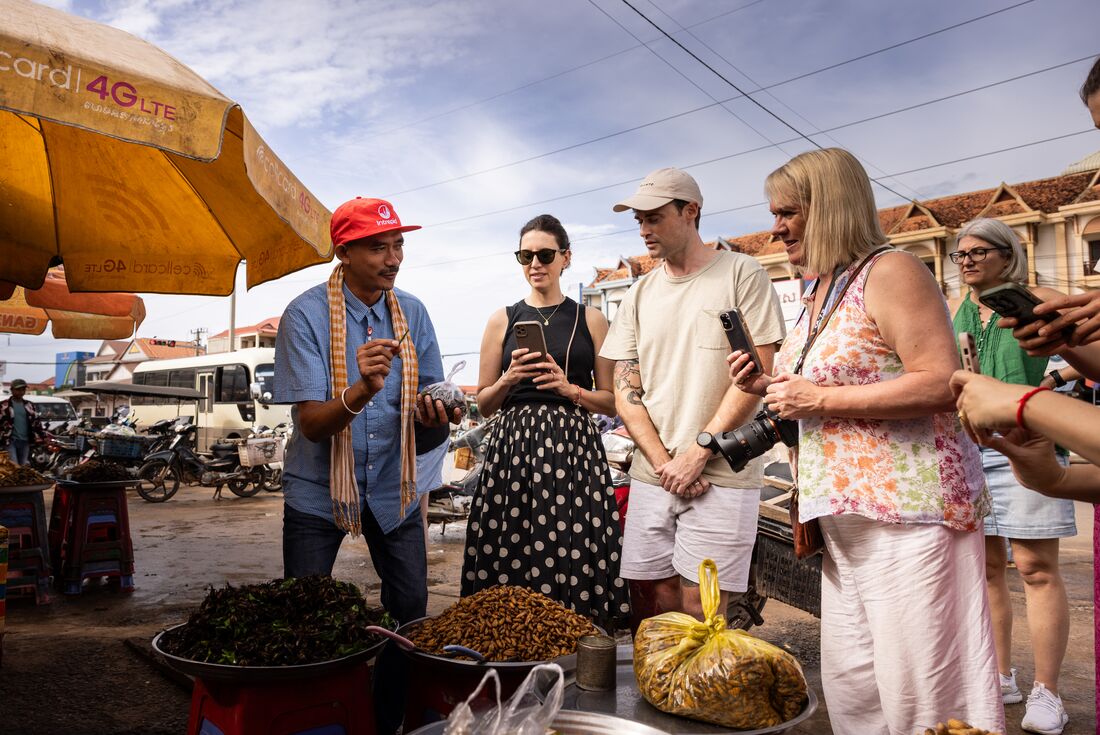
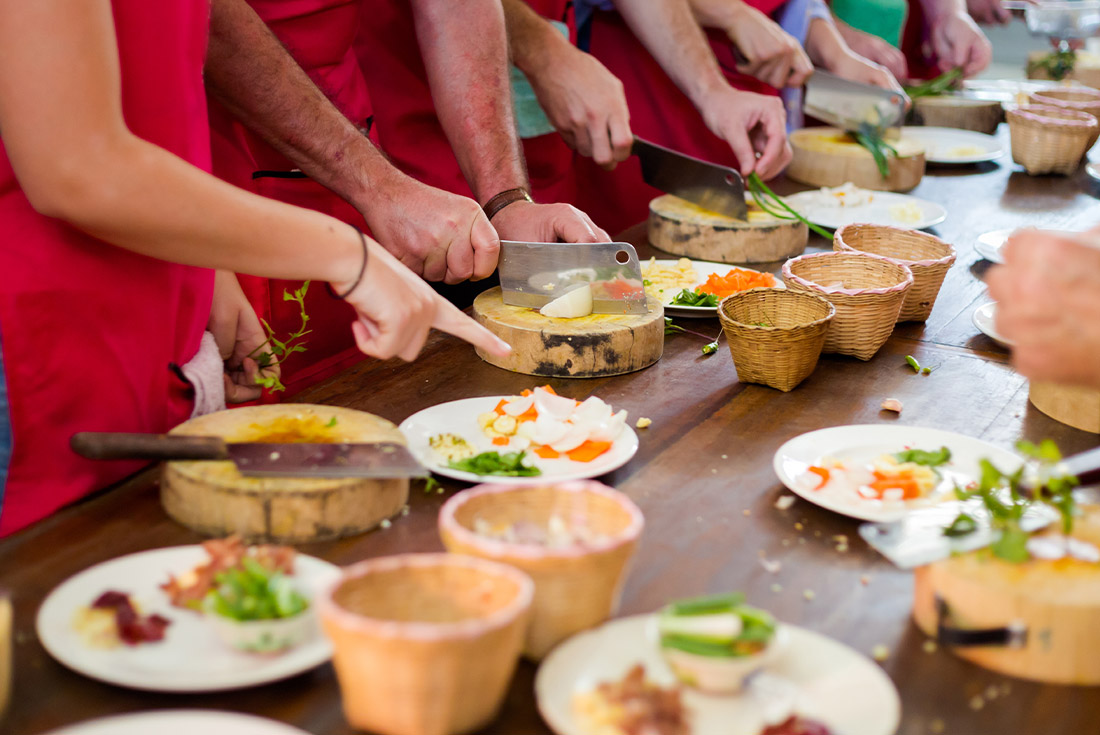
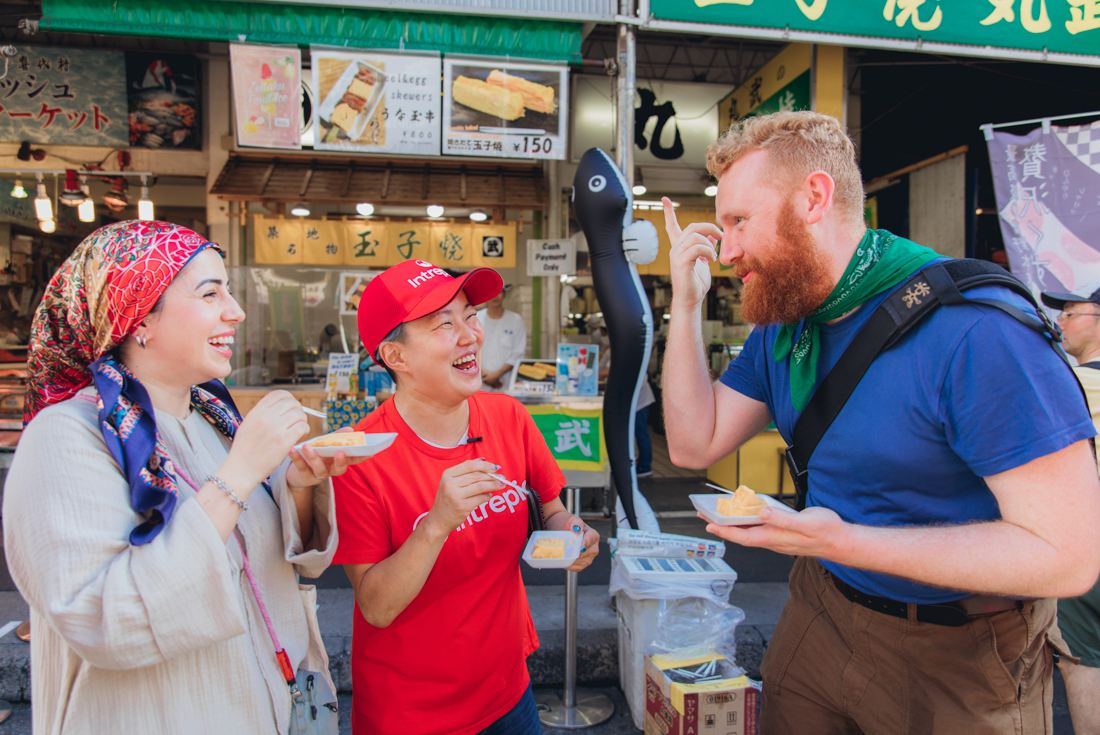
Tsukiji Outer Market opens early, and on day two you're walking it with the group — seafood from Tokyo's largest wholesale fish market, delivered and ready to sample daily. From there it's straight into a sushi-making class: the history of the Edo-era dish, how to choose fish, proper slicing, the rice-making techniques that separate a decent roll from a good one. You taste what you've made. It's the early anchor of a trip that runs through five Japanese cities — Tokyo, Kanazawa, Kyoto, Koya-san and Osaka — with cooking classes and local markets along the way.
The Tokyo days
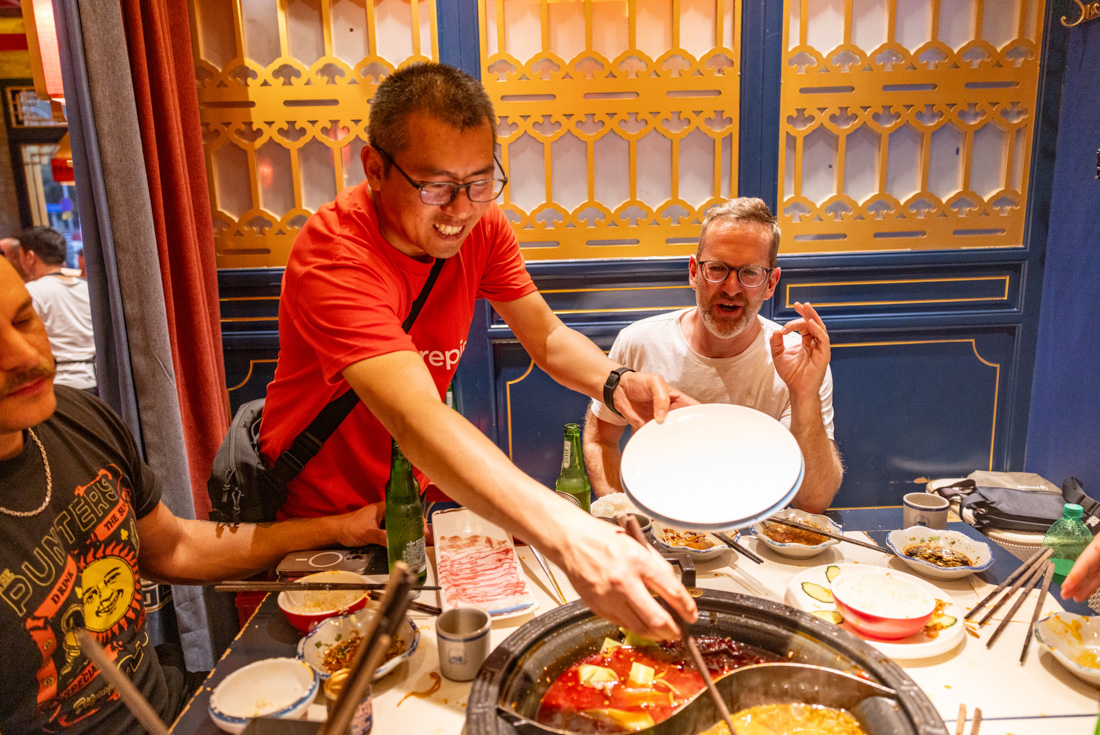
Day one is a soft landing. The group meets at 6pm — the local leader collects insurance and next-of-kin details then — before a welcome dinner built around yakitori skewers and soba noodles. Afterwards the itinerary suggests Shibuya's backstreets for sake or a local cocktail. If you've arrived earlier, Tokyo rewards wandering: izakaya (casual bars serving small share plates), karaoke, neighbourhood backstreets, museums. Day two, after the Tsukiji walk and sushi class, there's free time in Asakusa. Senso-ji, the city's oldest temple at almost 1,400 years old, is the landmark; the sweet stalls around it are the reason to linger — daigaku imo (fried sweet potato tossed in sugar and soy) and dorayaki (red bean paste between two small pancakes) are both Asakusa specialities. Evening is Tsukishima, the neighbourhood that belongs to monjayaki — a savoury pancake with a gooey, cheese-like consistency.
West through four more cities
From Tokyo the route continues through Kanazawa, Kyoto, Koya-san and Osaka, with more cooking classes and market visits along the way. The trip is built around eating the local way, with a local leader throughout — Intrepid's standard small-group format. The source material beyond Tokyo is light on specifics, so expect the same pattern rather than a radical shift in style: markets in the morning, hands-on cooking, neighbourhood dinners.
Booking and who it suits
The 6pm welcome meeting on day one matters — that's where insurance and next-of-kin paperwork happens — and Intrepid suggests booking an extra night or two in Tokyo beforehand if you want unhurried time in the city, because free time tightens once the itinerary begins. Night one is a hotel; the welcome dinner is included. It suits travellers who want Japan opened up through food specifically, who don't mind a set itinerary, and who'd rather eat monjayaki in Tsukishima with a local guide than work out the train to Tsukishima on their own. The trip generates 37 kg of CO2-e per person per day, which Intrepid publishes alongside its climate commitments.
The shape of the trip.
What's typically in the price, what isn't.
A general guide for food holidays of this kind. Check the operator's booking page for the final inclusions on this specific trip.
Typically included
- ✓Hotel or guesthouse accommodation — double or twin rooms, often locally-owned
- ✓A local leader or tour manager throughout
- ✓Most cooking classes, market visits and producer tours on the itinerary
- ✓Some meals — typically breakfasts, a few shared lunches and the cooking-class dinners
- ✓In-country transport between towns on the route (train, minibus, driver)
Typically not included
- ×Flights to and from the start city
- ×Travel insurance (strongly recommended)
- ×Most evening meals and lunches — eat where the group or your nose leads
- ×Drinks beyond what's included with set meals — wine flights and cocktails are extra
- ×Single-room supplements on shared-room departures (often £200-500 per trip)
- ×Tips for the tour leader and host families (customary but discretionary)
Everything you might be wondering.
Q1How much cooking is there?
Varies widely. A 'real food adventure' is typically 1-2 cooking classes plus market visits, food tastings and restaurant meals on an otherwise normal small-group trip. A cooking-school week is 4-5 hands-on sessions — that's most of the holiday. Check the day-by-day.
Q2Can I get vegetarian / vegan / gluten-free?
Yes. Cooking-focused holidays handle dietary requirements well — the organiser speaks to local hosts and cooks ahead of time. Flag requirements at booking, not on arrival. Some remote itineraries (street food in Marrakech, markets in Vietnam) are harder for strict veganism — ask before paying.
Q3Is the food high-end or everyday?
Most trips we list focus on everyday local cooking — market produce, home kitchens, family-run tavernas. Michelin-tier dining holidays exist but are niche. The ones worth travelling for are the home-cook-led ones.
Q4Will I gain weight?
Probably yes — but the good ones build walking into the day so it evens out. Tours that include long walks between meals (Tuscany, Puglia) keep you honest. Pure cooking-school weeks are where the damage happens.
Q5Can I travel solo?
Cooking classes suit solo travellers well — you're in a group for the cooking, then free between sessions. Single-room supplements apply; some operators offer shared-room matching. Escorted food tours (Intrepid, Flavours) are set up for solos.
Q6Do I need to speak the language?
No. English-speaking hosts are the norm on organised trips, and a local co-translator is common. Learn a few words for ingredients — it makes the hosts smile.
Q7Is it family-friendly?
Some trips explicitly welcome families (teen+ usually); others are adult-focused. Kids love market visits and pasta-making; they hate three-hour wine tastings. Read the age policy before booking.
Q8What about cancellation?
Typically 20-25% deposit at booking, balance 8-10 weeks before departure. Check the operator's own terms — food tours sometimes have tighter windows because small-group trips have low break-even thresholds. Travel insurance strongly recommended.
Three food holidays, side-by-side.
Other food holidays on Mooch in the same spirit. All prices per person, from the operator.