About this trip.
A food culture four thousand years deep
Pistachios have grown on Aegina since the 19th century, carried to the small Saronic island from Syria via Chios. An hour's ferry from the port of Piraeus, Aegina is the first real stop on this food-led tour through Greece — a route that begins in Athens and works its way south through Poros, Nafplio, Hydra, Kardamyli and the Mani Peninsula.
Greek cooking is often said to be more than four thousand years old, and the trip uses that depth as its organising principle. You don't eat your way through the greatest hits; you eat your way through the places themselves. The group is small, the pace measured, and the days are built around the people who grow, cook and pour what ends up on your plate.
Athens and the first mezze
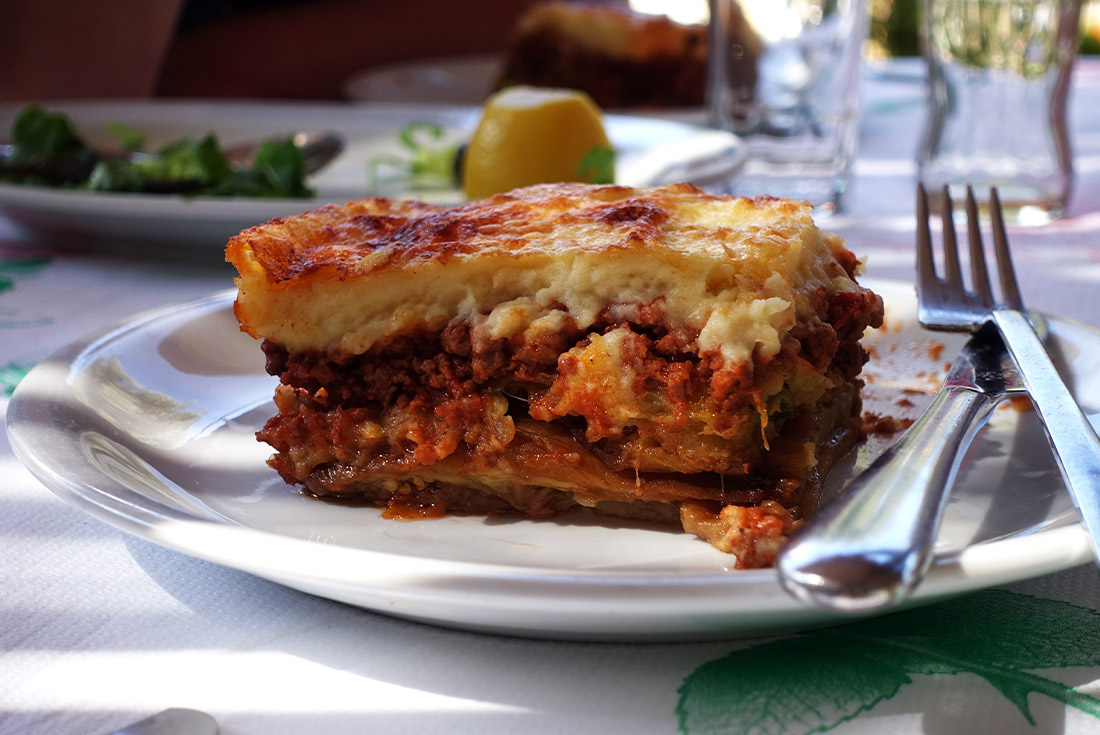
Day one opens with a welcome meeting at 6 pm, worth planning around since that's when insurance details and next-of-kin information are collected. If you arrive earlier the ancient city is on your doorstep, with the Acropolis, the Temple of Olympian Zeus and the Tomb of the Unknown Soldier all within walking distance. Optional add-ons include the Acropolis Archaeological Site (EUR30), the Acropolis Museum (EUR20), the National Archaeological Museum (EUR15) and the climb up Lycabettus Hill, which is free. The meeting ends with a plant-based mezze feast in a rustic taverna: courgette balls, vegan moussaka, tomato balls, fava beans, stuffed vegetables and fresh beans with courgette, brought out in small plates with wine or ouzo.
A day on Aegina
Day two begins with the metro to Piraeus and a scenic ferry across to Aegina, about an hour on the water. A private transfer meets the group at the port for a morning at a pistachio farm — this is the place to try fistikato, the local pistachio sweet, or the pistachio gelato sold as Fistiki Aeginis. After that, a dairy farm: a tour of the property with its owners, homemade cheeses with a glass of tsipouro, and a hands-on turn making rizogalo, the Greek rice pudding of fresh milk, rice, sugar and cinnamon that most Greeks associate with childhood. Weather allowing there's a swim and lunch before checking into the hotel, and the leader takes the group on an orientation walk around Aegina town later in the afternoon. The evening is free.
The shape of the trip.
What's typically in the price, what isn't.
A general guide for food holidays of this kind. Check the operator's booking page for the final inclusions on this specific trip.
Typically included
- ✓Hotel or guesthouse accommodation — double or twin rooms, often locally-owned
- ✓A local leader or tour manager throughout
- ✓Most cooking classes, market visits and producer tours on the itinerary
- ✓Some meals — typically breakfasts, a few shared lunches and the cooking-class dinners
- ✓In-country transport between towns on the route (train, minibus, driver)
Typically not included
- ×Flights to and from the start city
- ×Travel insurance (strongly recommended)
- ×Most evening meals and lunches — eat where the group or your nose leads
- ×Drinks beyond what's included with set meals — wine flights and cocktails are extra
- ×Single-room supplements on shared-room departures (often £200-500 per trip)
- ×Tips for the tour leader and host families (customary but discretionary)
Everything you might be wondering.
Q1How much cooking is there?
Varies widely. A 'real food adventure' is typically 1-2 cooking classes plus market visits, food tastings and restaurant meals on an otherwise normal small-group trip. A cooking-school week is 4-5 hands-on sessions — that's most of the holiday. Check the day-by-day.
Q2Can I get vegetarian / vegan / gluten-free?
Yes. Cooking-focused holidays handle dietary requirements well — the organiser speaks to local hosts and cooks ahead of time. Flag requirements at booking, not on arrival. Some remote itineraries (street food in Marrakech, markets in Vietnam) are harder for strict veganism — ask before paying.
Q3Is the food high-end or everyday?
Most trips we list focus on everyday local cooking — market produce, home kitchens, family-run tavernas. Michelin-tier dining holidays exist but are niche. The ones worth travelling for are the home-cook-led ones.
Q4Will I gain weight?
Probably yes — but the good ones build walking into the day so it evens out. Tours that include long walks between meals (Tuscany, Puglia) keep you honest. Pure cooking-school weeks are where the damage happens.
Q5Can I travel solo?
Cooking classes suit solo travellers well — you're in a group for the cooking, then free between sessions. Single-room supplements apply; some operators offer shared-room matching. Escorted food tours (Intrepid, Flavours) are set up for solos.
Q6Do I need to speak the language?
No. English-speaking hosts are the norm on organised trips, and a local co-translator is common. Learn a few words for ingredients — it makes the hosts smile.
Q7Is it family-friendly?
Some trips explicitly welcome families (teen+ usually); others are adult-focused. Kids love market visits and pasta-making; they hate three-hour wine tastings. Read the age policy before booking.
Q8What about cancellation?
Typically 20-25% deposit at booking, balance 8-10 weeks before departure. Check the operator's own terms — food tours sometimes have tighter windows because small-group trips have low break-even thresholds. Travel insurance strongly recommended.
Three food holidays, side-by-side.
Other food holidays on Mooch in the same spirit. All prices per person, from the operator.