About this trip.
Adjarian khachapuri in Tbilisi
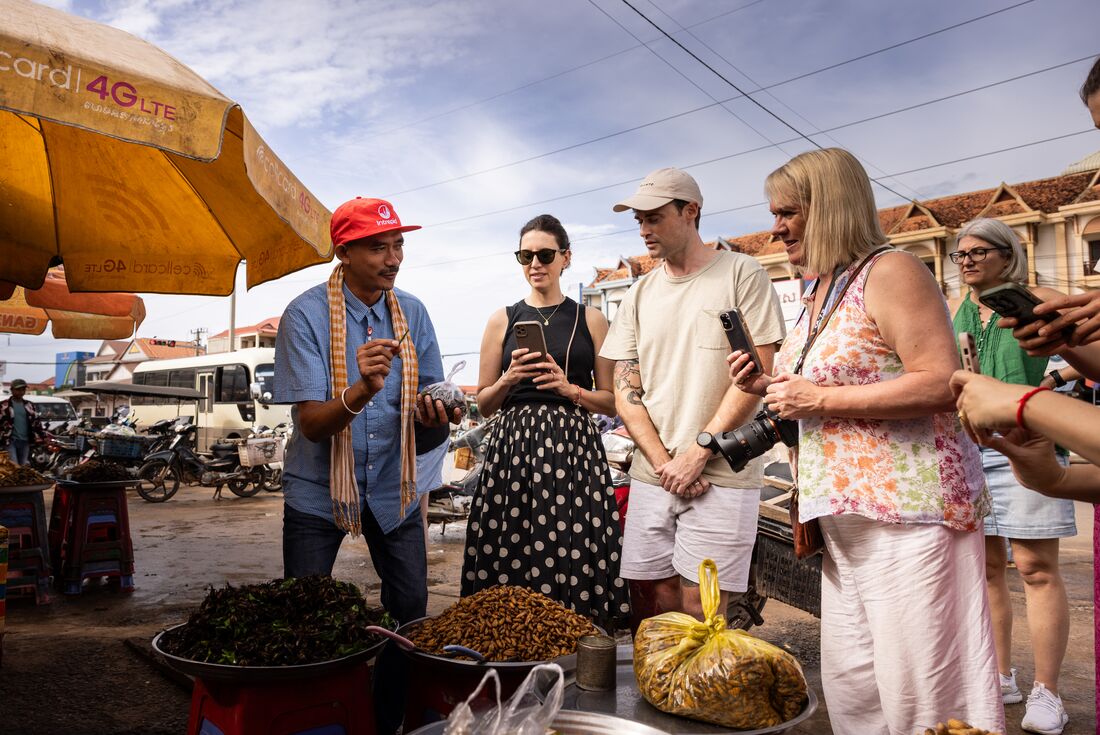
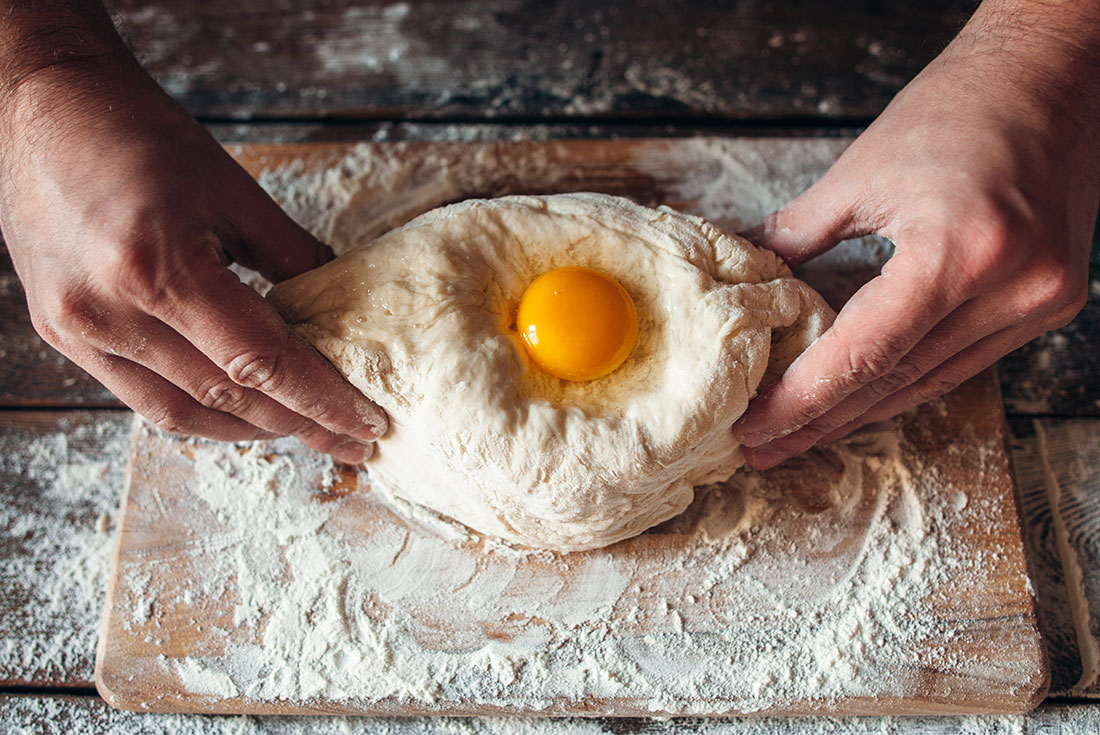
Georgia's signature dish is a boat-shaped bread filled with bubbling cheese, topped with a raw egg yolk and a pat of butter — and on the welcome dinner of this eight-day trip, it's the first thing you'll eat. Tbilisi is where the food makes sense: a cobblestoned Old Town that has passed through Persian and Russian hands, where art nouveau facades sit alongside Soviet Modernist blocks and Eastern Orthodox churches, with the snow-dusted peaks of the Caucasus behind it all. The reconstructed 4th-century Narikala Fortress looks down from the hill, and the Old Town's terraced alleys are lined with colourful houses and ornate wooden balconies. You spend the first two nights here, walking it with a local guide and eating your way through Dezertir Bazaar — fresh produce, spices, homemade cheese, and strings of churchkhela hanging from the stalls.
From Kakheti to the Pankisi Valley
On day three the route heads east into Kakheti, fertile valleys ringed by the snowy peaks of the Caucasus. The first stop is Signagi, a hilltop town often called the City of Love, before settling in Telavi. Further on, you spend a night in the Pankisi Valley with descendants of the original highland Chechens, in the dense foothills of the mountains. The itinerary also takes in Mtskheta, one of Georgia's oldest cities, and the Ananuri Fortress Complex on the way up towards Gudauri. Meals are the thread that holds the days together: lobio, the traditional bean stew; pkhali, vegetables with walnuts; pickles and salads at a local restaurant in Tbilisi; hands-on cooking classes; and tastings of the local wines Georgia is known for.
Bookings and practicalities
This is an Original-style Intrepid trip: tourist-class hotels, a mix of included activities and free time, and some meals built in. Group size is capped at twelve and the minimum age is fifteen, so it suits solo travellers, couples and friends rather than families with young children. The pace is moderate — it isn't a hiking holiday, but there's walking on cobbled streets and in the hills around Pankisi. Prices start from £1,450 for the eight days, beginning and ending in Tbilisi. Flights into Georgia are not included, and travel insurance details and next of kin information are collected at the welcome meeting on the first evening (6 pm, at the hotel), so arrive with those to hand. The leader handles logistics, transport between regions is by shared vehicle, and evenings tend to unfold around a long table.
The shape of the trip.
What's typically in the price, what isn't.
A general guide for food holidays of this kind. Check the operator's booking page for the final inclusions on this specific trip.
Typically included
- ✓Hotel or guesthouse accommodation — double or twin rooms, often locally-owned
- ✓A local leader or tour manager throughout
- ✓Most cooking classes, market visits and producer tours on the itinerary
- ✓Some meals — typically breakfasts, a few shared lunches and the cooking-class dinners
- ✓In-country transport between towns on the route (train, minibus, driver)
Typically not included
- ×Flights to and from the start city
- ×Travel insurance (strongly recommended)
- ×Most evening meals and lunches — eat where the group or your nose leads
- ×Drinks beyond what's included with set meals — wine flights and cocktails are extra
- ×Single-room supplements on shared-room departures (often £200-500 per trip)
- ×Tips for the tour leader and host families (customary but discretionary)
Everything you might be wondering.
Q1How much cooking is there?
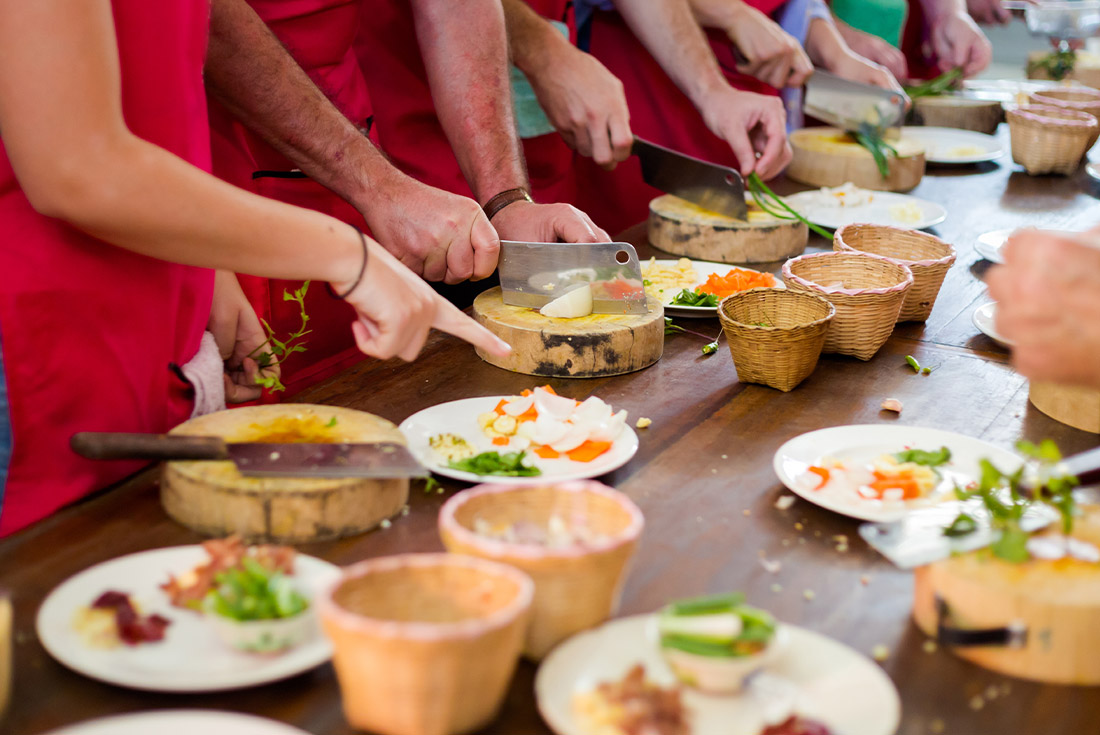
Varies widely. A 'real food adventure' is typically 1-2 cooking classes plus market visits, food tastings and restaurant meals on an otherwise normal small-group trip. A cooking-school week is 4-5 hands-on sessions — that's most of the holiday. Check the day-by-day.
Q2Can I get vegetarian / vegan / gluten-free?
Yes. Cooking-focused holidays handle dietary requirements well — the organiser speaks to local hosts and cooks ahead of time. Flag requirements at booking, not on arrival. Some remote itineraries (street food in Marrakech, markets in Vietnam) are harder for strict veganism — ask before paying.
Q3Is the food high-end or everyday?
Most trips we list focus on everyday local cooking — market produce, home kitchens, family-run tavernas. Michelin-tier dining holidays exist but are niche. The ones worth travelling for are the home-cook-led ones.
Q4Will I gain weight?
Probably yes — but the good ones build walking into the day so it evens out. Tours that include long walks between meals (Tuscany, Puglia) keep you honest. Pure cooking-school weeks are where the damage happens.
Q5Can I travel solo?
Cooking classes suit solo travellers well — you're in a group for the cooking, then free between sessions. Single-room supplements apply; some operators offer shared-room matching. Escorted food tours (Intrepid, Flavours) are set up for solos.
Q6Do I need to speak the language?
No. English-speaking hosts are the norm on organised trips, and a local co-translator is common. Learn a few words for ingredients — it makes the hosts smile.
Q7Is it family-friendly?
Some trips explicitly welcome families (teen+ usually); others are adult-focused. Kids love market visits and pasta-making; they hate three-hour wine tastings. Read the age policy before booking.
Q8What about cancellation?
Typically 20-25% deposit at booking, balance 8-10 weeks before departure. Check the operator's own terms — food tours sometimes have tighter windows because small-group trips have low break-even thresholds. Travel insurance strongly recommended.
Three food holidays, side-by-side.
Other food holidays on Mooch in the same spirit. All prices per person, from the operator.