About this trip.
Two trains, two very different moods
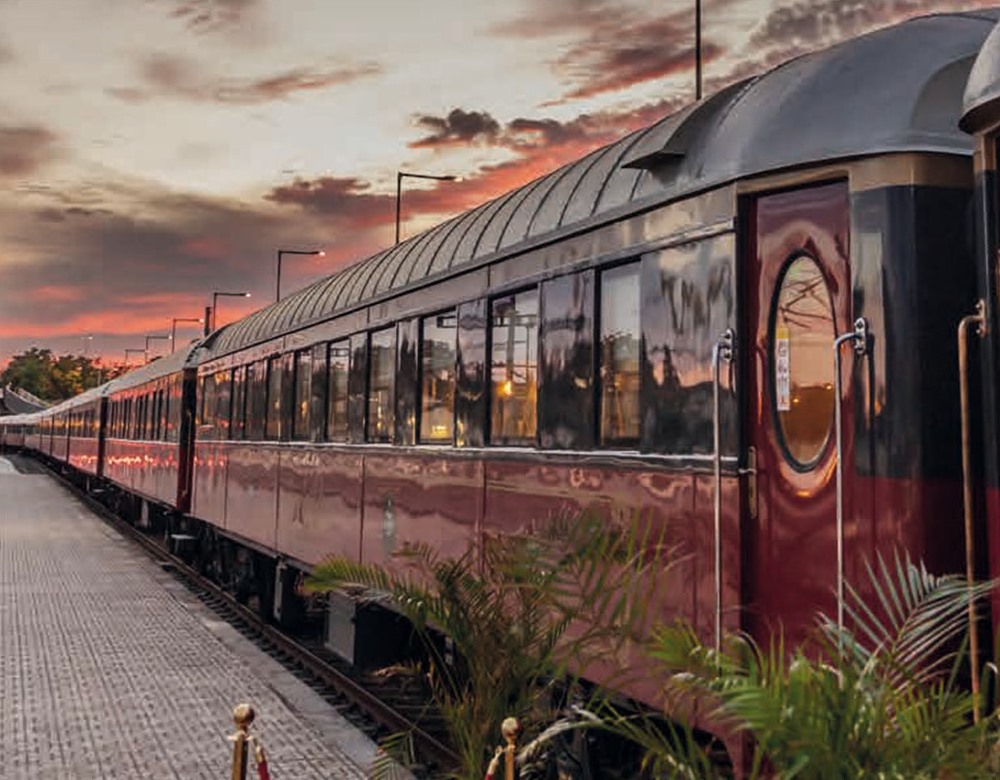
The Rocky Mountaineer only runs in daylight. You board in the morning, cross the mountains in glass-domed coaches, and step off each afternoon to sleep in a hotel — nothing is lost to darkness. VIA Rail's Canadian is the opposite proposition: a transcontinental sleeper with cabins, a dining car and a dome lounge, rolling on through day and night. This holiday uses both, which is the whole point. You get the polished daylight service through the Rockies themselves, then the slower, more lived-in rhythm of an overnight train for the longer stretches.
The Rockies from a dome car
The Canadian Rockies are the draw, and both trains give you the view that makes them famous — pine forest pressing against the track, bridged canyons, glacier-fed rivers in that particular mineral turquoise, and the granite shoulders of peaks that dwarf the train. On the Mountaineer, the glass roofs mean you can lean back and watch the summits without craning your neck. On the Canadian's dome car, you climb a short staircase into a bubble of glass above the coaches and watch the same country in a different light — often at golden hour, often nearly alone.
Life on board the Canadian
The Canadian is a real train rather than a holiday train, and that is part of its appeal. Meals are taken communally in the dining car, cabins are compact, the rhythm unhurried. You share a table with whoever else is aboard — Canadians visiting family, walkers heading to Jasper, the occasional rail enthusiast with timetables in hand. The tempo suits slow travel: read, watch, eat, sleep, wake somewhere new. It is the counterweight to the Mountaineer's more structured, tourist-facing service, and the contrast is what makes the trip feel properly thought-through rather than simply scenic.
Booking and who it suits
Great Rail Journeys handles the logistics — train tickets, hotel nights on the Mountaineer portion, transfers and the awkward bits between — so you turn up and travel. It suits anyone who likes the idea of the railway as the holiday rather than the means of getting somewhere, and who is happy sitting and watching a landscape unfold for hours at a stretch. Photographers and walkers do well on it; anyone wanting constant activity or nightlife should look elsewhere. Expect the price to reflect the Mountaineer's service class and, on the Canadian, the gap between a reclining seat and a proper cabin — the latter is the one worth stretching to if the budget allows, because the train is long and the nights on board are part of what you are paying for.
The shape of the trip.
What's typically in the price, what isn't.
A general guide for rail holidays of this kind. Check the operator's booking page for the final inclusions on this specific trip.
Typically included
- ✓Rail tickets on the published route, in the ticket class booked
- ✓Hotel accommodation between rail days, breakfast included
- ✓A tour manager throughout on escorted departures
- ✓Luggage handling between hotels on escorted tours
- ✓Some meals — typically breakfasts and a few set dinners; check the day-by-day
- ✓Any included excursions or entrance fees listed on the itinerary
Typically not included
- ×Flights to and from the start city
- ×Travel insurance with rail-protection cover (strongly recommended)
- ×Most lunches and some evening meals — eat at stations or in town
- ×Upgrades: first-class legs, sleeper cabin upgrades, single rooms on shared departures
- ×Drinks on board beyond anything stated in the itinerary
- ×Tips for the tour manager (customary but discretionary)
Everything you might be wondering.
Q1Do I have to change trains?
On most escorted tours, yes — the route is the point, not a single through-train. A tour manager handles the connections and your luggage. Independent itineraries come with pre-booked tickets and detailed routing, but you work the changes yourself.
Q2Are meals included?
Breakfasts at hotels are usually included. Dinners and lunches vary by tour. Many scenic day services have a dining car or trolley you can pay for on board. Check the day-by-day — escorted tours list every meal that's included.
Q3Is luggage handled?
On escorted tours your main bag is moved between hotels while you carry a day bag on the train. On independent itineraries you move your own luggage — pack a case you can lift onto a train without help.
Q4First class or second?
First class on European trains is wider seats, quieter carriages, sometimes complimentary drinks. Second class is perfectly fine and about a third cheaper. Upgrades to first are usually £50-150 per leg on longer routes.
Q5Can I travel solo?
Escorted rail tours suit solo travellers well — there's a tour manager, a set schedule, and shared hotel dinners most nights. Single-room supplements apply (typically £300-600 on a 10-day tour). A handful of departures are marked 'no single supplement' — watch the operator's calendar if you want to save.
Q6Is it slower than flying?
Yes, and that's the point. London to Zurich by train is 8 hours via Paris and the TGV, versus 2 hours in the air plus 3 hours of airport on each side. The difference is how you arrive — rested, in the middle of the city, having watched the journey.
Q7What if a train is cancelled?
Escorted tours have tour-manager contingency — the operator rebooks and absorbs the cost. Independent itineraries depend on your ticket type (flexible versus advance) and whether you have rail-protection insurance. Take it.
Q8What about cancellation?
Typically a 20-25% deposit at booking, balance due 8-10 weeks before departure. Rail tickets are a sunk cost once issued, which matters on longer trips. Travel insurance with rail cover is sensible.
Three rail holidays, side-by-side.
Other rail holidays on Mooch in the same spirit. All prices per person, from the operator.