About this trip.
The Rockies and the Inside Passage
The Canadian Rockies and the Alaskan coast sit close on a map but feel like different worlds. The first is interior and vertical — ice fields, turquoise lakes, limestone ridges rising sheer from spruce forest. The second is edge-country, where mountains drop straight into the sea and the weather changes by the hour. Combining the two by rail and ship is a well-trodden route for a reason: you get the altitude and the coastline in a single holiday, without the flying and waiting a self-planned version would involve.
Through the mountains by rail
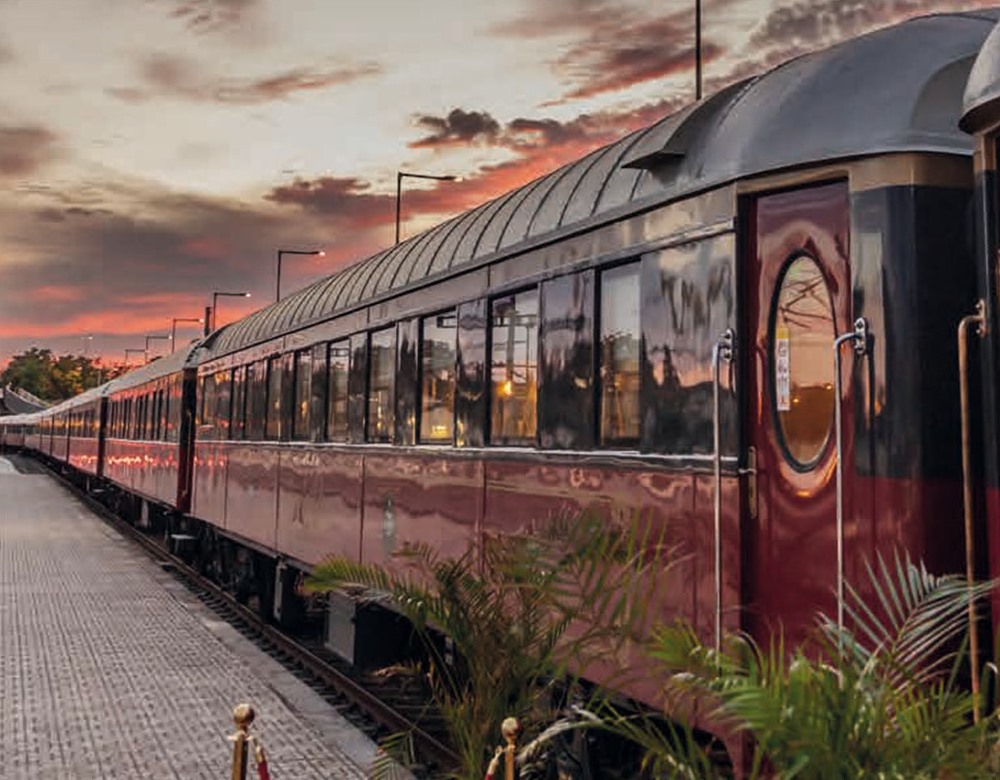
Canadian rail travel through the Rockies is a slow, glass-roofed affair. The tracks follow river valleys and cross passes that road traffic largely avoids, so much of what you see from the carriage isn't visible from the Trans-Canada Highway. Days are long but unhurried — the point is the window, not the ground covered. Evenings are typically spent in mountain towns at the foot of the big-name peaks, which gives you a chance to stretch the legs rather than pushing straight through.
The cruise leg
The ship portion runs along the Inside Passage, the sheltered strait that threads between the mainland and the outer islands. It's cruising in the scenic rather than the open-ocean sense — forested islands on either side, the occasional humpback, tidewater glaciers calving at the heads of the fjords. Port calls are small coastal towns built for fishing and, later, gold. The scale is what stays with you: the ship is dwarfed by the walls of rock on either side, and the wildlife tends to do its own thing rather than perform for the cameras.
Bookings and logistics
Great Rail Journeys handles the rail and cruise as a single booking, which takes the awkwardness out of joining the two legs — Vancouver arrival timings, cruise embarkation windows and overland transfers are all arranged for you. It suits travellers who want the Rockies and Alaska in one holiday, don't mind a longer trip, and would rather not stitch the logistics together themselves. The source copy is thin on specifics, so for exact routeing, duration, inclusions and departure dates, check the operator's current itinerary before booking.
The shape of the trip.
What's typically in the price, what isn't.
A general guide for rail holidays of this kind. Check the operator's booking page for the final inclusions on this specific trip.
Typically included
- ✓Rail tickets on the published route, in the ticket class booked
- ✓Hotel accommodation between rail days, breakfast included
- ✓A tour manager throughout on escorted departures
- ✓Luggage handling between hotels on escorted tours
- ✓Some meals — typically breakfasts and a few set dinners; check the day-by-day
- ✓Any included excursions or entrance fees listed on the itinerary
Typically not included
- ×Flights to and from the start city
- ×Travel insurance with rail-protection cover (strongly recommended)
- ×Most lunches and some evening meals — eat at stations or in town
- ×Upgrades: first-class legs, sleeper cabin upgrades, single rooms on shared departures
- ×Drinks on board beyond anything stated in the itinerary
- ×Tips for the tour manager (customary but discretionary)
Everything you might be wondering.
Q1Do I have to change trains?
On most escorted tours, yes — the route is the point, not a single through-train. A tour manager handles the connections and your luggage. Independent itineraries come with pre-booked tickets and detailed routing, but you work the changes yourself.
Q2Are meals included?
Breakfasts at hotels are usually included. Dinners and lunches vary by tour. Many scenic day services have a dining car or trolley you can pay for on board. Check the day-by-day — escorted tours list every meal that's included.
Q3Is luggage handled?
On escorted tours your main bag is moved between hotels while you carry a day bag on the train. On independent itineraries you move your own luggage — pack a case you can lift onto a train without help.
Q4First class or second?
First class on European trains is wider seats, quieter carriages, sometimes complimentary drinks. Second class is perfectly fine and about a third cheaper. Upgrades to first are usually £50-150 per leg on longer routes.
Q5Can I travel solo?
Escorted rail tours suit solo travellers well — there's a tour manager, a set schedule, and shared hotel dinners most nights. Single-room supplements apply (typically £300-600 on a 10-day tour). A handful of departures are marked 'no single supplement' — watch the operator's calendar if you want to save.
Q6Is it slower than flying?
Yes, and that's the point. London to Zurich by train is 8 hours via Paris and the TGV, versus 2 hours in the air plus 3 hours of airport on each side. The difference is how you arrive — rested, in the middle of the city, having watched the journey.
Q7What if a train is cancelled?
Escorted tours have tour-manager contingency — the operator rebooks and absorbs the cost. Independent itineraries depend on your ticket type (flexible versus advance) and whether you have rail-protection insurance. Take it.
Q8What about cancellation?
Typically a 20-25% deposit at booking, balance due 8-10 weeks before departure. Rail tickets are a sunk cost once issued, which matters on longer trips. Travel insurance with rail cover is sensible.
Three rail holidays, side-by-side.
Other rail holidays on Mooch in the same spirit. All prices per person, from the operator.