Camino Portugués: Coimbra to Porto
About this trip.
Comparing firms? Every Camino holiday on Mooch, route by route.
Before you book: Walking holidays vs cycling holidays — when each one is the right answer · Which Camino route is right for you — an honest opinion on each of the seven
From Coimbra to Porto on the Camino Portugués
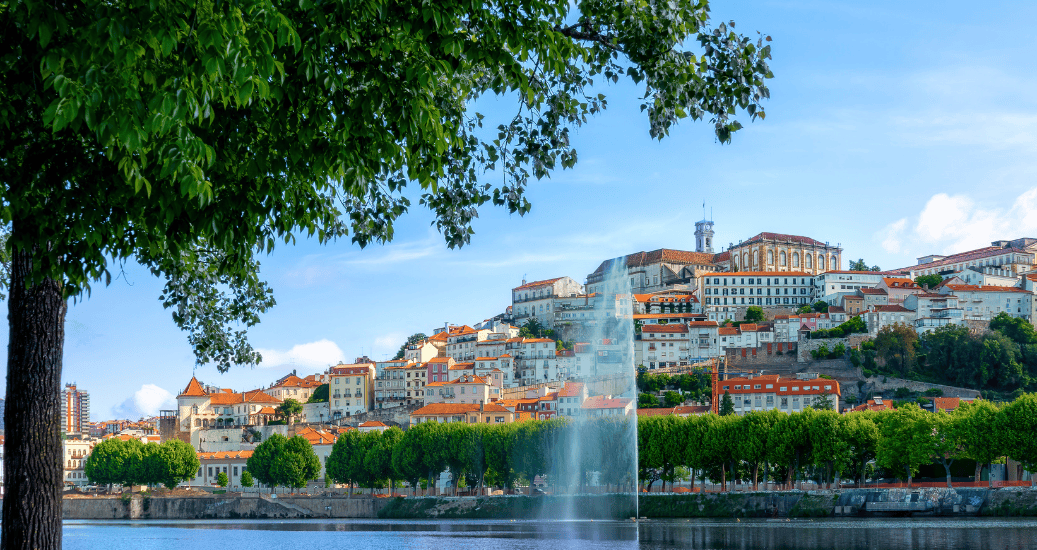
Coimbra, once the capital of Portugal, is where this third section of the Camino Portugués begins. From there the route heads north to Porto, a UNESCO World Heritage site, taking you from inland Portugal out to the Atlantic coast. Between the two cities you walk past vineyards and river valleys and through gently rolling woodland.
The walking is hilly, but the daily stages are a reasonable length. Anyone with a regular level of fitness should manage it. There are plenty of facilities along the way. Even so, carry enough water and snacks to keep you going between stops.
Coimbra's university and the history along the way
Coimbra University was founded in 1290 and is one of the oldest universities in Europe. It is still a working university and is also a World Heritage Site. It stands where the first Kings of Portugal lived while Coimbra was the capital, from 1145 to 1255. The library and the chapel are well worth a visit. The students bring plenty of life to the city, and you'll spot them in their long dark robes, which are said to have inspired the cloaks in Harry Potter.
Further on, one town grew up around a pilgrim hostel. Queen D. Teresa, mother of Afonso Henriques, founded it by royal command in the 12th century. Pilgrims are still central to the town's identity, and the people who live there are happy to keep it that way. The route also passes a monastery whose story begins in 992, when two clergymen founded it. It moved to its present site in 1122 and was consecrated in 1235. It later fell into ruin, and when the monks returned in the 1500s the rebuilding took more than 60 years. The monastery was dissolved in 1770 and became part of the Convent of Mafra.
What's included
You stay in hand-picked accommodation on a bed and breakfast basis. You also get a holiday or pilgrim pack, a virtual face-to-face briefing before you leave, and on-call support 24 hours a day. Luggage transfers between hotels are an optional extra.
The shape of the trip.
Everything you might be wondering.
Q1How hard is it really?
The grading is set by the operator and usually reflects daily distance and total ascent. As a rule of thumb: if you can comfortably manage a 5-6 hour hillwalk at home on a weekend, a moderate-graded route will be fine. Read the day-by-day notes carefully, and train with a loaded pack in the months before.
Q2Can I do this solo?
Yes — self-guided walking holidays are well suited to solo travellers, and some operators waive the single-room supplement on certain departures. The route notes are written for confident independent walkers, and most operators run a 24/7 support line.
Q3Do I need to speak the language?
No. Hotels and restaurants on the route are used to English-speaking walkers. A phrasebook for menus and a few polite basics (hello, thank you, please) is all you really need. The operator's support line speaks English.
Q4Can I bring my dog?
Some routes are dog-friendly, others aren't — it depends on whether all the accommodation on the itinerary accepts dogs. Check with the operator before booking. If you do bring a dog, you'll need a pet passport, up-to-date rabies vaccination, and a lead for villages.
Q5What if it rains?
The route is walkable in rain — your luggage travels ahead regardless, so you'll always arrive somewhere dry. Some trails get slippery in wet weather and the operator's support line can arrange a taxi for any stage if conditions are properly bad.
Q6How do I get there from the UK?
Most routes are reachable by a short flight to a nearby airport, followed by train or transfer. The operator will usually point you at the nearest airport and can advise on rail connections. Some will book train tickets on your behalf for a small fee.
Q7Can I shorten or extend it?
Usually yes. Many operators offer shorter versions of a route as a standalone, and most will add extra nights at the start or end at their own rates. Ask when you enquire — they'll tailor it before booking.
Q8What about cancellation?
Typically a deposit (usually 20-25%) is taken at booking, with the balance due 8-10 weeks before departure. The operator's own terms apply — Mooch doesn't handle the booking or refunds. Travel insurance is strongly recommended.
Three walking holidays, side-by-side.
The two closest walking holidays on Mooch, both on the Camino. Prices are the operators' own, per person.


